The Hand, the Potter, and the Question Every Creative Faces
Ruka turns a small potter’s struggle into a mirror for every creator: how do we protect our craft, dignity, and meaning in a world that keeps asking us to build monuments to someone else’s power?
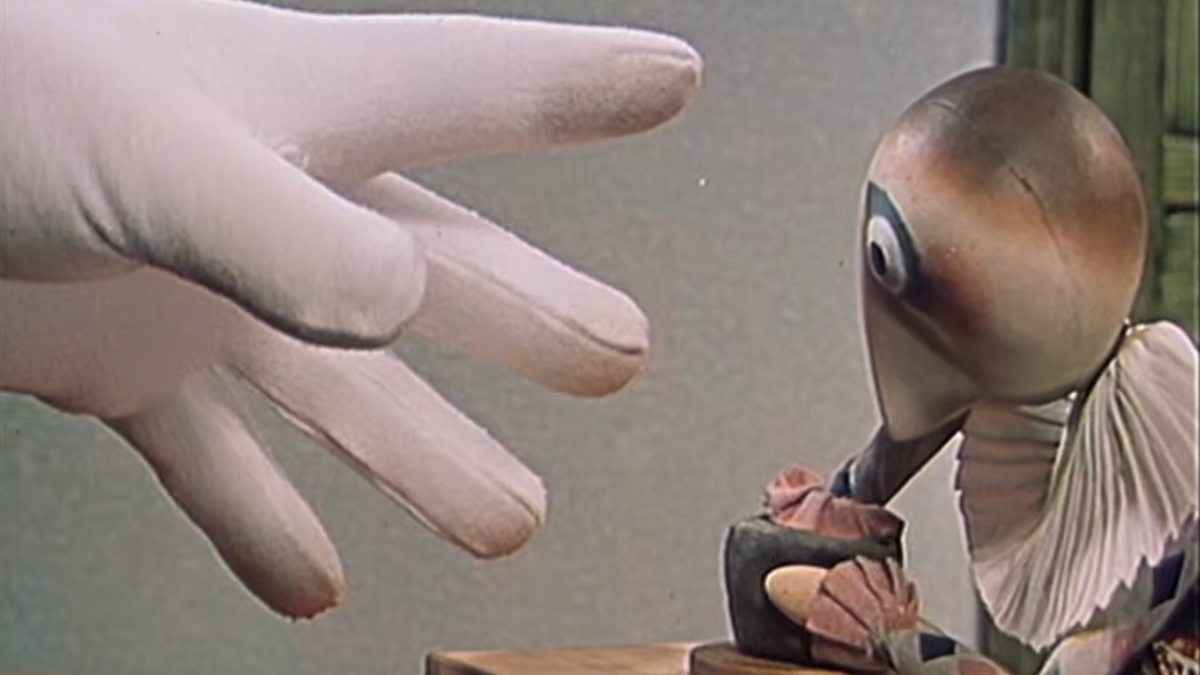
At EPC Film Club, a group of designers and design leaders watched Ruka — also known as The Hand — a short stop-motion film by Jiří Trnka about a small potter, his flowers, and a large hand that enters his room and slowly takes control.
What happens when a creator wants to make one thing, but the world keeps asking for another?
On the surface, the film is simple. A man wants to make pots for his plants. The hand wants him to make a statue of the hand. First, it tries to persuade him. Then it rewards him. Then it threatens him. Finally, it traps him.
But the conversation quickly moved beyond the film. For a room full of designers and creatives, the story felt close to home. It became a discussion about creative control, survival, work, money, meaning, power, and the strange way society often celebrates people only after it has already broken them.
The sadness of being understood too late
One of the first reflections was on how society often reduces creative people to a single thing. A creator may live with many thoughts, skills, doubts, experiments, and desires. But the world usually wants a simpler version. It wants to say, “This is what you are good at. Do only this.”
Someone connected this to VanGogh — an artist who was not fully recognised in his lifetime but later became a symbol. The point was not only about posthumous fame. It was about how people are often made smaller after they are gone. Their life becomes one neat story. Their pain becomes part of the brand. Their complexity disappears.
In the film, this happens painfully. The potter is controlled while he is alive. But once he is dead, he is honoured. The same force that trapped him also arranges his final display. For many creatives, this felt familiar. There is often a gap between what people ask from you while you are working and what they celebrate later.
The world may not make space for your full self. But it may still want to own the story of your work.
The hand as the power
The group saw the hand in many ways. For some, the hand was society. For others, it was the state. For some, it looked like capitalism. For others, it looked more like communism or any system where authority decides what people are allowed to make.
One person saw the film as a story of capitalism: a world where the creator is pushed to make what sells, what can be rewarded, what can be turned into status. Another saw it as a story of political control: the hand does not simply want useful work; it wants loyalty. It wants the potter to make its image. It wants to be worshipped. Both readings can exist together.
Because for creatives, control does not always come in one form. Sometimes it comes as money. Sometimes as approval. Sometimes as deadlines. Sometimes as awards. Sometimes as fear. Sometimes as “this is how things are done here.”
At first, the hand offers incentives. Then it begins to dominate. Power does not always begin with force. It often begins politely. It makes an offer. It gives a reward. It gives visibility. Then, slowly, it starts deciding the terms.
The pot, the flower, and the work that matters
The potter does not want much. He wants to make pots for his flowers. The pot was seen as his craft. The flower was seen as something he cared for. It was not something grand and wasn't made for applause. It was simply meaningful to him.
Designers often know this feeling. There is the work that is asked of you, and then there is the work that carries your sense of self. Sometimes they overlap. Often, they do not.
One member pointed out that the hand never really values what the potter brings. It sees his skill only as something to be used for its own sake. It does not ask what he wants to make. It only asks whether he can make what it wants.
This is where many designers saw a reflection of their own industry. A designer may be hired for taste, craft, thinking, care, and judgment. But once inside a system, they may be asked only to execute. Make the screen. Finish the deck. Follow the template. Meet the deadline. Fit the process.
The film made that pain visible. The potter is skilled. But his skill is separated from his will. That is where creativity starts to die.
Freedom is not always simple
One of the focus areas in the conversation was the idea of balance. It is easy to say that the potter should have completely resisted. It is also easy to say he should have compromised. But real life is not that black and white.
One member asked whether the potter could have made both — one pot and one hand. Another connected this to portfolios: designers often show what they want to be known for, but also what the market expects to see.
How much of yourself can you protect while still surviving in the world? Many creatives live with this dilemma. Total freedom is rare. Total compromise is painful. The real challenge is learning how to move between both without losing yourself.
The conversation did not romanticise rebellion. People recognised that survival matters. Money matters. Work matters. Being understood by clients, teams, and leaders matters.
But they also recognised the danger of being fully absorbed by the system. If you only respond to what power asks from you, you may slowly forget what you wanted to make in the first place.
The red hat as dignity
One of the most beautiful observations was about the potter’s red hat. A member read it as his dignity. At the beginning, he has it. As the hand begins to interfere, that dignity starts to disappear from the scene.
Creative control is, at times, about dignity and not just the final output. It is about whether a person feels seen. Whether their judgment is respected. Whether their inner world is allowed to exist. Whether they can still recognise themselves in the work.
In design, we often speak about output: the product, the campaign, the interface, the system. But behind every output is a person negotiating how much of themselves they can bring into the room. That negotiation can be energising, but it can also be exhausting.
The burnout of being trapped
The potter eventually breaks free from the cage, returns to his room, and tries to protect himself. But he is not truly free. He is shaken. His space is damaged. His comfort is broken. His craft cannot be returned to in the same innocent way.
Someone in the group connected this to burnout. Burnout is not only tiredness. It is what happens when a person has fought too long to protect something that should not have needed that much protection.
The film shows that even when the potter escapes, something has already been taken from him. Many people leave difficult workplaces, clients, or systems, but the effects linger. They may get freedom later, but not always the same softness, confidence, or joy they once had.
Left the group with a painful question: when a system damages a creator, can the creator return to their work unchanged?
Meaning, money, and privilege
What gives life meaning? Some spoke about dancing, learning, travelling, and meeting people. Others spoke about how hard it is to know what one truly wants when the world keeps showing us borrowed dreams.
Someone pointed out that many people romanticise escape — living in the mountains, taking a year-long break, leaving everything behind. But those dreams can be shaped by social media, distance, and privilege. A peaceful life from the outside may be very hard in reality. The search for purpose is not available to everyone in the same way.
For earlier generations, meaning often came from providing for family, building stability, and surviving. For many younger people today, meaning is tied more closely to individuality and choice. Neither is wrong. They come from different life conditions.
Thinking about purpose often comes after basic needs are met. It requires time, space, and some degree of freedom. This made the film feel less like a simple “artist versus system” story and more like a question of what kind of freedom different people can afford.
Success does not have to mean forever
Today, we often think something is successful only if it lasts forever, grows forever, or becomes widely known. But one member challenged this. If someone opens a café and runs it beautifully for a few years, but later shuts it down, was it a failure? Not necessarily. It may have been successful for the time it existed.
A design does not need to change the whole world to matter. A project does not need to last forever to have value. A creative act may be meaningful because of what it makes possible in a certain moment. Not every creative effort has to become a monument. Sometimes it is enough that it helped, moved, opened, protected, or changed something for a while.
The real question: who holds creative control?
In the film, the hand holds power. The potter holds skill. That imbalance is the tragedy. Many designers experience a similar gap. People who understand design may not have money or decision-making power. The people who hold money may not fully understand design.
This is where good work often gets weakened. A strong idea begins with care but is slowly cut down by approvals, numbers, speed, fear, or a lack of understanding.
This makes it even more important to be part of fundamental discussions: Why should this exist? Who is it for? What problem does it really solve? What value does it create? What future does it lead to?
When designers enter only at the end, they become hands for someone else’s idea. When they enter early, they can shape the idea itself.
Speaking the language of power without losing your own
Designers often speak in a language that other designers understand, but businesses may not. Words like empathy, craft, experience, and beauty matter. But in many rooms, they are not enough. Business leaders often need to understand value, risk, growth, cost, trust, retention, or differentiation.
This does not mean designers should reduce everything to numbers. Numbers are not everything. But numbers are often the language of the people who make decisions. So the challenge is not to abandon design language. The challenge is to translate design without losing its soul.
A designer should be able to say: this matters to the user, and this is how it creates value. This improves the experience and helps the business. This is more humane, and this is why it is also more sustainable. That translation is a form of creative control.
Designing beyond the screen
One member said something simple and expansive: design is not only about products or objects. Designing conversations is also design. Talking to people is design. Designing your own life is also design.
The film is not only about a potter making pots. It is about how a person arranges their world so they can keep making what matters. How do we design conditions where our work, energy, dignity, and meaning can survive?
Sometimes that means choosing the right projects. Sometimes it means learning to speak in business. Sometimes it means creating small spaces of freedom inside larger systems. Sometimes it means knowing when to resist. Sometimes it means knowing when to bend. And sometimes it means finding a community where these questions can be spoken out loud.
What the film left us with
Some saw the hand as capitalism. Some saw it as the state. Some saw it as society. Some saw it as the client, the manager, the market, the trend, or even the voice inside us that says, “Be practical.” Some felt the potter should have resisted. Some wondered if he should have found balance. Some felt the hand was guilty at the end. Some wondered whether freedom without survival is enough.
How do we keep making our pots while living in a world that keeps asking us to build statues of the hand?
Maybe the answer is not pure rebellion. Maybe it is not a pure compromise either. Maybe it begins with noticing the hand. Then, noticing the pot. Then asking, again and again, who gets to decide what we make — and what it costs us to say yes.
Comments ()