What makes a table iconic? A field guide for designers.
Design adores chairs, but life happens around tables: where we gather, spread ideas, and signal power. This essay offers a lens on what makes a table iconic and how to design one for homes and offices that are constantly shifting.

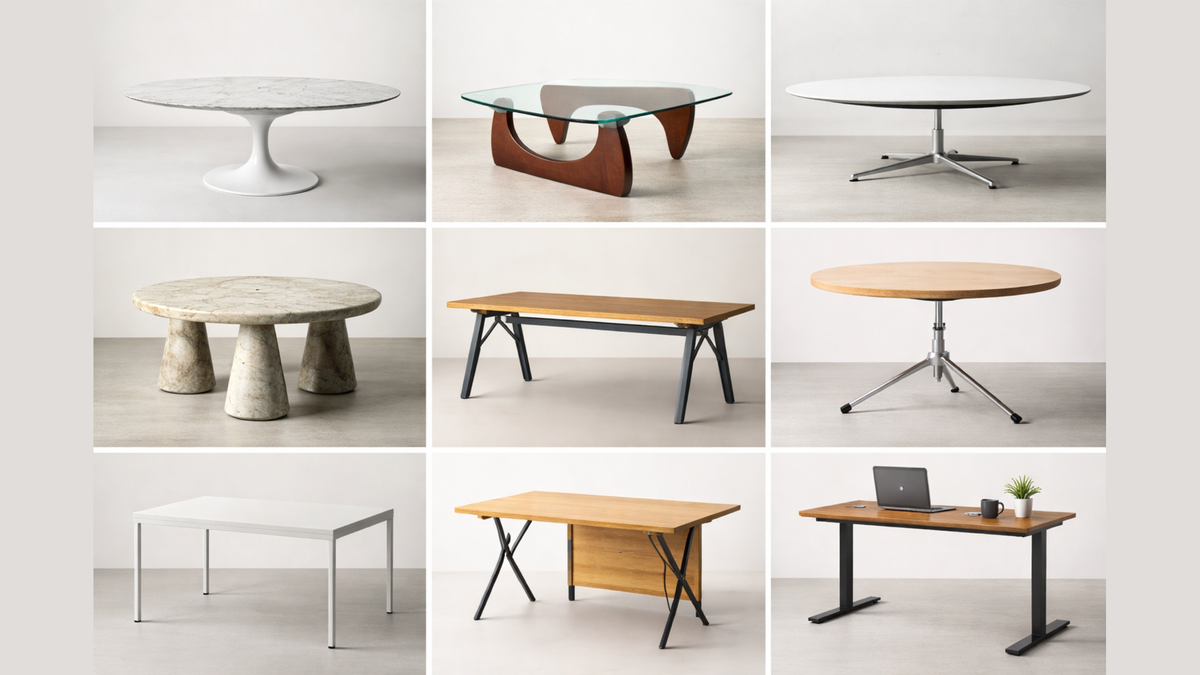
Design has a famous obsession: chairs. There are encyclopedias of them, timelines of them, museums full of them. Tables? Not so much. Yet if you pay attention to how people really live and work, the table is the object we gather around, spread ideas across, and signal power with. The table may be the quiet icon hiding in plain sight.
This essay distils a long, lively designers’ roundtable into a practical lens: how to recognise an iconic table, how to design one, and why tables still matter in a world of shrinking homes, fluid offices, and vanishing hardware.
First principles: what even is a table?
A working definition helps. A table is any horizontal surface used above the floor. That sounds simple, but it contains the seeds of everything that makes the type so rich: height, reach, clearance, approach, circulation, things above, legs below, and people around.
And because “desk vs table” comes up in every studio, think of a desk as primarily for one. A table is for more than one by default. That bias toward togetherness is why tables magnetise culture.
What does “iconic” mean for a table?
- Timelessness: It remains relevant across decades.
- Recognisability: You can sketch its silhouette and be understood.
- Adoptability: People repurpose it across contexts without it falling apart functionally or visually.
When those three line up, an object stops being just “good” and becomes a reference.
When technology influences the form
Iconic tables often track leap moments in materials and processes:
• Tubular steel made thin, rigid frames possible (think Marcel Breuer).
• Moulded laminates and composites flattened and refined profiles.
• The pedestal cleared the forest of legs underfoot. Eero Saarinen’s tulip did more than look clean; it solved knee-banging and chair-snagging with one move.
These designs weren’t created to decorate a specific lobby. They emerged because new manufacturing methods allowed new structural ideas. Form followed a fresh capability.
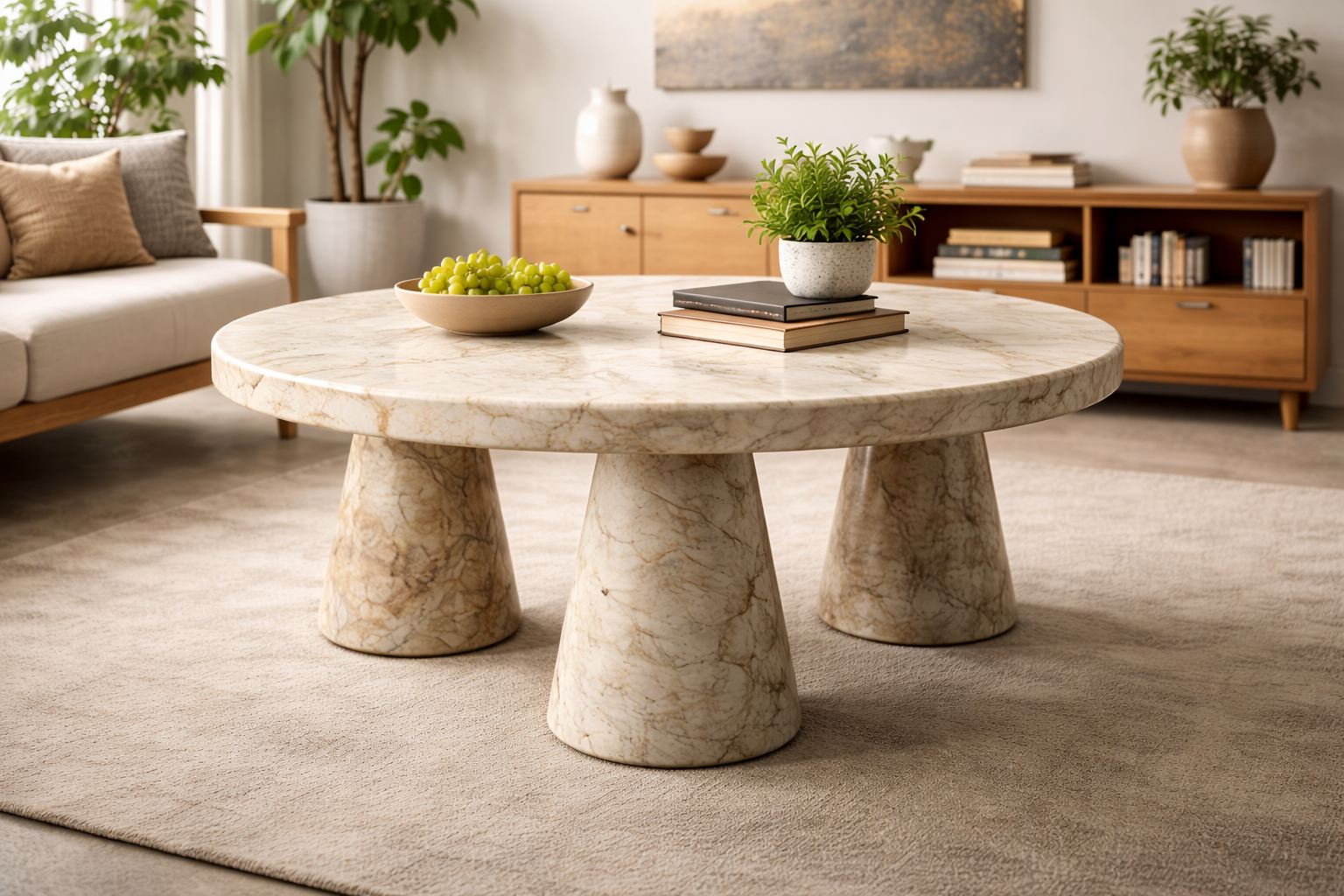
A favourite example from the conversation: Angelo Mangiarotti’s gravity-joined marble tables. No screws, no glue—just well-resolved geometry where weight locks the top into conical supports. The engineering is poetry.
Watch the production line. When a fundamental shift arrives—bending, forming, joining, finishing- it unlocks iconic possibilities.