Scaling Design teams is really about scaling judgment
Scaling design teams is less about headcount and more about distributing judgment. Strong teams create ownership, systems and access to the right information—helping organisations choose better, learn faster and build with greater care.
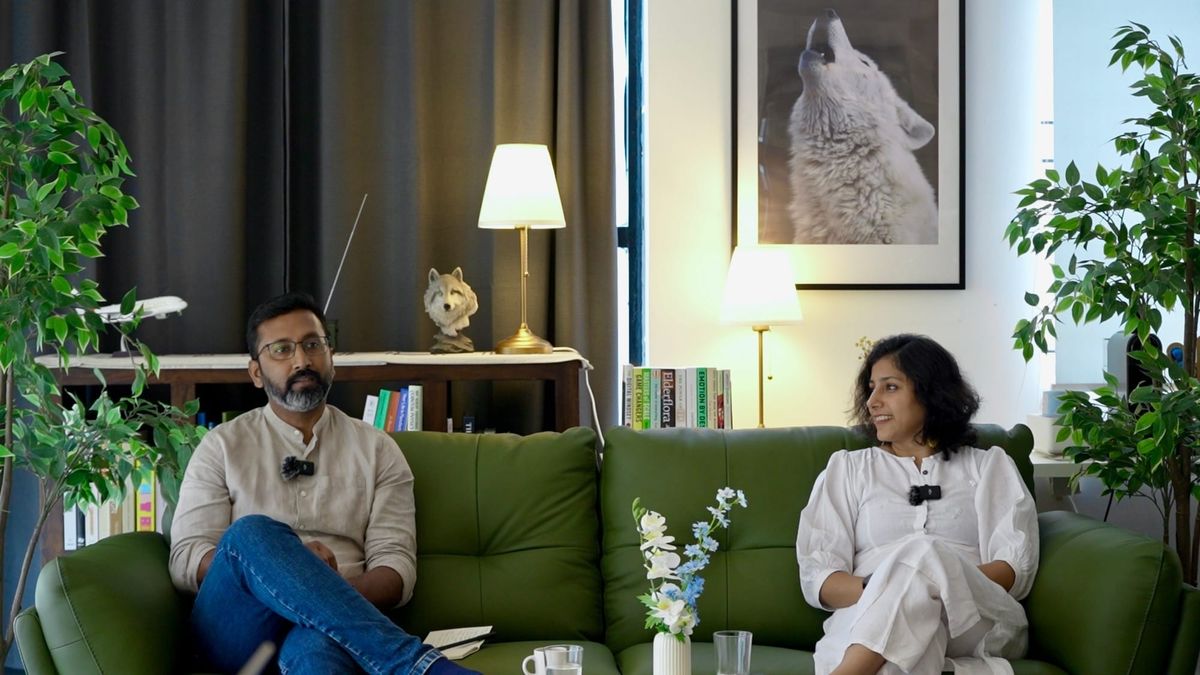
EPC hosted an unscripted conversation on scaling design teams, moderated by Mohit Yadav with design leaders Subroto and Shreeya.
The discussion brought together two very different organisational realities. One reflected the complexity of large global product organisations. The other reflected the constraints, speed, and commercial focus of growing businesses. Despite these differences, a common view emerged.
A design team does not become mature simply because it becomes larger. It becomes mature when good judgment, ownership, trust, and quality can operate across the organisation without depending on one leader.
Scaling design is therefore not only a hiring exercise. It is the work of building a system in which designers understand the business, stay close to users, collaborate early, make informed decisions, and represent design confidently in every important room.
Scale is not the same as headcount
The most common interpretation of scale is an increase in the number of designers. A company launches more products, expands into new markets, or creates new business units, and the immediate response is to hire more people.
Headcount can increase output. It does not automatically increase maturity.
A larger team may produce more screens, support more product managers, and attend more meetings. Yet it can still make weak decisions, depend heavily on a few senior people, and operate mainly as a production service.
A smaller team may have greater influence when its designers are trusted to shape problems, challenge assumptions, understand the business, and participate in important decisions.
Scaling headcount increases capacity. Scaling maturity improves judgment.
This distinction is becoming more important as artificial intelligence and automation speed up production. Organisations can now generate interfaces, prototypes, content, and working software more quickly. The scarce capability is no longer only production. It is the ability to decide what deserves to be built, why it matters, and how it should work. Design maturity lies in the quality of those decisions.
A mature team is represented in every important room
A useful sign of scale appears when the design leader is no longer needed to personally represent design in every discussion.
A small team may depend on one leader to attend every important meeting, review every major decision, and protect the quality of every product. That model stops working as the organisation expands.
A mature structure allows other designers to represent design with the same level of clarity and responsibility. Important decisions continue to be made well even when the design leader is absent.
The leader should not be present in every room. Design judgment should be.
This requires more than appointing managers. It requires people who can understand the wider situation, connect user needs with business goals, work with engineering constraints, and make decisions without waiting for approval at every step.
The real test of scale is not the number of people reporting to a leader. It is the number of capable people who can carry responsibility without the leader becoming a constant dependency.
Structure must come before expansion
One of the most damaging mistakes in a growing design team is excessive dependence on a few high performers.
The same reliable designers receive more products, more meetings, more junior team members, more reviews, and more responsibilities. Eventually, they stop doing the work at which they were exceptional. Their time is consumed by coordination and management.
This creates several problems:
- Senior designers become bottlenecks.
- Junior designers do not receive enough attention.
- Product decisions slow down.
- Quality becomes dependent on a few individuals.
- Strong performers become dissatisfied or exhausted.
- The organisation reacts by hiring even more people.
The underlying problem is often not the lack of people. It is the absence of a thoughtful team structure.
Every important area of work needs a clear owner. Every designer needs someone close enough to understand their work and support their growth. Every senior designer needs enough space to contribute through their strengths rather than being turned into a full-time coordinator.
A strong structure creates several capable layers without creating unnecessary hierarchy. It also recognises that leadership can come from managers as well as senior designers who do not manage people. Some of the most important product areas may be led by experienced designers with deep ownership, strong influence, and excellent judgment.
Hiring must follow business clarity
Design leaders need to understand where the organisation is going before deciding how the team should grow.
This means knowing the priorities of the chief executive, product leadership, engineering leadership, marketing, sales, and other business groups. It also means understanding the numbers that matter, the products receiving investment, the markets being entered, and the capabilities needed over the next six to eighteen months.
Without this visibility, the design team is likely to be either understaffed or overstaffed. An understaffed team remains trapped in delivery. Designers have no time for exploration, product improvement, or learning. An overstaffed team places capable designers on low-value work simply to keep them occupied.
Design leaders cannot wait for this information to arrive in a formal document. They need to build relationships across the organisation, enter the right conversations, and develop their own view of what is likely to happen next.
This makes workforce planning more precise. The team can hire for actual capabilities rather than general capacity.
A company planning a major physical expansion may need designers who understand spaces, retail environments, services, or visual merchandising. A company developing a new artificial intelligence product may need designers who can work through uncertainty, understand system behaviour, and prototype new interactions. A mature product may need designers who enjoy improving complex systems and refining details.
Bring people into the organisation only when meaningful work exists for their strengths.
Hiring talented people without suitable opportunities does not strengthen the team. It frustrates them and can slowly weaken the abilities for which they were hired.
Design should enter before the solution is defined
In many organisations, designers are brought into the process after a product manager has completed a product requirements document.
By that stage, the problem has already been framed. Business assumptions have been made. A direction may already exist in stakeholders' minds. The designer is then expected to improve the experience or create the interface.
This produces predictable conflict. The designer proposes a different solution. The product manager has already invested weeks in another direction. Long discussions, revisions, escalations, and delays follow. Designers feel overworked, and the organisation concludes that it needs more design capacity.
The real problem is late involvement.
Designers should participate in discovering and defining the problem. They should work with product managers to understand customer behaviour, business value, constraints, and possible directions. They should help write the product requirements document rather than wait for it.
The document is an alignment tool for the wider team. It should not be the first point at which design learns about the problem.
When product and design investigate together, they bring alignment in the direction to engineering. This reduces rework, creates stronger relationships, and gives designers a more strategic role.
Design is most valuable when the problem is still unclear, not after every important choice has already been made.
This change also improves workload. One example discussed during the session showed that designers who appeared overloaded were spending much of their time resolving disagreements caused by late involvement. Moving design earlier reduced repeated debates and delayed the need for additional hiring.
Incremental design is not mere execution
Not every designer needs to work on a new product from the beginning. Most work in established organisations is incremental.
Incremental work improves an existing product through better flows, clearer information, stronger systems, improved accessibility, fewer errors, and more thoughtful details. It may appear smaller than creating something new, but it can have a large cumulative impact.
This work still requires judgment. Execution begins when a designer receives a predetermined solution and simply produces what has been requested. Incremental design begins with an existing product but still allows the designer to investigate, challenge, improve, and make decisions.
Design teams therefore need different kinds of strengths. Some designers work well in highly uncertain situations. They can create a direction when the problem, process, and outcome are unclear. They are useful for new products and unexplored opportunities.
Other designers are exceptional at understanding systems, improving established experiences, identifying missing cases, and refining details. They make products dependable and coherent as they grow.
The same person may move between these modes, but the shift requires support. A designer accustomed to a clear process may feel lost when moved into a completely open problem. A manager can help by narrowing the starting point, clarifying the purpose, and providing enough structure without prescribing the answer.
Innovation also tends to work better when led by people who already understand the organisation. Designers who have spent time improving an existing system often have the context required to identify meaningful new opportunities.
External hiring can bring fresh thinking, but innovation without organisational context can remain theoretical.
Designers need to scale their understanding
Scaling intelligence within a team depends on how close designers are to the sources of truth.
Designers need access to:
- The people using the product
- Business priorities and financial realities
- Product performance and behavioural data
- Engineering constraints and possibilities
- Marketing and sales insights
- Decisions being made across the organisation
A designer who receives only a task cannot develop the same judgment as a designer who understands why the work matters.
This is why design leaders need to include designers in business conversations. Even when they do not speak in every meeting, regular exposure to product performance, revenue, customer behaviour, and strategic priorities builds commercial understanding.
Designers should not need to ask product managers for every answer. They need to learn how to find information, study user behaviour, interpret data, and form a point of view.
This can be uncomfortable in large organisations where roles are tightly defined. Designers may become accustomed to receiving a clear problem, a success measure, and a complete brief.
Moving towards greater ownership requires coaching. It takes time for designers to become comfortable gathering raw information and turning it into a direction. The result is stronger alignment and a healthier relationship between design and product.
Rituals create clarity at scale
A growing team needs shared ways of working. These do not have to become rigid procedures, but they must help people understand where work stands and what kind of decision is required.
One operating model discussed during the event used progress checkpoints. At an early checkpoint, product and design align on the problem, its importance, the evidence behind it, and the expected business or user impact.
The next checkpoint focuses on the first direction for the solution, before visual details dominate the conversation. Later checkpoints establish what can be released first, how the product may improve over time, and what constraints affect the original vision.
The final checkpoint reviews what will actually reach users.
The value of these checkpoints is not control. It is clarity.
A team may be wrong and still learn something valuable. It should not proceed while confused about what it is trying to learn.
Being wrong after a clear experiment creates evidence. Shipping something while the team itself is unclear wastes design, engineering, and organisational effort.
Other useful team rituals include:
Shared business reviews
Product, design, engineering, marketing, and business leaders review product performance together. Designers see the same numbers and participate in the same discussions as their partners.
Show-and-tell sessions
Designers working across different products share experiments, patterns, and lessons. This allows knowledge to move across the team rather than remain inside individual projects.
Craft reviews
Dedicated sessions focus specifically on interface quality and detail. Strategic reasoning and visual craft are both important, but separating them can help each receive proper attention.
Working sessions
Instead of presenting completed work for approval, designers and leaders work through a problem together. This reduces the pressure to please the most senior person and creates space for disagreement, exploration, and shared ownership.
Different teams may choose different rituals. The important point is that every meeting should have a clear purpose. It should help the team make a decision, reduce confusion, improve quality, or spread knowledge.
Design leadership is built on four responsibilities
The discussion identified four enduring responsibilities of a design leader.
1. Create clarity
Every designer should understand what they are working on, why it matters, what outcome is expected, and how their work connects to the organisation.
Clarity also includes ways of working. Designers need to understand what partners expect from them and what they can expect from their leaders.
2. Build trust
Design leaders often expect individual designers to build strong relationships with product and engineering while failing to create trust at the leadership level.
Trust flows through the organisation. When senior design, product, and engineering leaders respect each other and work openly, their teams are more likely to do the same.
3. Create opportunities
A leader needs to continually find meaningful work for the team.
New ideas often emerge in small pockets of an organisation. Engineers, product leaders, researchers, and business teams may be exploring something before it becomes an official project. Design maturity increases when these people think of design as an early thought partner.
The design leader creates this reputation by being curious, visible, dependable, and willing to contribute before a project is fully formed.
4. Show rather than tell
Design advocacy has limited value without evidence.
Instead of repeatedly explaining why design matters, teams need to demonstrate it through better decisions, clearer prototypes, stronger customer understanding, measurable improvements, and examples that others can experience.
Design earns influence by making its value visible.
Leaders become bottlenecks when they manage everything
Design leaders can become so occupied with reviews, staffing, approvals, and day-to-day delivery that they stop observing what is changing around the organisation.
This is one of the most dangerous forms of bottleneck. The leader may still be busy, but the team loses access to future opportunities.
A leader cannot personally champion fifteen initiatives. It is more realistic to go deeply into one or two areas and appoint capable owners for the rest.
Each important area needs someone who understands the problem, knows the relevant numbers, works closely with partners, and has enough authority to act. The wider organisation should recognise that person as the owner rather than continuing to look towards the design head for every answer.
Delegation is not simply the distribution of tasks. It is the transfer of visibility, authority, context, and responsibility.
A leader who keeps ownership at the top may feel useful, but prevents the team from scaling.
Diversity means combining different kinds of strength
A strong design team does not consist of people who think and work in the same way. Some designers are builders. They are resourceful, energetic, and eager to turn an idea into something visible.
Some bring an artistic point of view. They give work character, beauty, and emotional quality. Some need time and context. They investigate carefully, speak to many people, and ensure that the team is solving the right problem.
Some imagine a large future. Others notice every missing case and carry the idea safely into production. Very few people are exceptional at all of these things.
The leader’s role is to understand individual strengths and combine them thoughtfully. A big-picture thinker may be paired with a highly detail-oriented designer. A fast builder may work with someone who slows the team down long enough to examine purpose and consequences.
Diversity also includes different working needs.
A simple personal working guide can help team members explain how they prefer to communicate, receive feedback, structure their day, participate in meetings, and process information. This creates practical inclusion without forcing everyone into one working pattern.
The goal is not to make everyone behave in the same way. It is to help different people contribute effectively towards a shared standard.
Taste must become an organisational capability
Taste is often reduced to visual style. In reality, it includes the standard an organisation applies to everything it creates.
It appears in the interface, language, behaviour, customer experience, product choices, communication, and level of care shown by the team.
Every designer brings personal taste. That individuality should remain alive. At the same time, the organisation needs a shared understanding of what good work means for its customers and its brand. This shared taste becomes strong when non-designers can also recognise work that feels wrong.
When product managers, engineers, marketers, and leaders can identify an experience that does not meet the organisation’s standard, taste has moved beyond the design department and become part of the culture.
Leaders support this by clearly defining the quality bar, repeating it, reviewing work against it, and protecting it when delivery pressure rises.
Designers also need regular exposure to excellent work. Books, products, spaces, art, technology, and everyday experiences quietly shape the quality of future decisions.
Taste improves when people repeatedly experience, discuss, and compare high-quality work.
AI raises the value of judgment and taste
Artificial intelligence is changing the pace of production. It allows designers to create prototypes, explore directions, generate content, and test ideas faster.
This does not remove the need for design. It raises the standard expected from designers. When average output becomes easy to produce, average work becomes easier to recognise.
Designers increasingly need:
- Strong taste
- Curiosity
- A builder’s mindset
- Resourcefulness
- The ability to collaborate
- Understanding of how artificial intelligence systems behave
- Clear storytelling
- The confidence to form and defend a point of view
A portfolio made from a familiar template, filled with identical process diagrams and long descriptions, no longer demonstrates enough individuality. Designers need to show what they noticed, what they believed, what they built, what changed, and how their judgment shaped the result.
The same applies inside organisations. Designers who can turn an idea into a working prototype can create support for it without depending entirely on presentations. Their ability to show an experience gives others something concrete to understand and improve.
However, faster building should not lead to indiscriminate building.
AI should help organisations make better decisions about what to build, not merely increase the number of things they produce.
Design and product work cannot be measured at the same speed as software production. Engineering may become many times faster, while good problem definition, customer understanding, experimentation, and judgment still require care.
Design processes should become faster where possible. Research can be focused. Prototypes can be created earlier. Testing can happen sooner. Repetitive work can be automated.
The quality bar should not fall simply because production has accelerated.
Repetitive work should be removed before more people are added
Before approving another design position, leaders need to understand where the current team’s time is going.
Small requests can consume significant capacity when repeated across many products. Designers may be creating standard error states, applying existing patterns, reproducing design-system components, preparing routine documentation, or answering the same implementation questions.
Many of these tasks can be supported through:
- Better design-system guidance
- Templates
- Automated tools
- Office hours
- Consultation rather than full project involvement
- Clear ownership for small changes
- Stronger collaboration with engineering
In one example, a designer created a tool that generated standard screens from predefined inputs and design-system rules. This removed repeated production work and allowed engineers to handle familiar cases confidently.
The relevant leadership decision was not another hire. It was a better system.
Additional hiring becomes justified after unnecessary work has been removed and the remaining demand still requires design judgment.
A healthy team is not fully utilised
A team working at full capacity all the time may appear efficient, but it has no space to improve. Designers need time to learn, explore, test ideas, improve internal systems, and pursue opportunities that are not yet formal projects.
A useful principle from the discussion was to aim for roughly eighty per cent planned utilisation. The remaining capacity gives people room to improve their skills and the organisation.
Unused time should not result in designers waiting for instructions. Mature designers maintain a list of improvements, experiments, and ideas worth exploring.
Organisations can support this through safe environments where designers create working prototypes and test them with a limited set of customers. This helps promising ideas gain evidence before they enter the main roadmap.
A team may be understaffed when it can deliver routine work but repeatedly postpones experimentation, product improvements, or its own design priorities.
A team may be overstaffed when capable designers spend long periods performing predetermined tasks with little opportunity to think, decide, or grow.
Another simple measure is the quality of work available to each person.
Every designer should have work that is meaningful enough to strengthen the product, the organisation, and their own body of work.
Design operations protects time for design
As teams grow, coordination can consume the time of senior designers and creative leaders.
Requests arrive from many stakeholders. Briefs are incomplete. Deadlines conflict. Reviews are scheduled without the right information. Designers spend time chasing decisions rather than solving problems.
A design operations function can act as the bridge between design and the wider organisation. It can help collect complete briefs, clarify requests, manage workflow, establish checkpoints, and create systems for collaboration.
Good design operations does not merely administer a queue. It improves the quality of the input before work reaches designers.
This is particularly valuable in central creative teams that support many business groups. It allows design leaders to focus on direction and quality instead of becoming full-time project coordinators.
Design should be measured through outcomes, not volume
The number of screens produced is not a meaningful measure of design performance.
A designer who solves a problem in five screens should not be considered less productive than someone who uses twenty. Greater simplicity may represent better design.
Designers should be connected to the outcomes of the work. These may include changes in customer behaviour, adoption, trust, conversion, retention, efficiency, revenue, or another product measure.
This places design closer to product management than software production. The designer and product manager may share responsibility for improving the same customer or business outcome.
Craft quality must also remain part of the standard. A solution can move a metric and still damage trust, accessibility, consistency, or the long-term product experience.
A mature organisation therefore evaluates both the effect of the work and the quality of the experience that created it.
The shape of a design-mature organisation
A design-mature organisation does not have one ideal team size. The right number depends on the products, markets, operating model, ambition, and complexity of the business.
The healthier signs are visible in how the team works:
- Designers are involved before solutions are fixed.
- Product and design define problems together.
- Important decisions do not depend on one design leader.
- Designers understand users, business priorities, and product performance.
- Leaders create clarity, trust, and meaningful opportunities.
- Different kinds of designers are placed where their strengths matter.
- Quality remains consistent as the team grows.
- Repetitive work is automated or supported through systems.
- Designers have space for exploration and learning.
- Design is evaluated through outcomes and quality, not volume.
- New ideas across the organisation involve design early.
- The team can move faster without becoming careless.
- Artificial intelligence strengthens judgment rather than encouraging unnecessary production.
The purpose of scaling is not to create the largest possible design organisation. It is to create a team that can carry design judgment across a growing business without losing closeness to users, strength of craft, speed of learning, or clarity of purpose.
Closing thought
Scaling design teams is often presented as an organisational problem. It is more accurately a problem of distributed judgment.
Headcount matters when the business has more meaningful problems than the existing team can responsibly address. Structure matters because capable people need ownership, support, and room to grow. Systems matter because quality cannot depend on personal memory or constant supervision. Leadership matters because design needs access to the right information, conversations, and opportunities.
The strongest design teams do not simply produce more. They help the organisation choose better, learn faster, and build with greater care.
Scale judgment first. The team can grow from there.
This article was developed from the two recorded transcripts of EPC’s unscripted session on scaling design teams.
Comments ()