Designing high-stakes interfaces: Lessons from supercars, ambulances, oil rigs, and everything in-between.
During EPC’s London Immersion Program, a small crew visited Conjure for a deep, high-context session where Founder Sam Clark shared case studies and two decades of lessons on design excellence and running an independent studio.

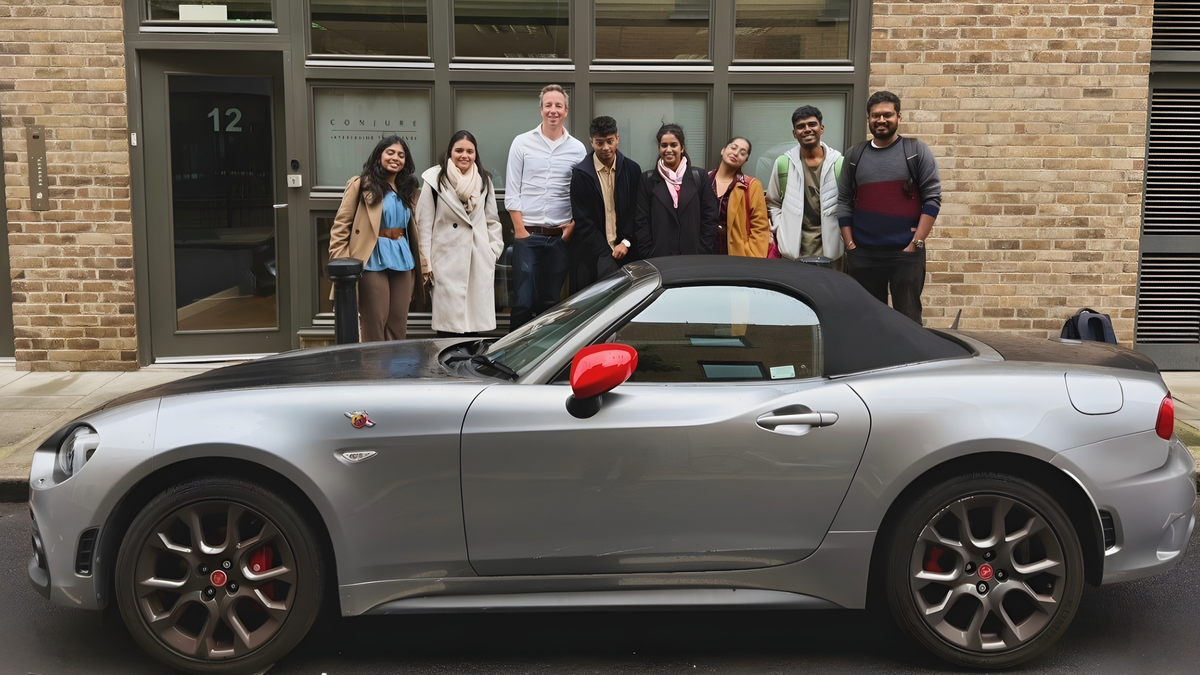
Sam Clark, Conjure’s Founder and CEO, led a generous, high-context session. We left feeling wiser, hungrier, and very grateful for the openness and candour.
This essay distils a wide-ranging conversation about HMI practice across domains — automotive (from supercars to motorcycles), emergency care, and heavy industry into concrete guidance for designers.
It focuses on three things: how to research and prototype fast without losing rigour, what to steal from human factors history when the stakes are high, and why physical controls are back (for good reasons).
Research that moves the work forward (not just the deck)
Assume the client knows more, then close the gap fast. Out of the gate, domain experts (OEMs, paramedics, rig operators) will out-knowledge the design team. Treat discovery as a high-throughput interview pipeline: bring users on-site, ask what actually helps or hurts, and fold that into live prototypes while they’re still in the room.
Prototype while they talk. Use rapid tools (e.g., Figma) to mock flows in parallel with interviews; hand participants tappable prototypes before the session ends. For interaction nuance and edge cases, move to higher-fidelity interactive tools (e.g., ProtoPie) as soon as you see patterns. The loop is: listen → sketch → try → adjust — minutes and hours, not weeks.
Reality check the personas. In luxury segments, buyers are often not the “hero” persona from the mood board; brand loyalty can dominate rational HMI preferences. In mass or safety-critical contexts (trucks, ambulances, rigs), usage fit beats brand theatre every time. Calibrate your research depth to the segment’s decision drivers.