EPC Unscripted: Behavioural understanding of the Indian consumer.
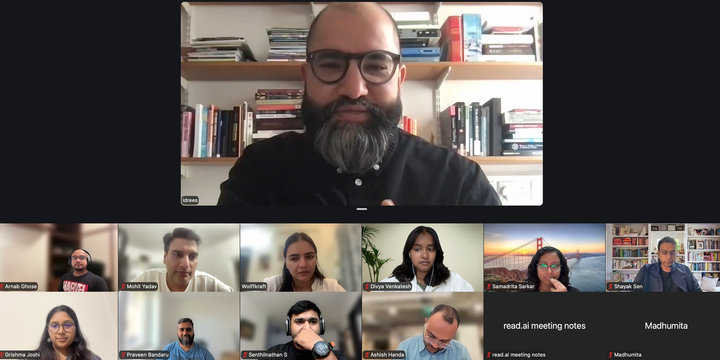
EPC hosted an Unscripted session on understanding the Indian consumer beyond stereotypes. With leaders from Amazon, Flipkart and 1990 Research Labs, we explored how trust, aspiration, culture, and context shape product decisions in India. The following is a 10-point documentation of the session.

The Indian consumer segment is not clean. It is a convenient business label for a dense, uneven, adaptive, aspirational, and deeply contextual population. The most important lesson from the session was not that India is diverse, but that India cannot be understood through demographics, sample size, language translation, or adoption numbers alone. India has to be understood in the context of behaviour.
A user researcher in India is not simply collecting user feedback. They are translating between offline life and online behaviour. They are studying how trust is formed, how decisions move through households, how aspiration overrides affordability, how confidence is built, how people delegate, how they game systems, how they resist, and how they improvise. The session discussed the role of UXR: moving beyond what users say, interpreting what they mean, and connecting digital behaviour with offline context.
1. Stop treating the “Indian consumer” as a real persona
The phrase “Indian consumer” works for market sizing, but it breaks down the moment a team starts making product decisions. India is not one behavioural system. It contains multiple trust structures, cultural norms, income rhythms, household arrangements, linguistic realities, aspiration models, and decision-making environments.
The mistake many teams make is assuming that access equals adoption. A person may have a smartphone, cheap data, UPI access, WhatsApp fluency, and still not feel confident enough to complete a purchase, save a card, trust a return promise, use a digital loan, or depend on an AI assistant. Digital fluency is not digital adoption. This distinction is central for every business leader designing for India.
Product teams must stop using adoption infrastructure as proof of behavioural readiness. A large smartphone base does not mean a large confident user base. A UPI-enabled market does not mean that every user is equally comfortable with digital money. A WhatsApp-native user is not automatically an e-commerce-native user.
Actionable takeaway: Replace “target user” with “target context.” Before defining the user, define the decision environment: household income, device ownership, trust sources, language comfort, cash flow, decision-maker, influencer, and perceived risk.
2. Bigger sample sizes do not correct weak interpretation
One of the most important points in the session was that sample size does not guarantee insight. Teams often respond to India’s complexity by increasing coverage: more cities, more income groups, more age groups, more respondents. But if the research question is shallow, the scale yields shallow findings with greater confidence.
For example, a team may define Tier 2 and Tier 3 users as price-conscious, e-commerce-aware, and convenience-seeking. A larger sample may confirm that these users use WhatsApp, YouTube, and low-ASP shopping apps. But the real issue may not be price. It may be checkout confidence. It may be mistrust of value claims. It may be a fear of getting stuck after payment. It may be uncertainty about returns.
The research task shifts from “How do we attract price-sensitive users?” to “How do we build trust and confidence across the purchase journey?”The craft of research lies in moving from observation to finding to actionable insight. Observation is what happened. Finding is the interpreted pattern. Insight is the business-relevant behavioural truth that can shape decisions. Many teams collapse these stages and call user statements “insights.” This weakens research and makes leadership less likely to trust it.
Actionable takeaway: Create an interpretation discipline. Every research readout should separate raw observations, interpreted findings, and decision-grade insights. Do not let anecdotes travel into strategy without context, patterning, and synthesis.