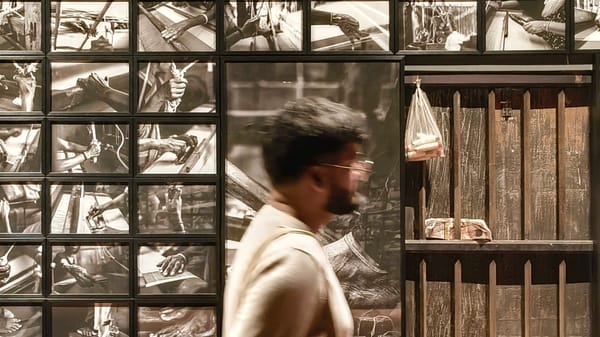
"For the Time Being" at the Kochi Biennale.

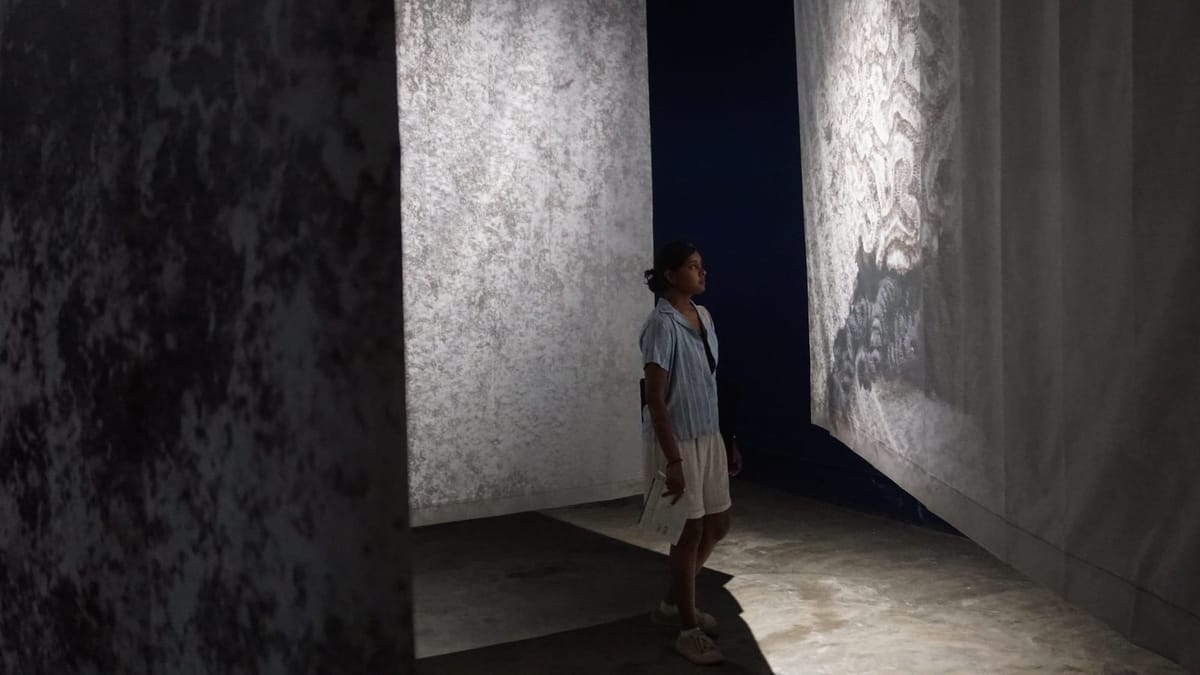
An exploration of a living ecosystem of art and culture in the historic port city of Kochi - by Divya Venkatesh, UI & Graphics Designer at Wolffkraft.
Over four days, the Kochi Muziris Biennale revealed itself not as something to be rushed through, but as something to move with; embracing the pace of the city and allowing the art, the place, and the people to gradually shape the experience.
Why Kochi? The Biennale’s roots in the port city.
Unlike many biennales that unfold within the confines of a single exhibition hall, the Kochi Muziris Biennale spreads across the streets, courtyards, warehouses, and cafés of Fort Kochi and Mattancherry, transforming them into art spaces. Art does not sit behind walls here; it lives within the city.
The Biennale feels less like visiting an exhibition and more like stepping into an evolving cultural landscape. The experience unfolds slowly between narrow streets and unexpected art spaces; small cafés become galleries for emerging artists; colonial architecture opens its doors to installations; and old spice warehouses along the backwaters quietly hold works from across the world.
Why Fort Kochi and Mattancherry are ideal for a 120-Day Art exhibition?
The fort's compactness
Fort Kochi and Mattancherry are compact localities in West Kochi, Kerala. Together, these historic, water-bound neighbourhoods span roughly 4.13 km², forming a small yet dense and culturally significant part of the larger city.
Often referred to as “Old Kochi,” the region is characterised by narrow streets, heritage buildings, and colonial-era architecture that define the area's cultural richness. At the same time, the area’s ageing warehouses and spice godowns near the port provide expansive spaces that allow the Biennale to inhabit sites throughout the neighbourhood.
A city small enough for coincidences
The city itself makes this expansion effortless, with clusters of exhibits spread across neighbourhoods that invite visitors to move between them, taking a calm ferry ride to the neighbouring Wellington Island warehouse, walking through narrow streets to discover art galleries, café spaces, or hopping onto a rickshaw to shorten the journey and spend more time immersed in the art. In a city this compact, coincidences feel inevitable. Over four days, we happened to take the same auto-rickshaw twice, from two different spots at different times.
Every Scene a Canvas
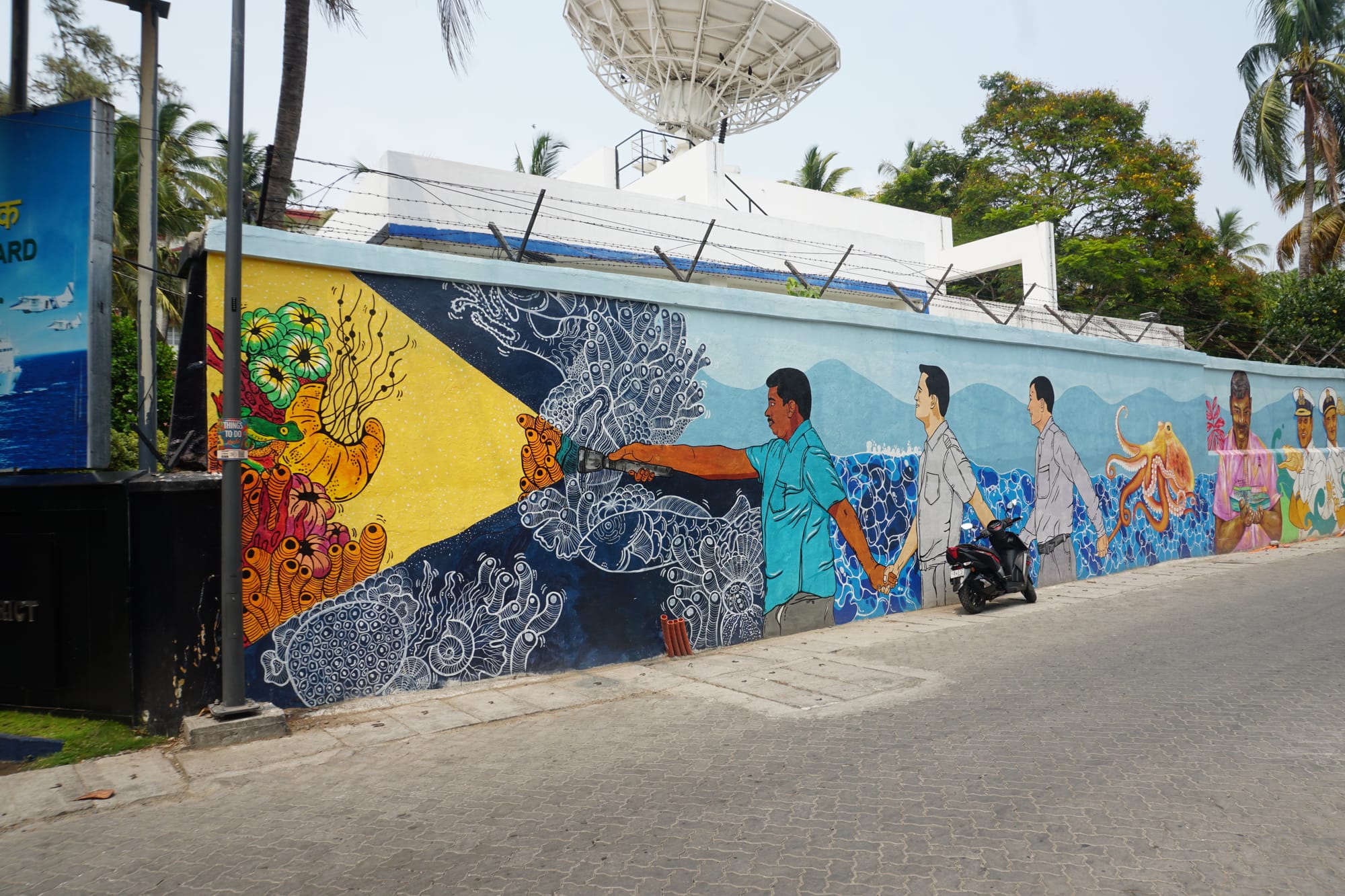
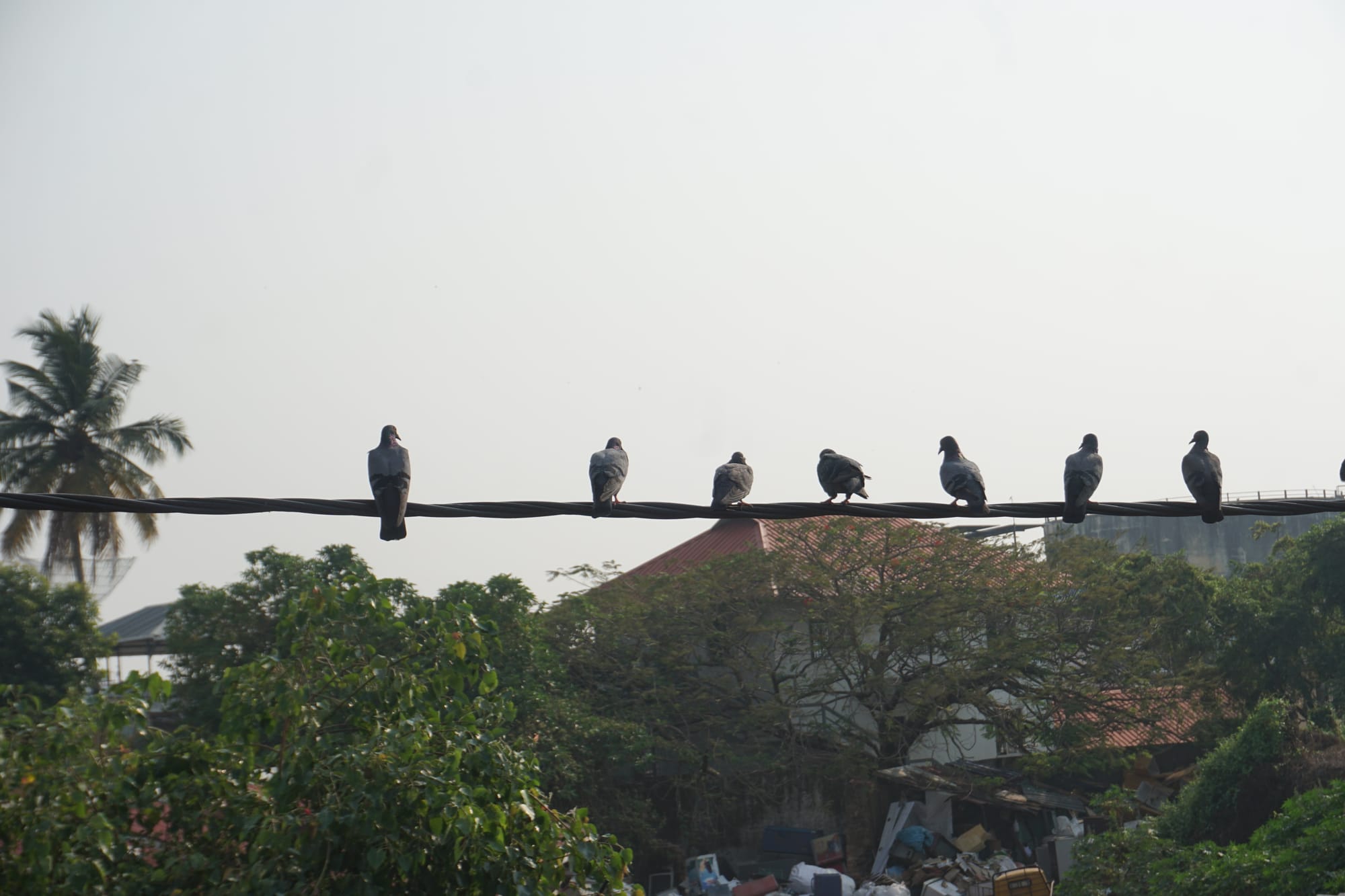
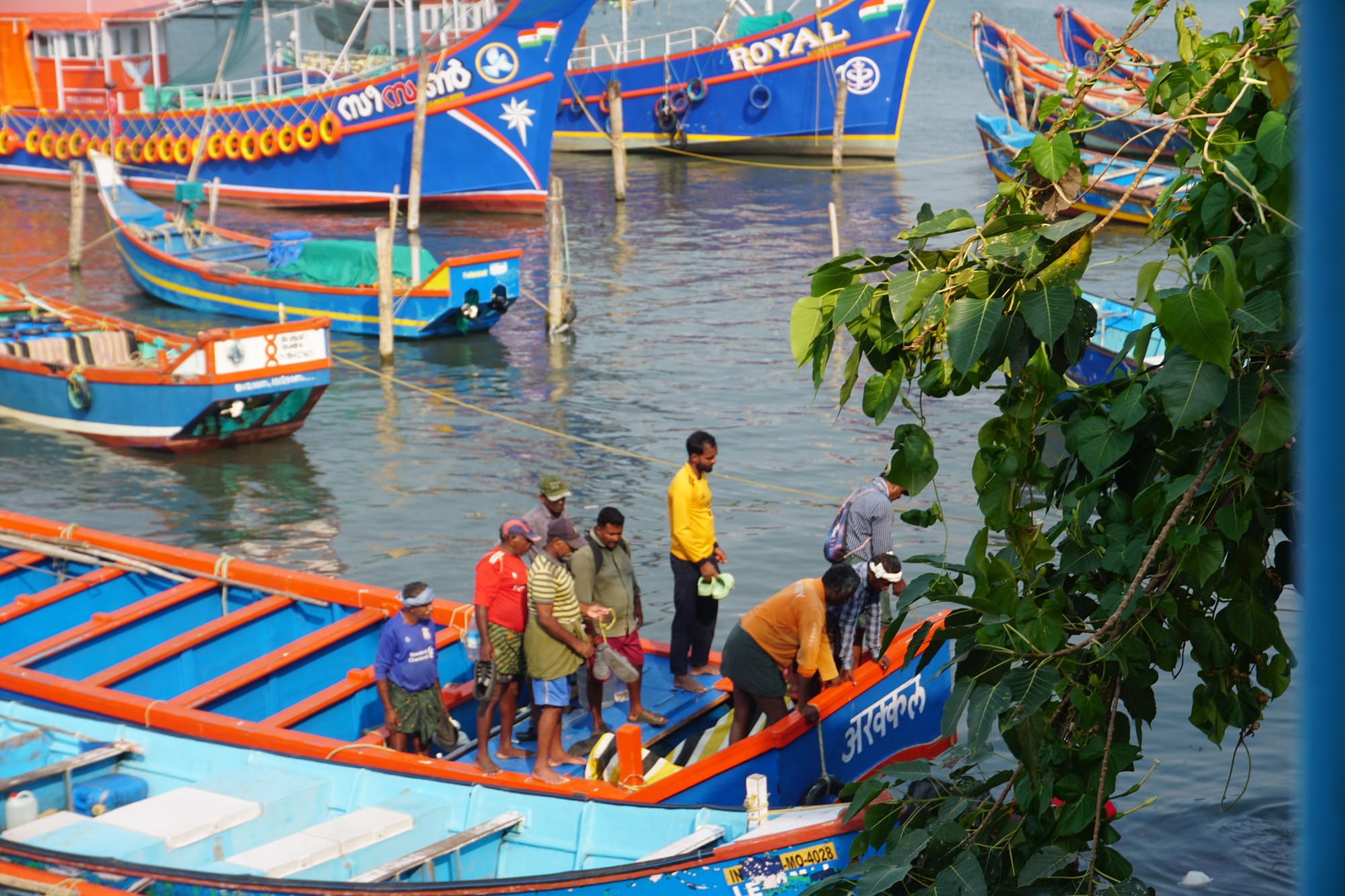
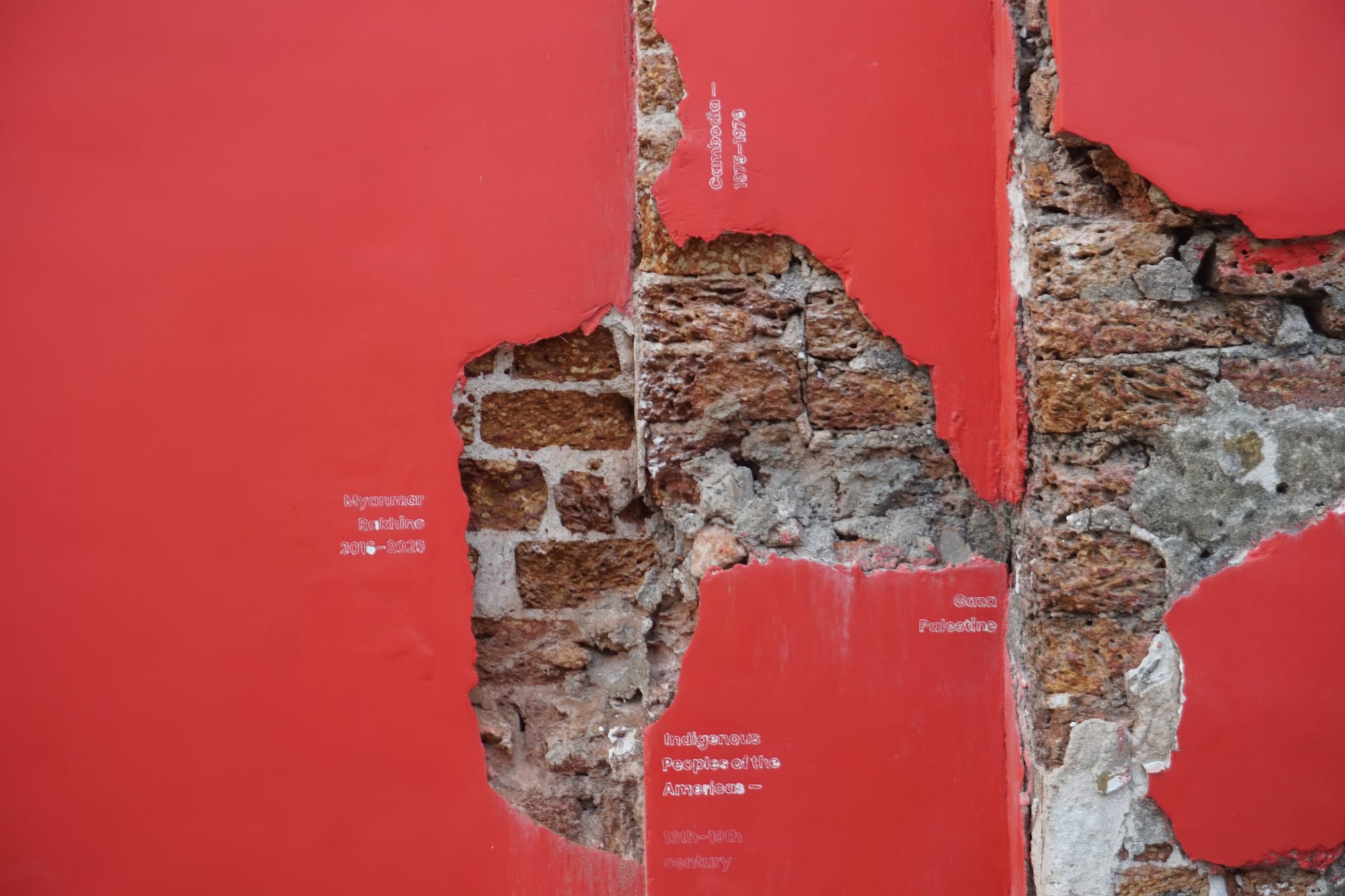
From narrow, colourful passages that unexpectedly led to exhibits to the murals and graffiti across the town, each standing out in its own way. The vibrancy of the wall art, the textures of old buildings and pavements, the greenery that quietly frames the streets, and boats drifting along the shore together create a city that feels visually alive, making almost every corner feel like a frame worth capturing.
For the Time Being: Interpreting the 6th edition's theme
The sixth edition of the Kochi–Muziris Biennale, curated by Nikhil Chopra with HH Art Spaces, an artist-led organisation based in Goa, unfolds under the theme For the Time Being. The theme invites audiences to pause, stay present, and engage with art as an evolving process rather than a fixed outcome. It speaks to the idea of temporality how things exist, transform, and leave traces within a certain span of time.
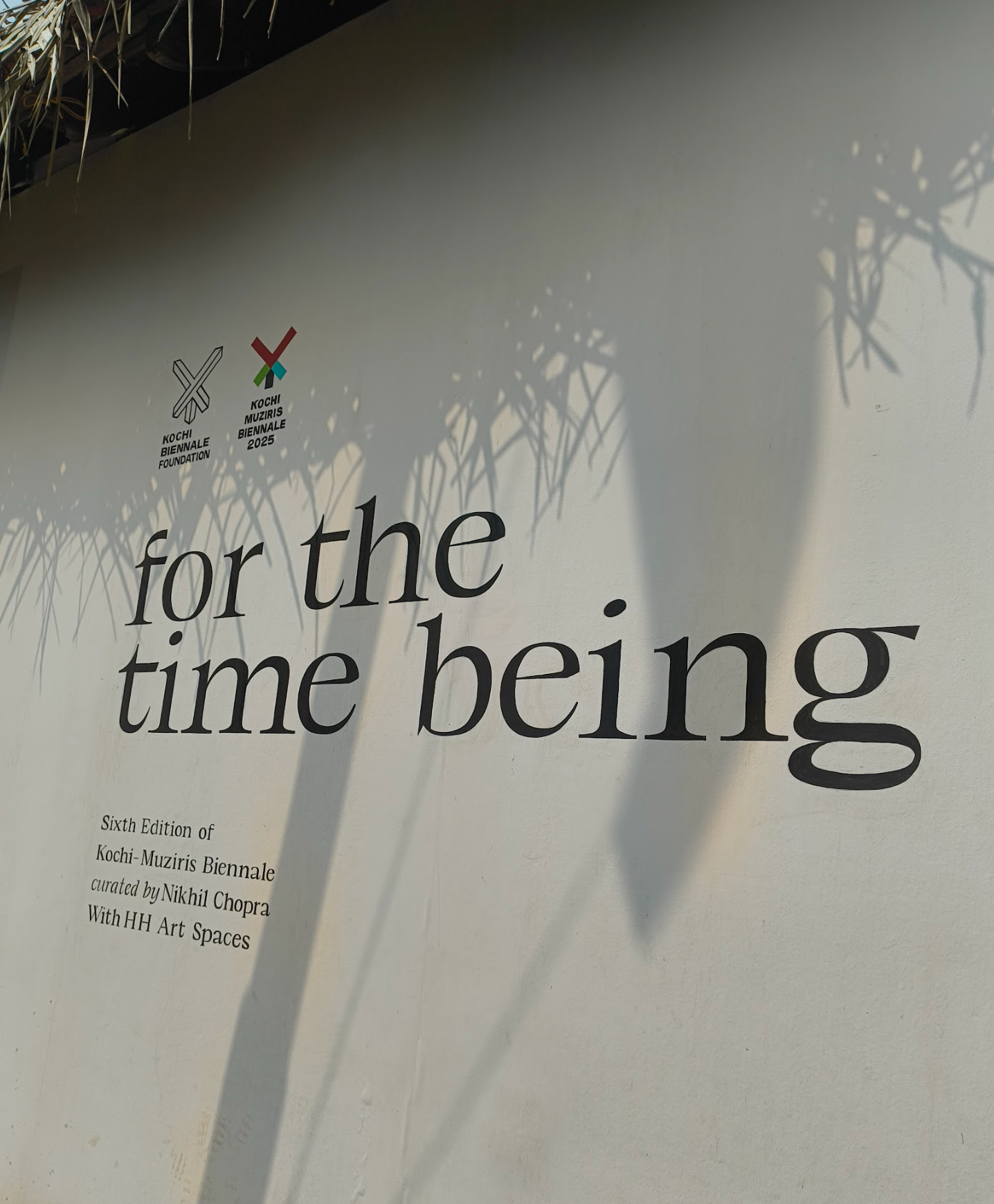
In many ways, the Biennale itself embodies this idea. For 120 days, the streets, warehouses, cafés, and historic spaces temporarily transform into sites of artistic dialogue before returning to their everyday rhythms. The artworks, the spaces they inhabit, and the encounters they create all exist for the time being.
Many Layers of the Biennale
The Biennale unfolds through multiple programmes that together form a wider ecosystem of art. At its core is the main Kochi–Muziris Biennale exhibition, presenting works by international artists across venues in Fort Kochi and Mattancherry, while the Students’ Biennale highlights emerging artists from art schools across India.
Interactive spaces like the ABC Art Room invite visitors to create and engage with art, while initiatives such as Edam, Invitations, and Collaterals expand the festival through regional artists and parallel exhibitions. Alongside these, the Pavilion hosts talks and discussions, further enriching the Biennale’s cultural dialogue.
Highlights from the Biennale
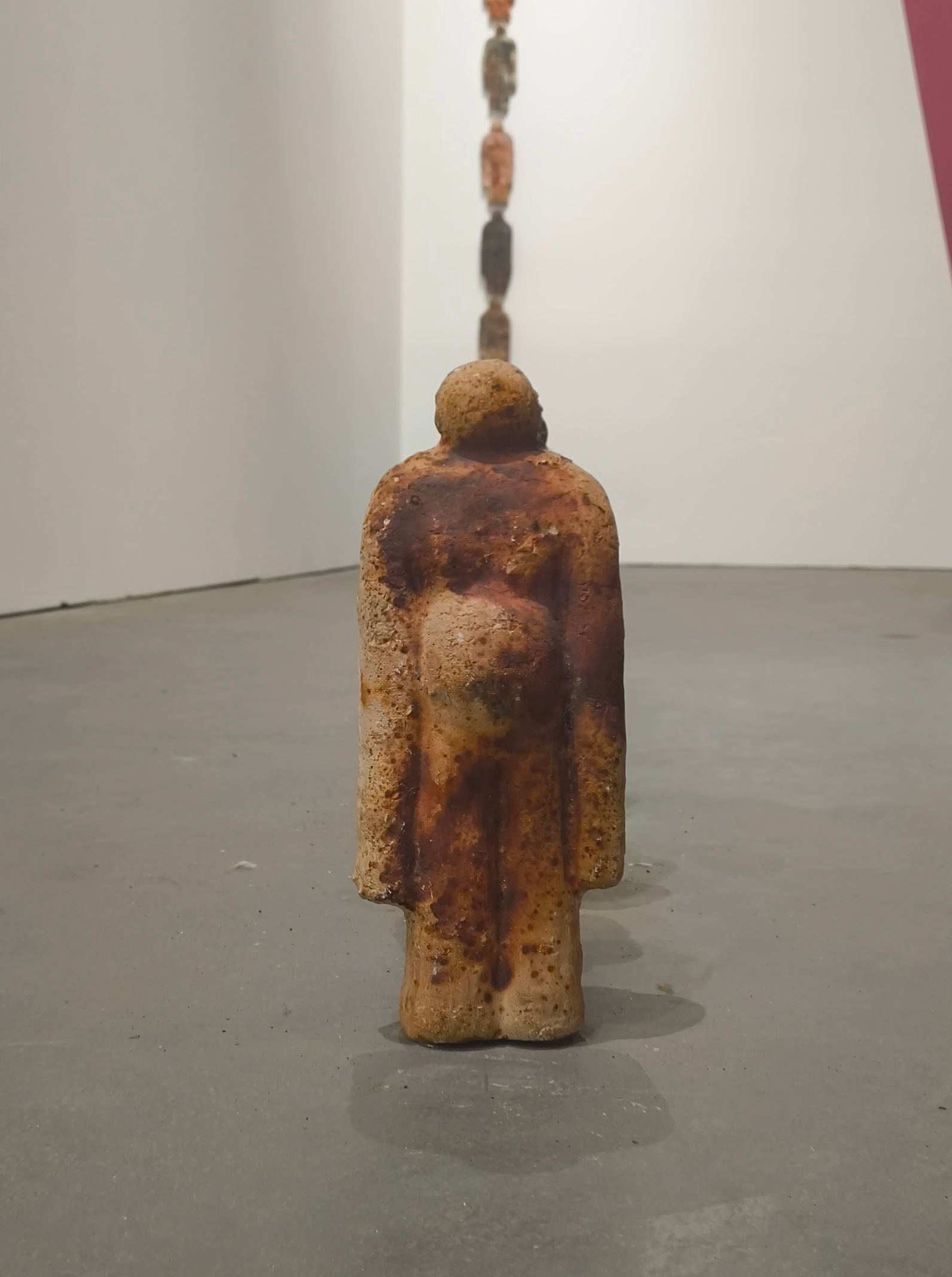
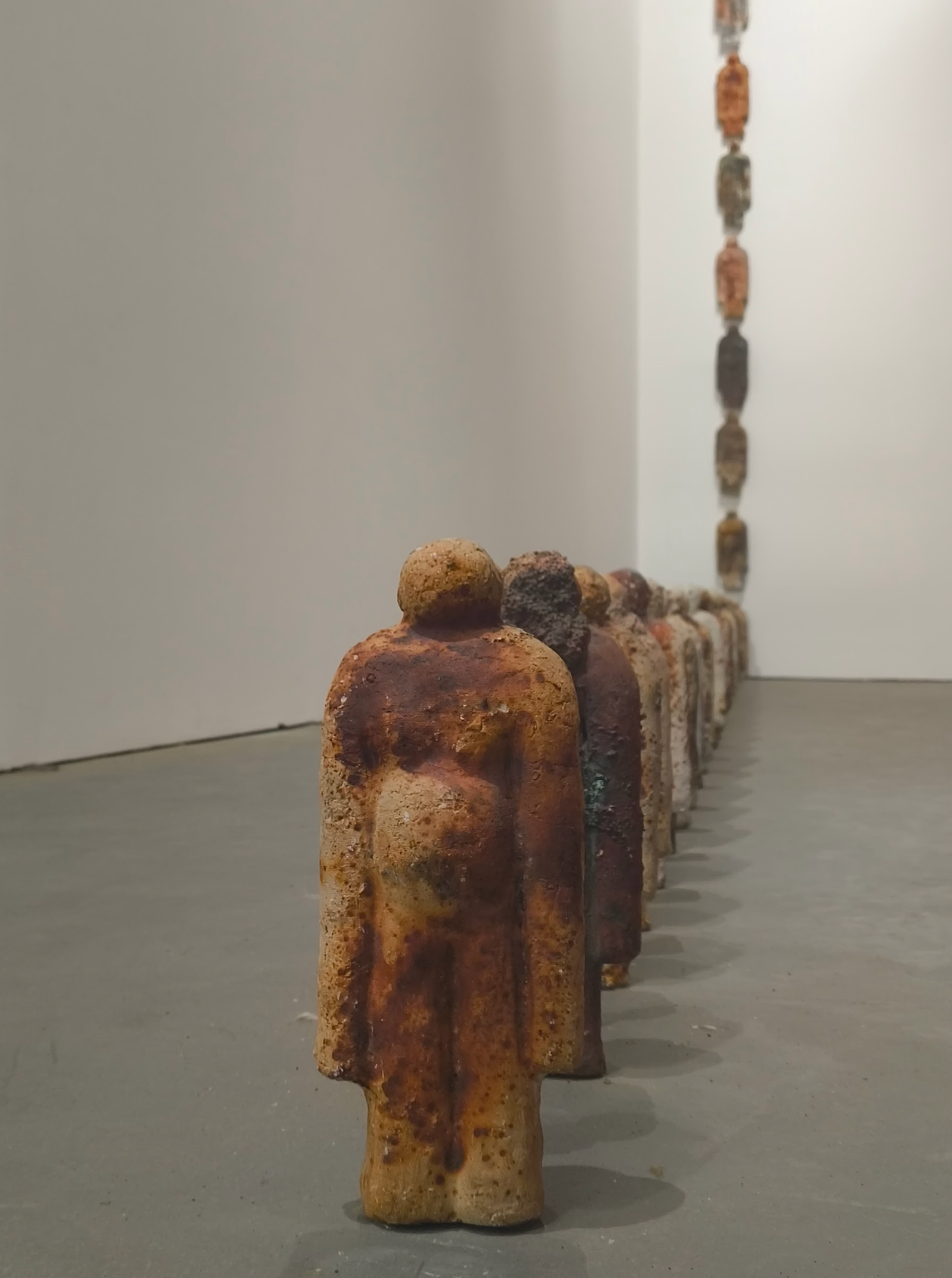
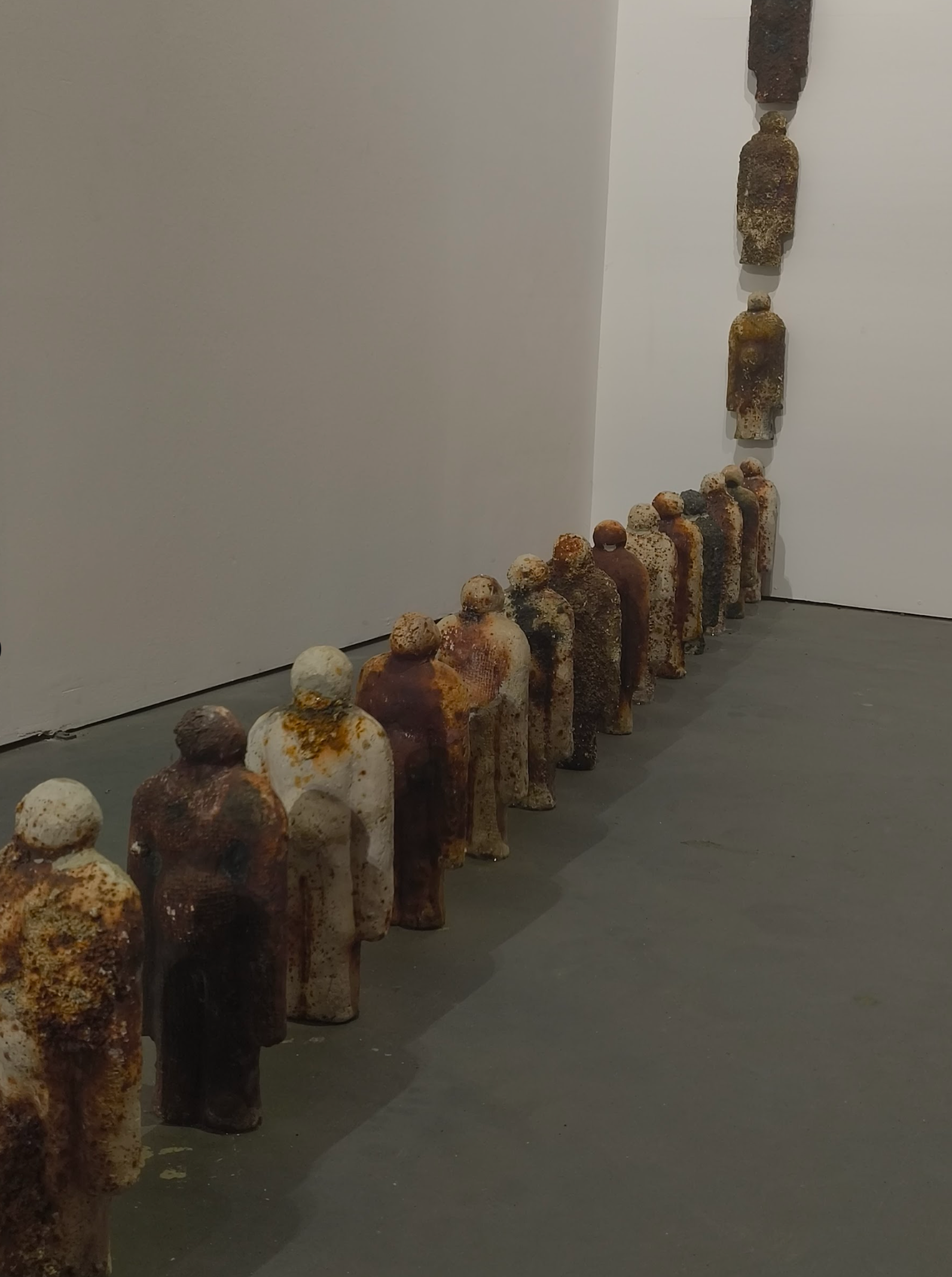
The sculptural works of Arun B draw attention through their raw materiality. Working with iron, found objects, and rough surfaces, the artist creates forms that appear both resilient and fragile. His sculptures often transform familiar elements into figures that feel simultaneously recognisable and uncanny, as if caught in a moment of movement or becoming.
The works seem to exist in a state of transition, where form feels alive and performative rather than static. In relation to the Biennale’s theme For the Time Being, these sculptures resonate with the idea of impermanence, transformation, or movement, evident at a glance, capturing objects and bodies in moments that feel temporary, evolving, and suspended in time.
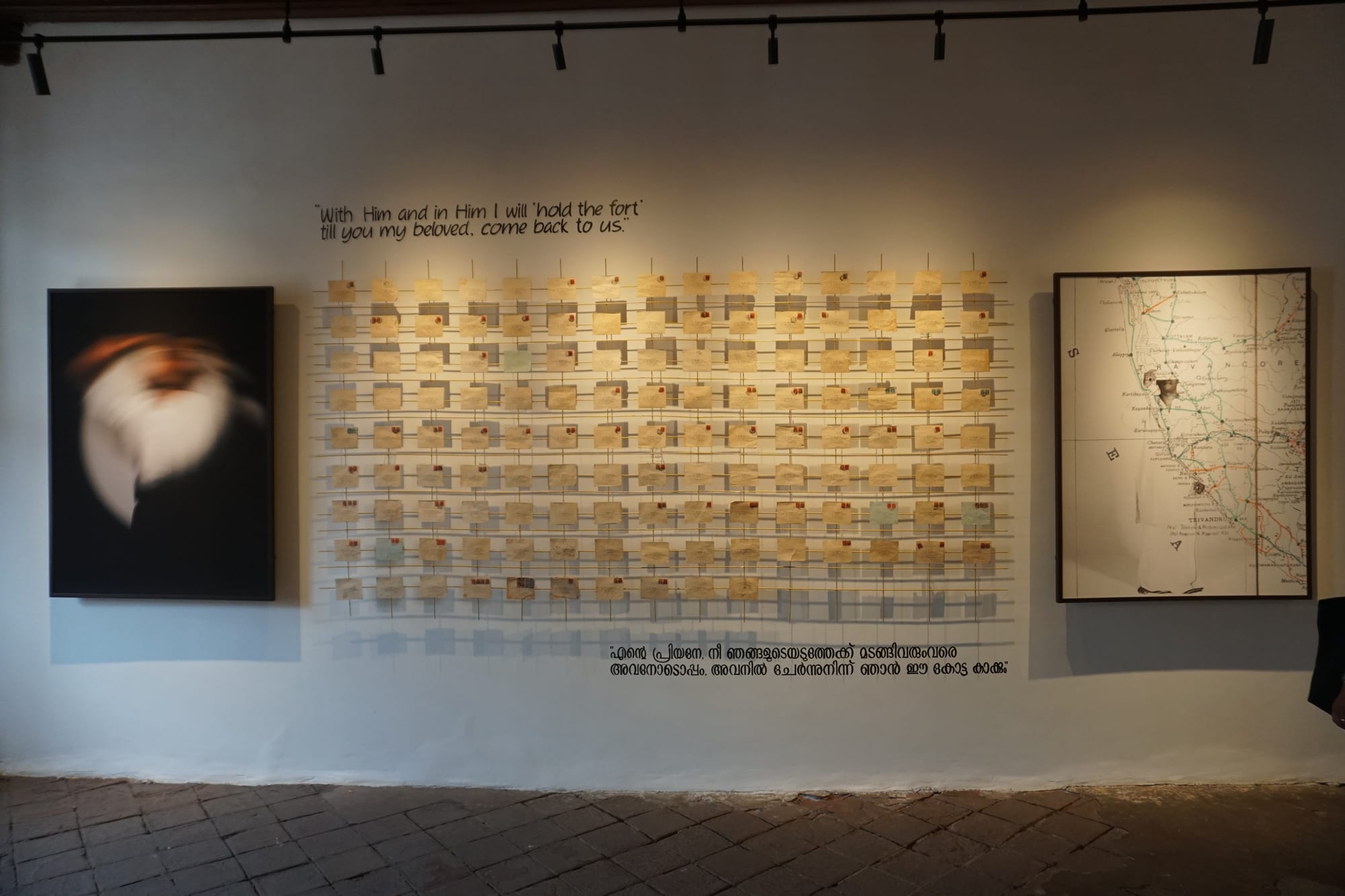
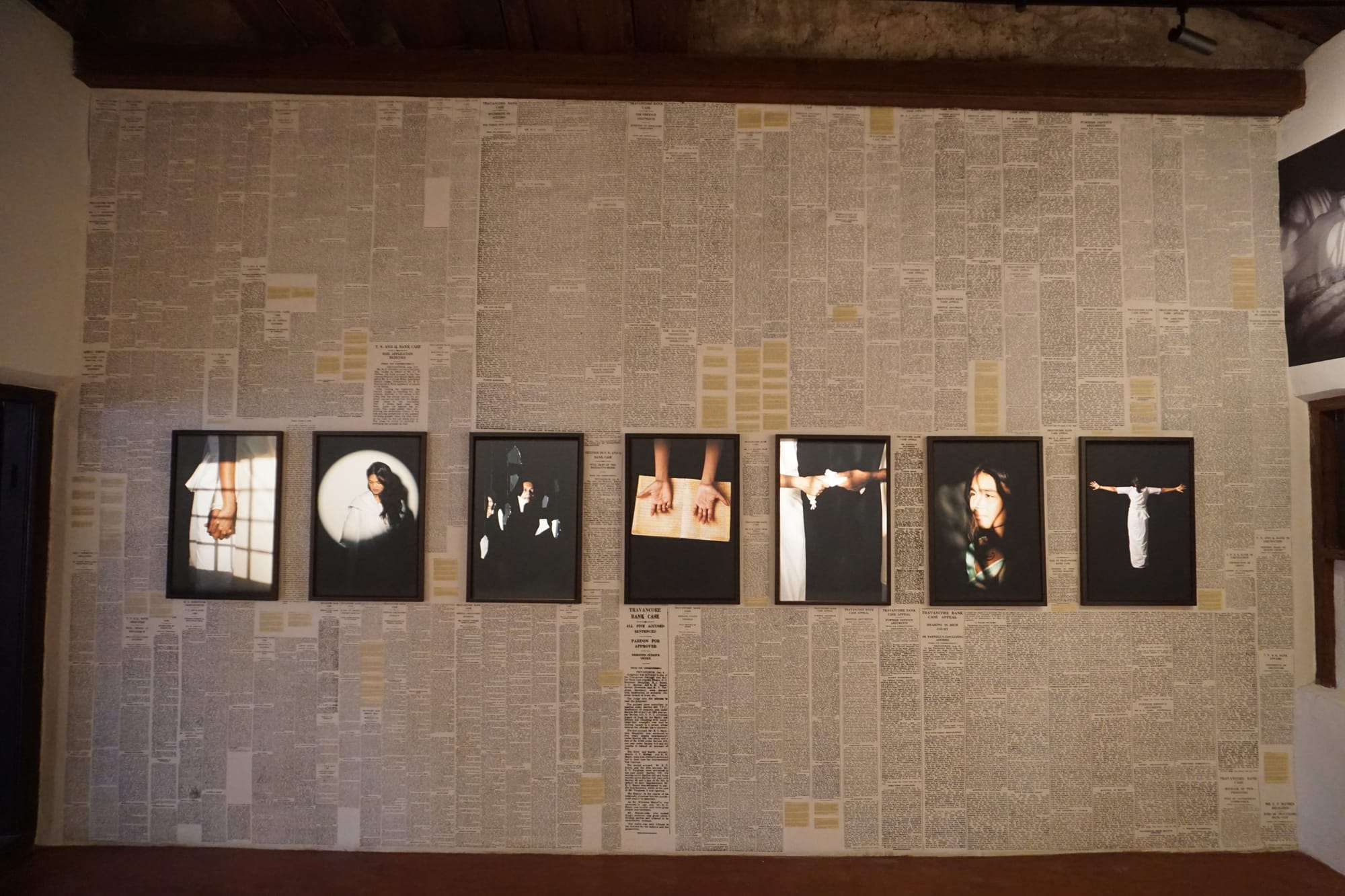
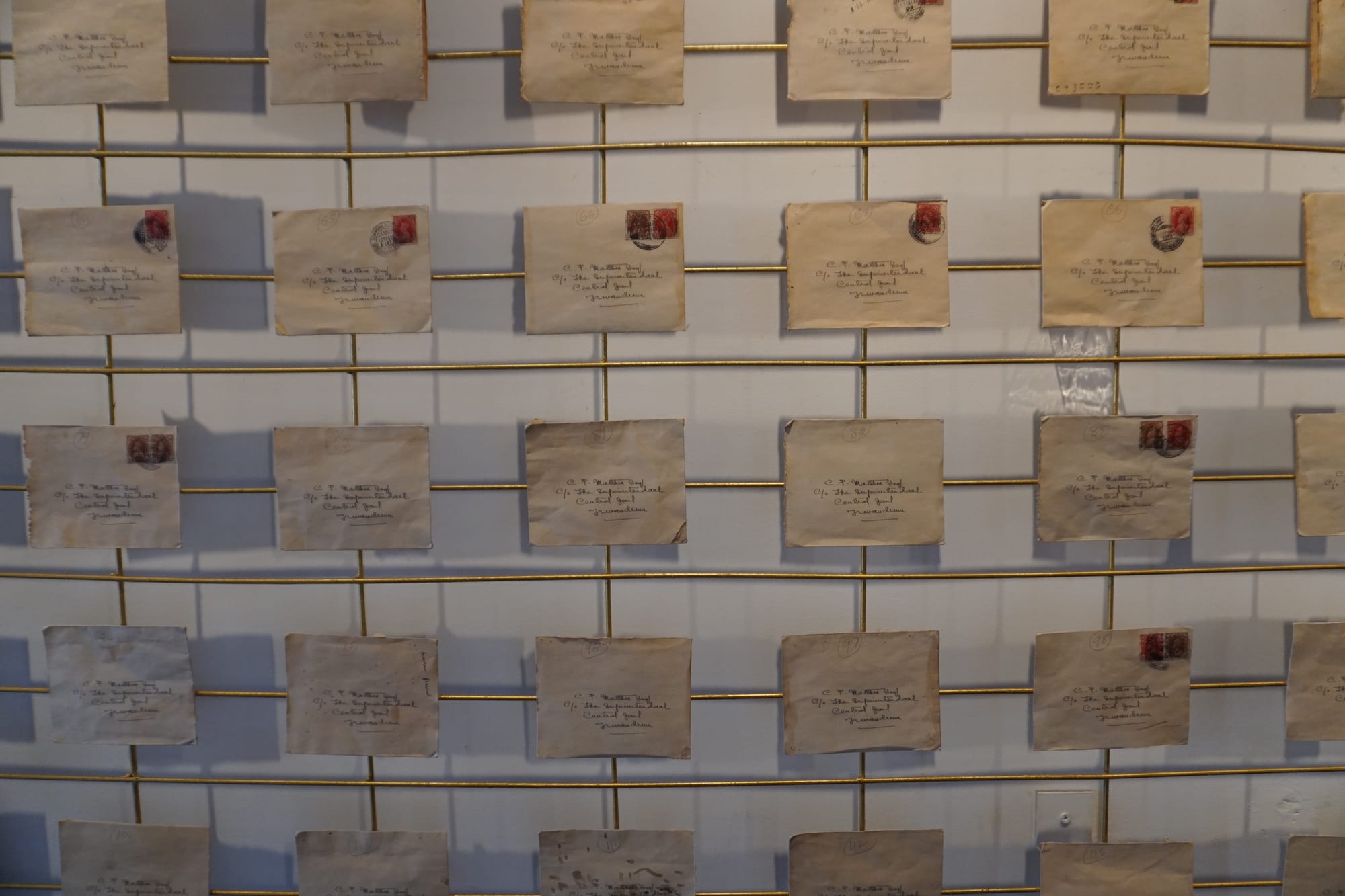
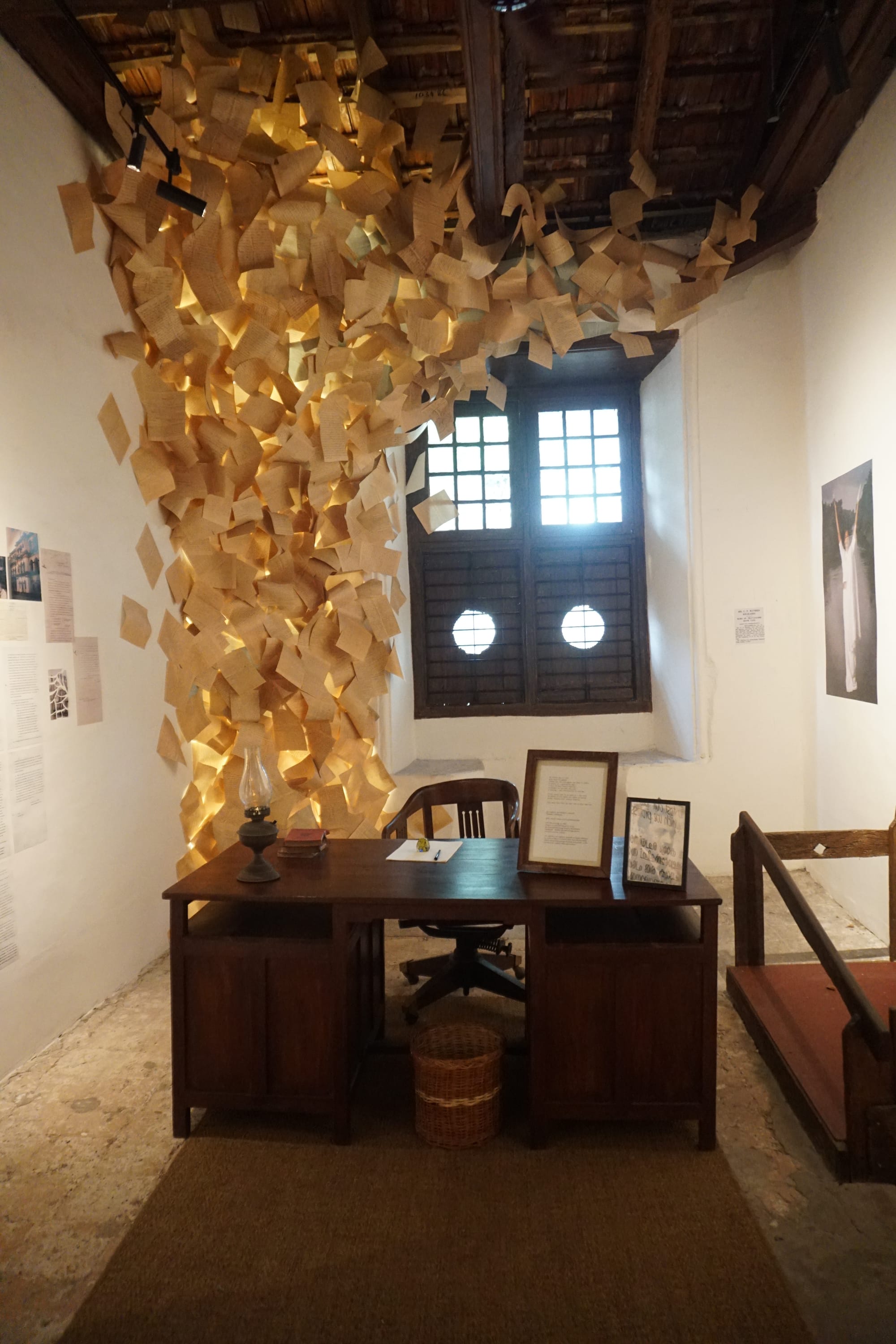
Lilies in the Garden of Tomorrow by Sarah Chandy is a deeply personal and archival exploration of memory, resilience, and intergenerational storytelling. Drawing from the letters and diaries of Eliamma Matthen, her great-grandmother-in-law and a Syrian Christian woman from South India. The exhibit spoke through photographs and intimate narratives; the project reflects on how women often carry and preserve family histories that remain unseen.
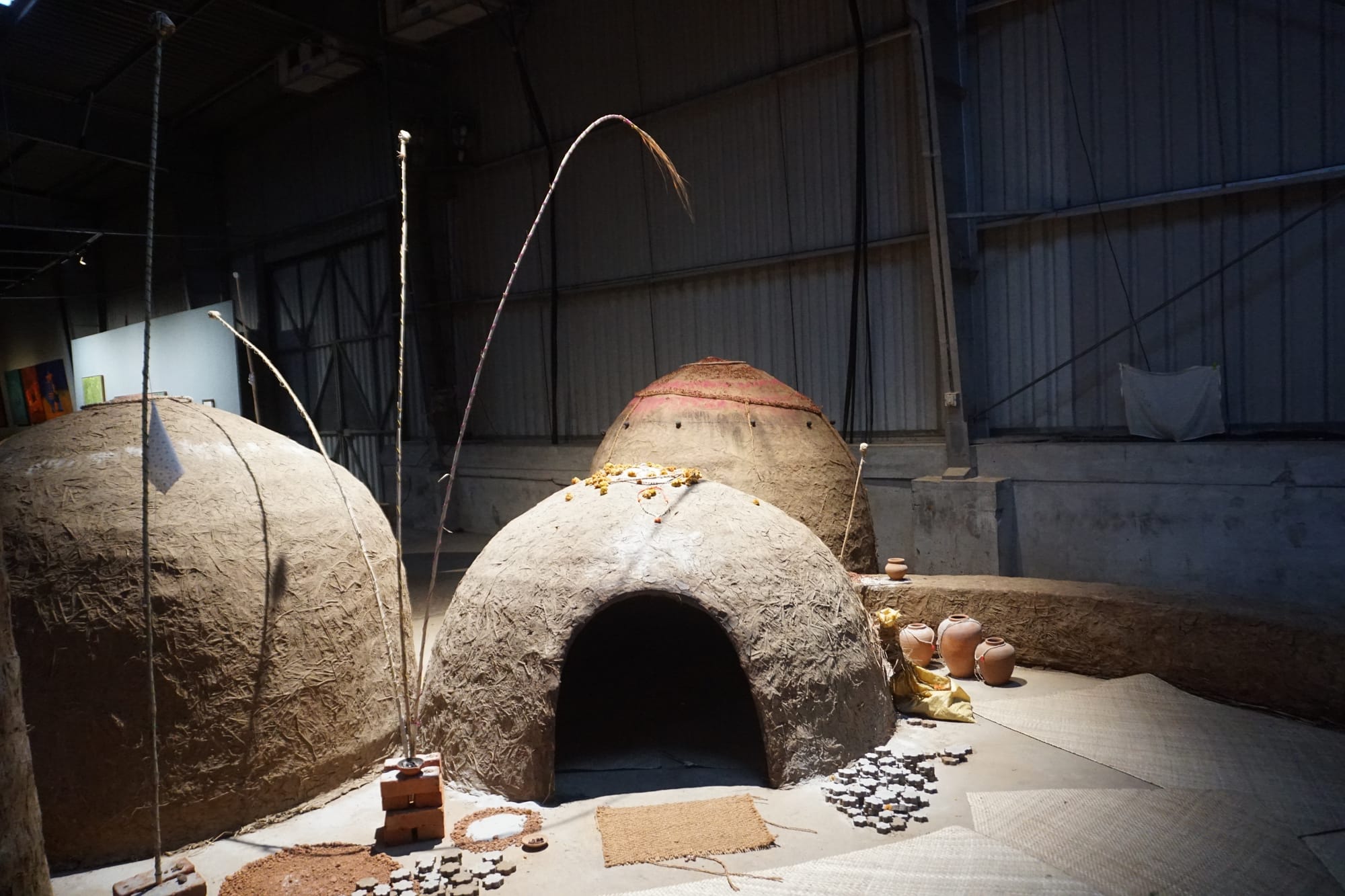
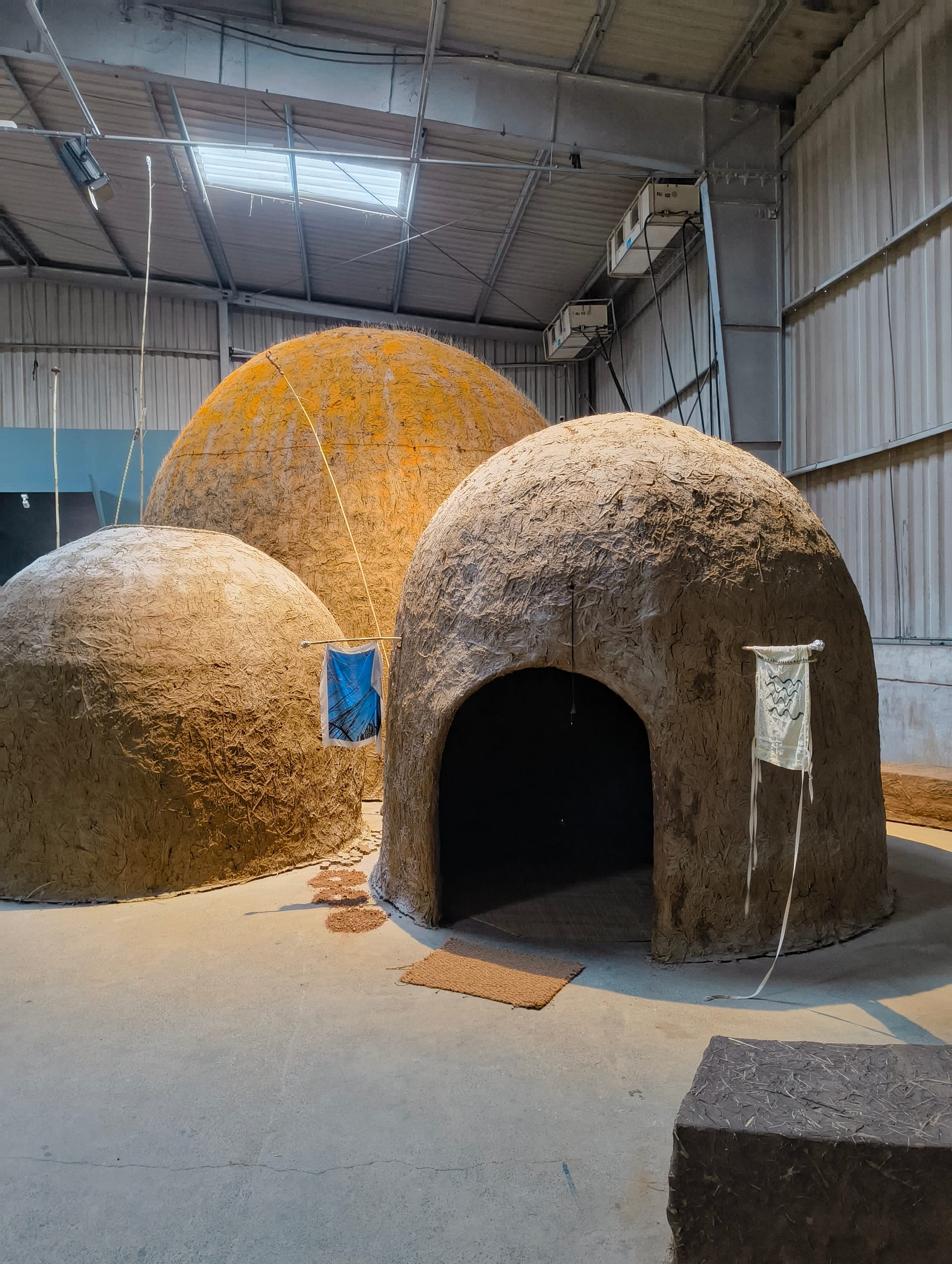
Dineo Seshee Bopape’s Mme Mmu, Bhumi Bhumi is an installation built around nine earth mounds that quietly transform the exhibition space into a site of reflection and grounding. The forms echo temple and stupa-like structures while drawing inspiration from Seolo termite mounds, which carry sacred significance in parts of southern Africa.
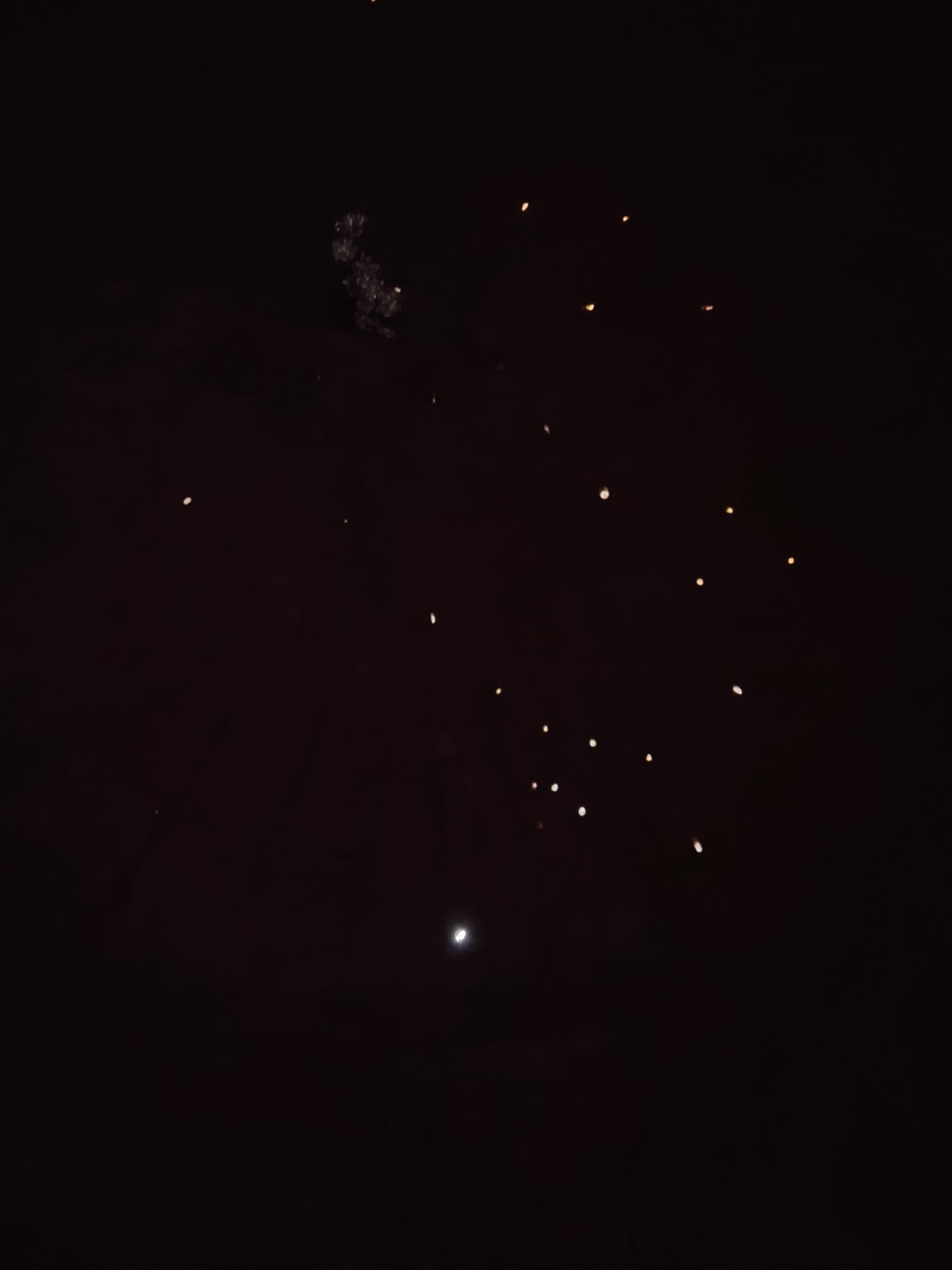
The space invites visitors to sit, pause, and simply be. For a brief moment, when one lies down inside the dome, the roof mimics the night sky, with small points of light resembling stars or constellations.
Rather than presenting something to merely observe, the work creates an environment that encourages stillness and presence, the installation becomes a reminder of grounding in the present moment where the earth itself acts as a quiet tuning fork, bringing the body and mind back to a slower, more human rhythm.
Encounters Beyond the Exhibits
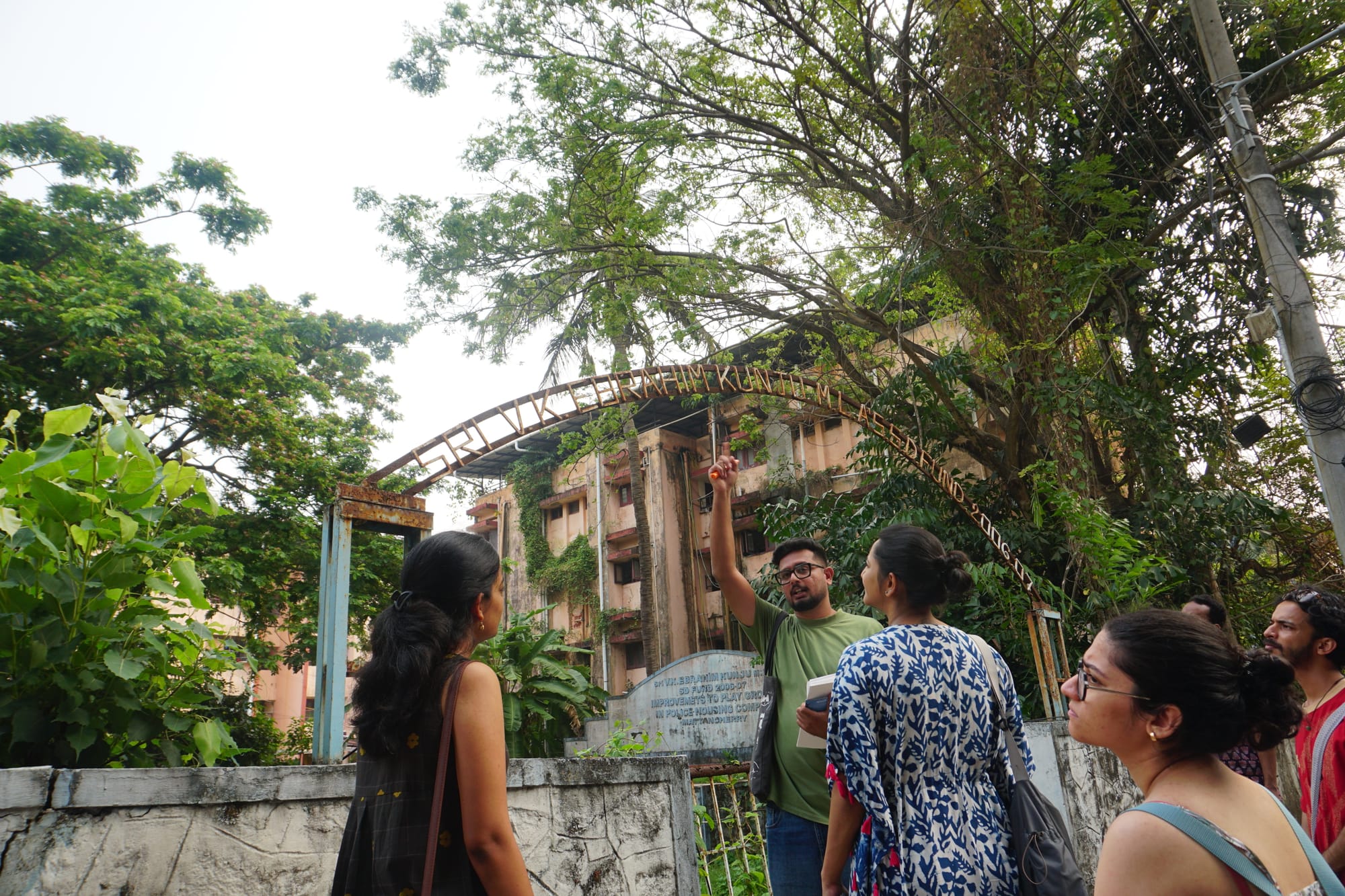
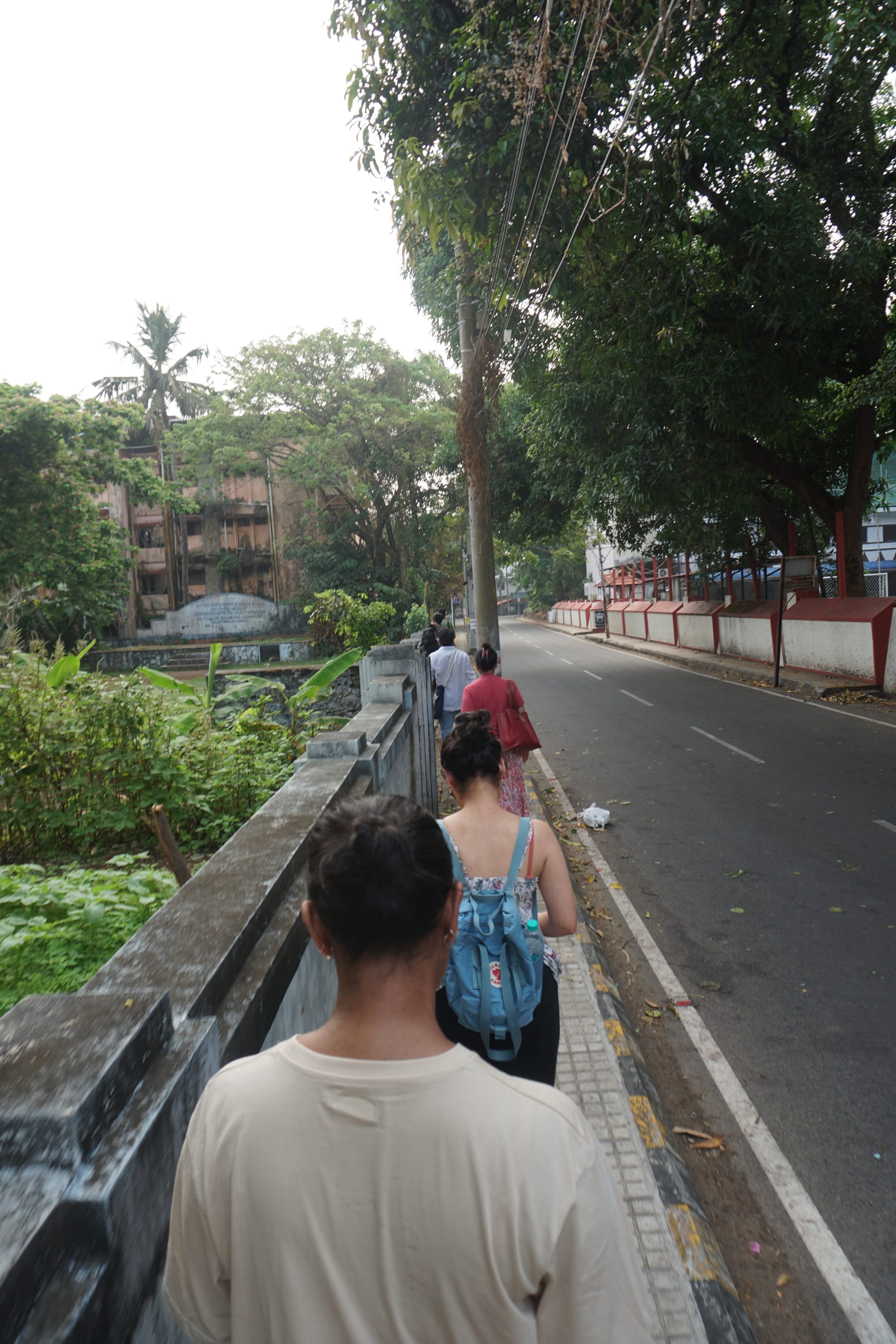
The Type-Walk led by Prajwal Xavier, was a refreshing start to the Biennale experience. What began as a simple walk through the streets of Mattancherry and Jew Town soon turned into an exploration of how history quietly lives through typography.
Starting near the Mattancherry Palace, we observed how Malayalam letterforms, signboards, and street inscriptions reflected layers of cultural influence left by different communities that once lived and traded here.
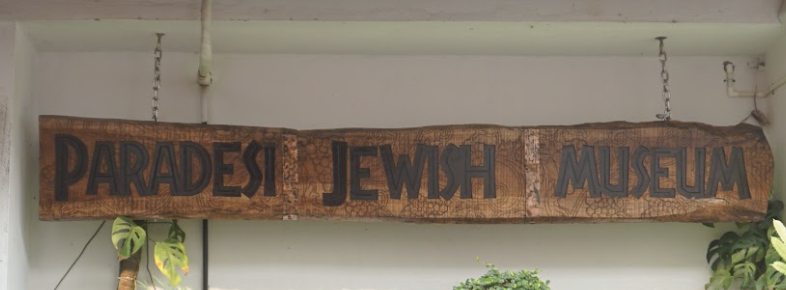
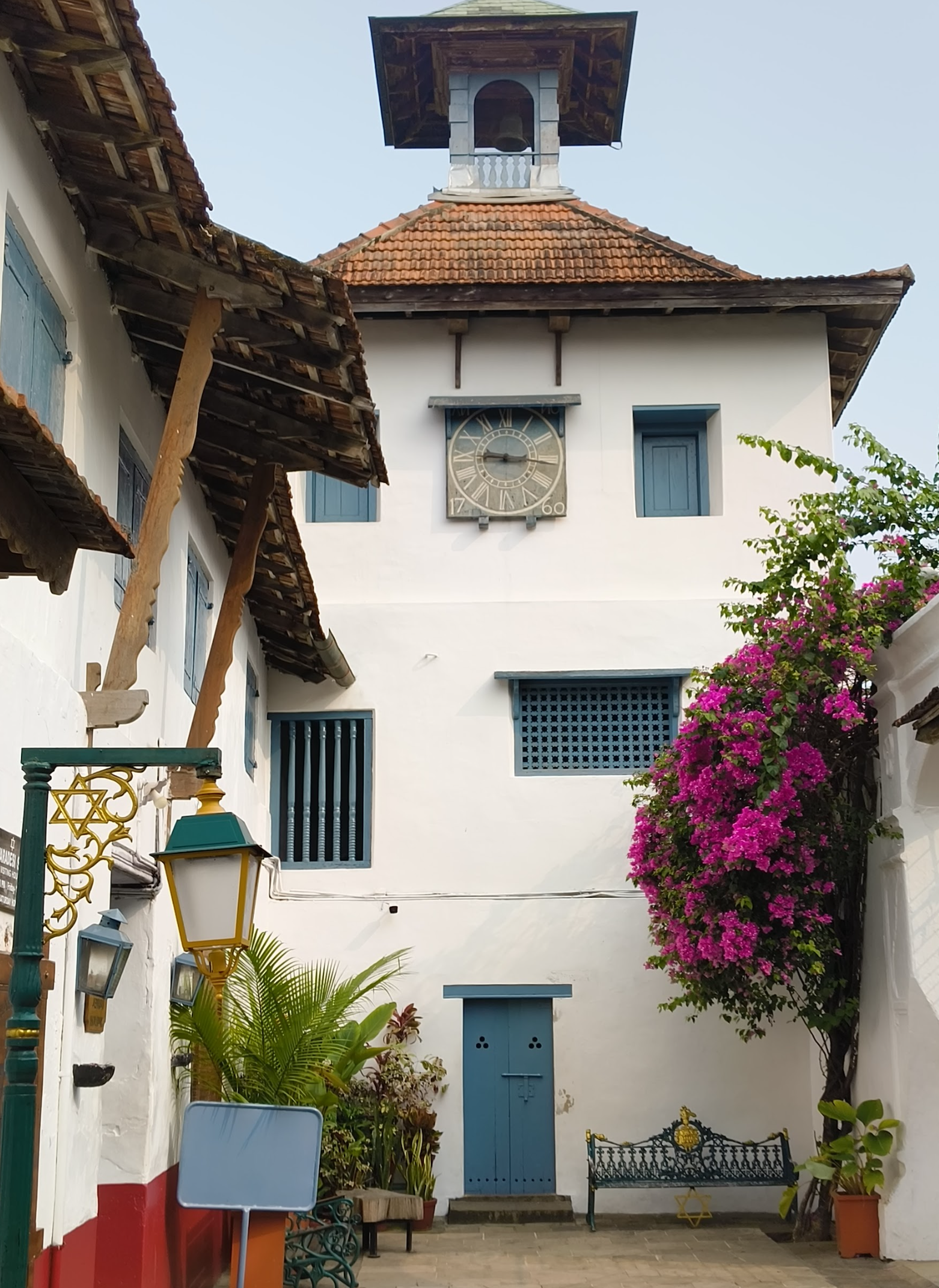
From noticing typefaces resembling the iconic Jurassic Park lettering on a museum signboard to observing how numerals were written in Hebrew, Malayalam, and Roman on the 18th-century clock tower at the Paradesi Synagogue, the walk revealed how typography becomes a subtle archive of the city’s history.
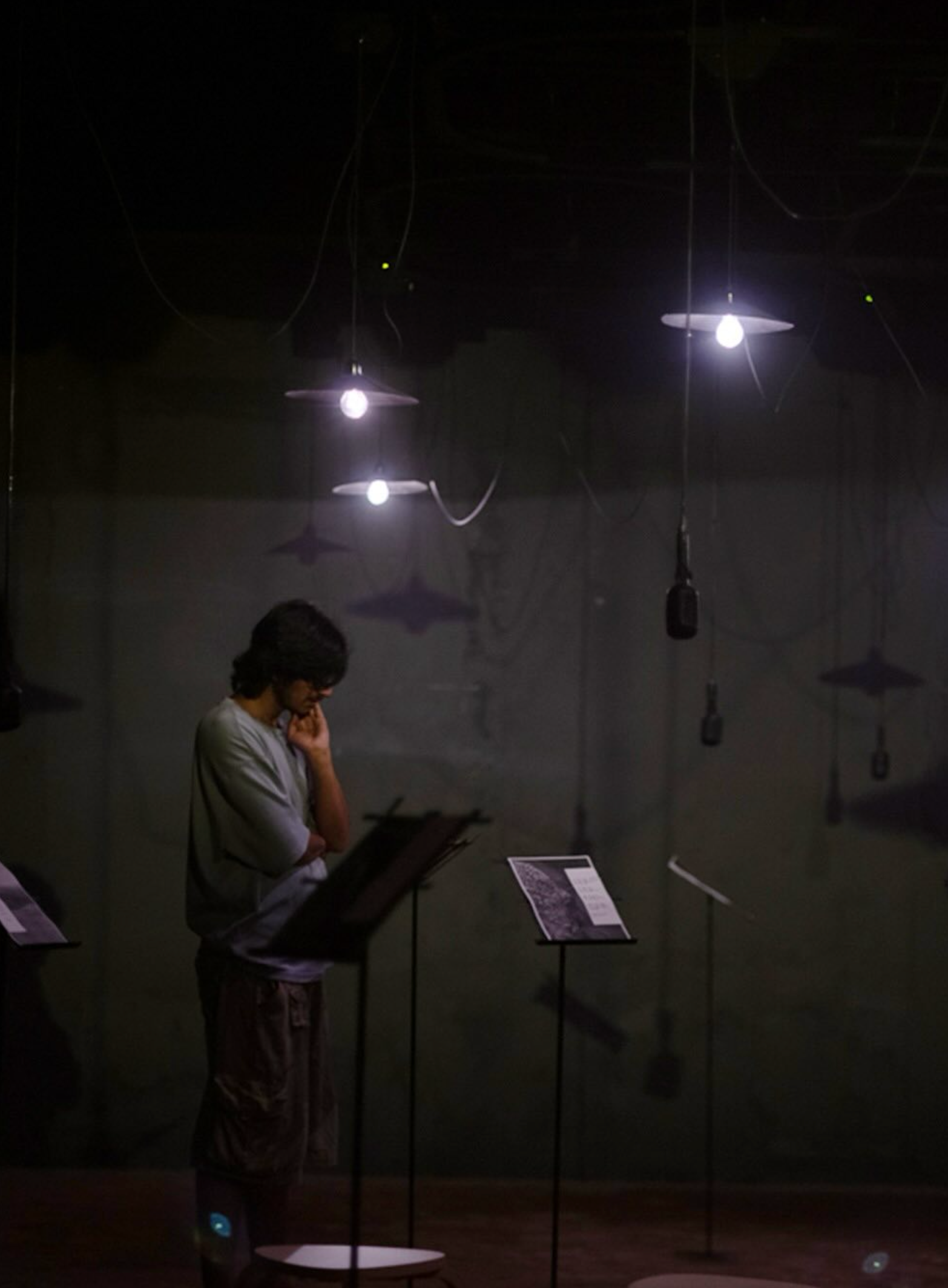
Listening Air by Shilpa Gupta, displayed at the Ginger House Museum Hotel, was a surprising encounter. Though not officially listed among the Biennale venues, the work stood out for the immersive experience it created. The multi-channel sound installation filled the space with overlapping voices drawn from songs of protest, labour, and resistance from around the world.
As microphones slowly moved through the room, fragments of these voices echoed and intertwined, creating a layered soundscape that reflected how language, memory, and collective histories travel across borders and generations.
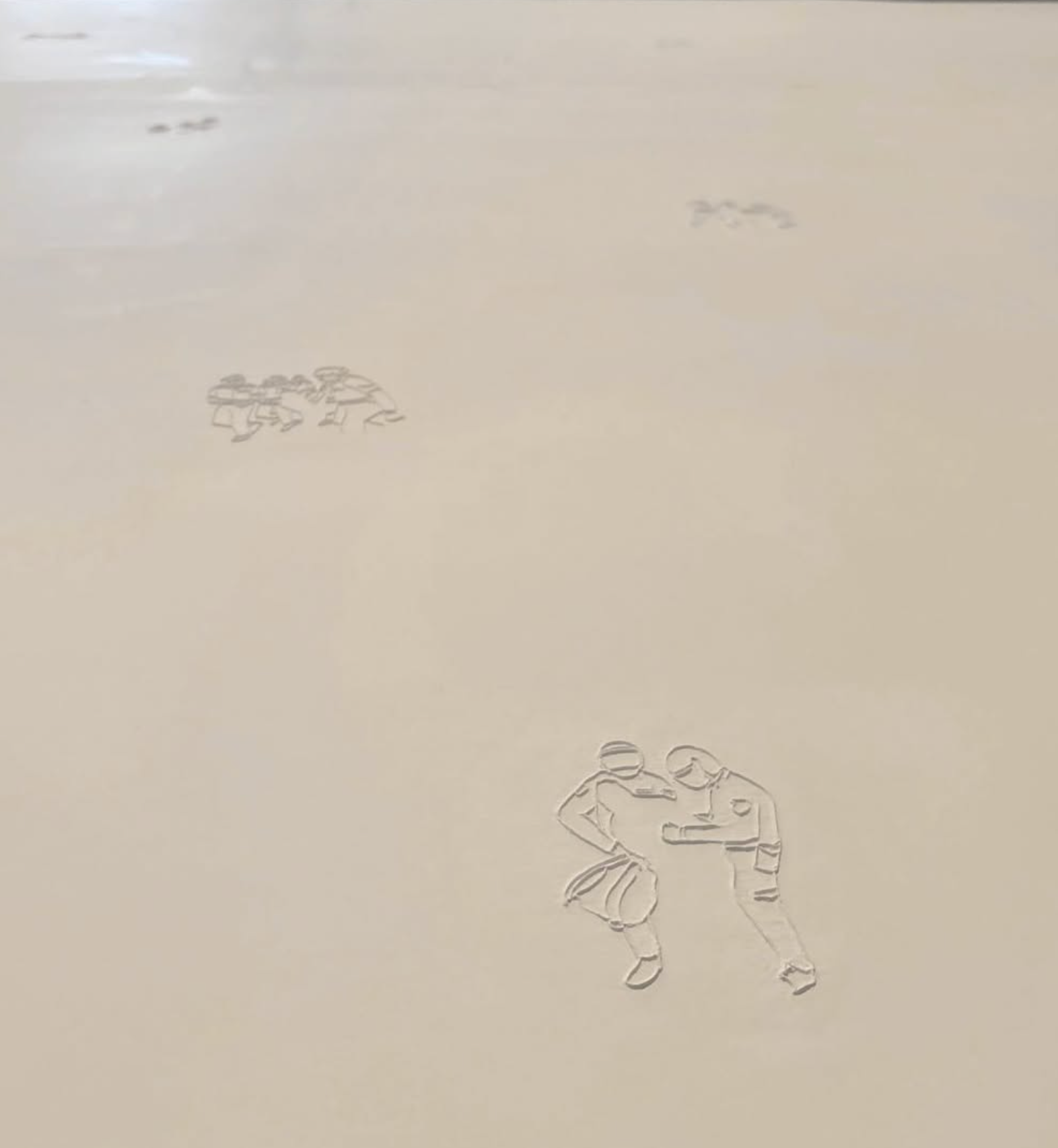
Another memorable work was Breathe, an interactive installation that invited visitors to help create the artwork. Visitors were encouraged to trace the artwork on the wall onto a sheet of paper by colouring it, then place it over the artwork, allowing the artwork to extend beyond the gallery space and carry forward with the visitors.
Closing Reflections
Reflecting on the four-day journey through these spaces, the theme For the Time Being began to feel deeply personal. For a brief period, the city transforms into a living landscape of ideas, conversations, and creative encounters; moments that exist only within that span of time.
And perhaps that is what makes both art and experience meaningful: their temporary nature, leaving behind reflections that linger long after the visit ends.