Kochi-Muziris Biennale: For the time being.

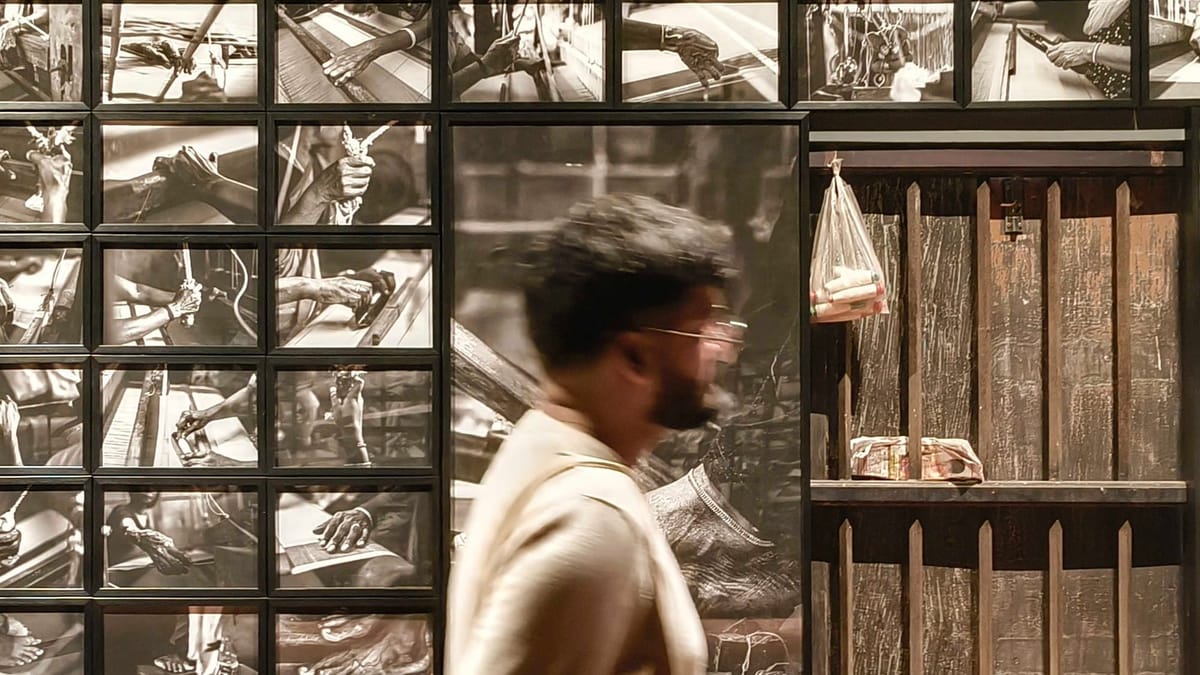
A 120-day redesign of a City that allows a slowed-down consumption of art and culture.
An exploration of a living ecosystem of art and culture in the historic port city of Kochi - by Bobby Pashine, Industrial Designer at Wolffkraft.
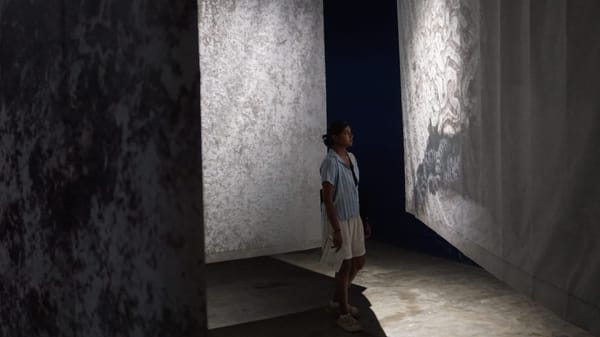
Every two years, something unique happens in Fort Kochi. When we were there during the Biennale, we could see how the spaces have redefined their purpose. The spice warehouses, colonial houses, and quiet courtyards that normally belong to the town's everyday life have begun to transform into exhibition venues.
What stood out for us was that the event does not simply display art inside these buildings. Instead, it subtly reorganises how the city is experienced for a short period, showing how culture can temporarily reshape urban behaviour without changing the physical infrastructure, simply by coexisting with what already exists.
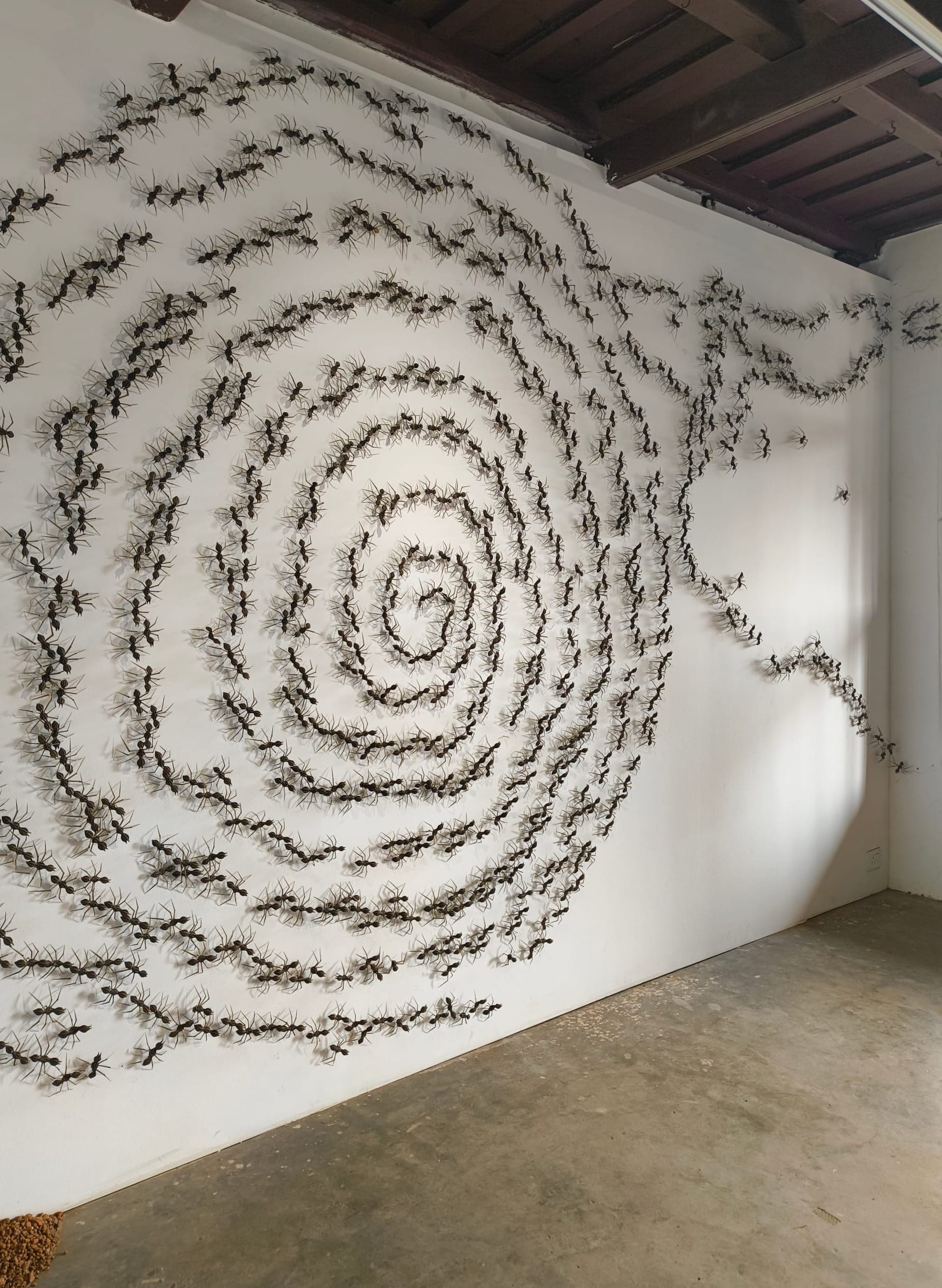
The visually rich and expressive Murals, textured walls, colonial facades, and narrow streets create scenes that often feel like framed compositions. Churches, temples, mosques, cafés, art spaces, and homes exist side by side, forming a cultural harmony within the neighbourhood.
One doesn't get the feeling that an event is being imposed on the city. Instead, it feels like an extension of a place where art, architecture, and everyday life already blend together.
Why Fort Kochi and not any other place?
Walking through Fort Kochi, its layered history becomes impossible to ignore. The traces of Portuguese, Dutch, British, Arab, and local trading communities are preserved in the neighbourhood's architecture.
Many of the spaces used during the Biennale are not designed as galleries, yet they carry their own cultural memory. Experiencing artworks in these raw spaces felt very different. When contemporary works enter these buildings, they interact with the place's historical and spatial character, making the exhibition inseparable from its location.
The visually rich and expressive. Murals, textured walls, colonial facades, and narrow streets create scenes that often feel like framed compositions. Churches, temples, mosques, cafés, art spaces, and homes exist side by side, forming a quiet cultural harmony within the neighbourhood.
As we moved between venues, it also became clear how many different elements were interacting at once- artists, curators, historic buildings, visitors, small cafés, and public streets. Conversations and interactions naturally extended beyond the galleries and into the city.
Many local cafés and independent spaces even display artworks and creative products; as a result, the Biennale felt less like a single exhibition and more like a system unfolding across Fort Kochi. This is also what makes it distinct from many global art events held in purpose-built cultural districts.
What makes the forts of Kochi and Mattancherry an ideal place for this 120 days of art exhibition?
Another thing that made the experience unique was the way the exhibition venues were spread across the city. Instead of moving through a single building, we found ourselves navigating through streets and neighbourhoods to reach the next venue.
The Biennale unfolds across Fort Kochi and Mattancherry in small clusters of exhibition spaces. Within each cluster, several venues can easily be explored on foot, often just a few minutes apart.
Once a cluster is explored, moving to the next one might mean a 20–30-minute walk through the town or a short five-minute rickshaw ride. This rhythm of walking, discovering, and occasionally riding through the streets makes the journey between venues part of the experience itself.
What added even more charm to this rhythm was that one venue was set apart from the rest. Island Warehouse sits outside the main exhibition clusters, and reaching it meant stepping away from the usual movement through the streets and instead taking the water metro across the backwaters to Willingdon Island.
Because the city is relatively compact, the experience often feels surprisingly personal. During our time there, we even reconnected with the same rickshaw driver three different times at different points in the city while moving between exhibition clusters.
Small moments like this made the Biennale feel less like a large international event and more like something unfolding within a close-knit neighbourhood.
The Biennale and its theme
Each edition of the Kochi-Muziris Biennale is shaped by a theme that connects the many artworks presented across the exhibition. This year’s theme, “For the Time Being,” explores ideas of temporality and the present moment.
Many of the works engage with this idea in different ways, inviting viewers to reflect on what it means to exist in a particular time while being shaped by both past histories and uncertain futures.
The scale of the Kochi-Muziris Biennale becomes evident through the diversity of its participants and programming. Artists from different parts of the world, along with practitioners from various regions of India, bring together a wide range of cultural perspectives and their own interpretations of the theme through installations, sculptures, video works, performances, and immersive environments.
Beyond the main Biennale exhibition, several parallel initiatives expand the event's scope. The Students’ Biennale offers emerging artists a space to experiment and present their work.
Alongside these program initiatives, such as ABC (Art By Children), EDAM (Education through Art Making), Collaterals, Pavilions, Residencies, and Special Projects, bring together artists, curators, and cultural practitioners in different formats, creating spaces for dialogue, experimentation, and collaboration.
Work that stayed with us
1. Adrián Villar Rojas
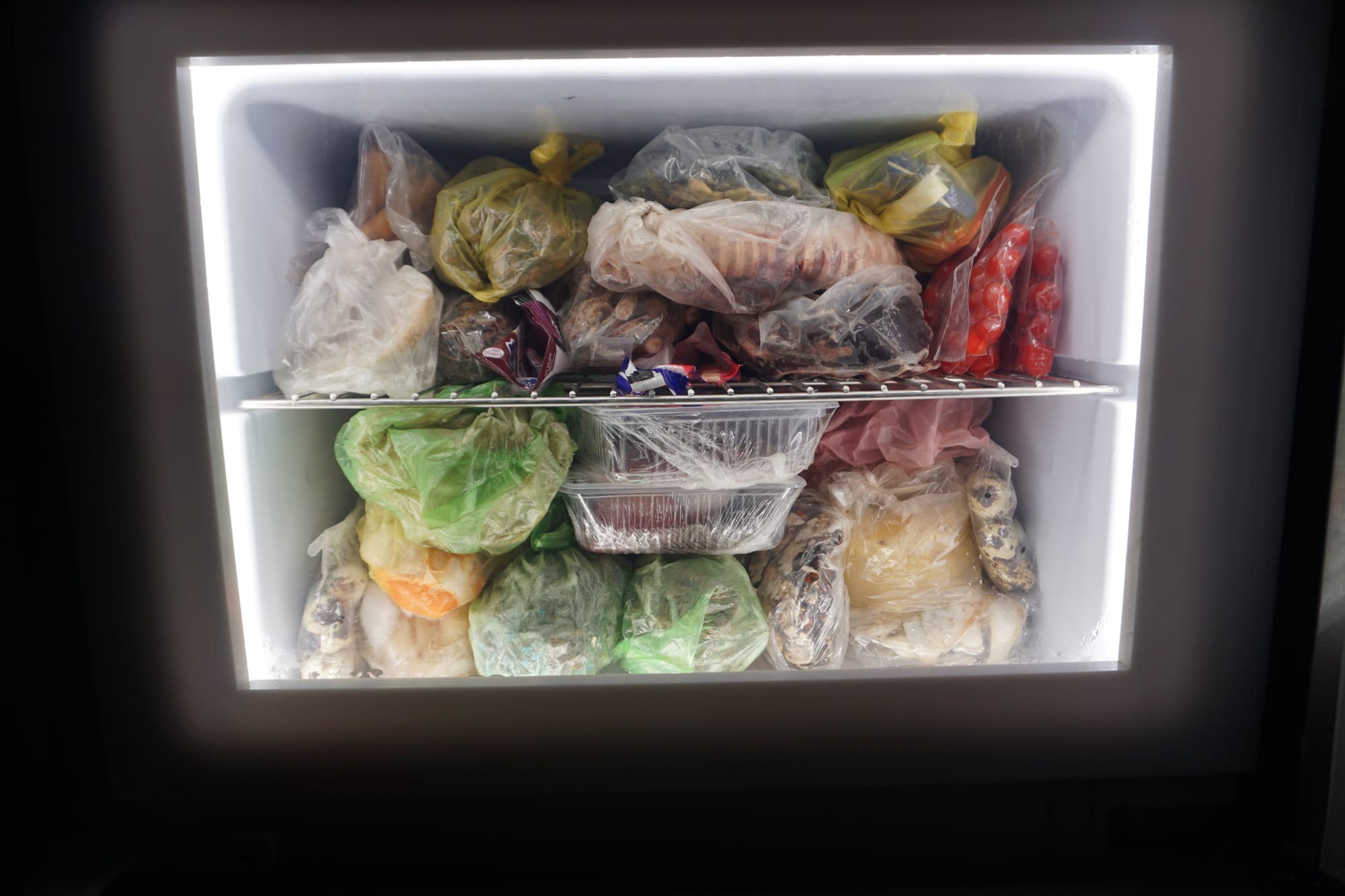
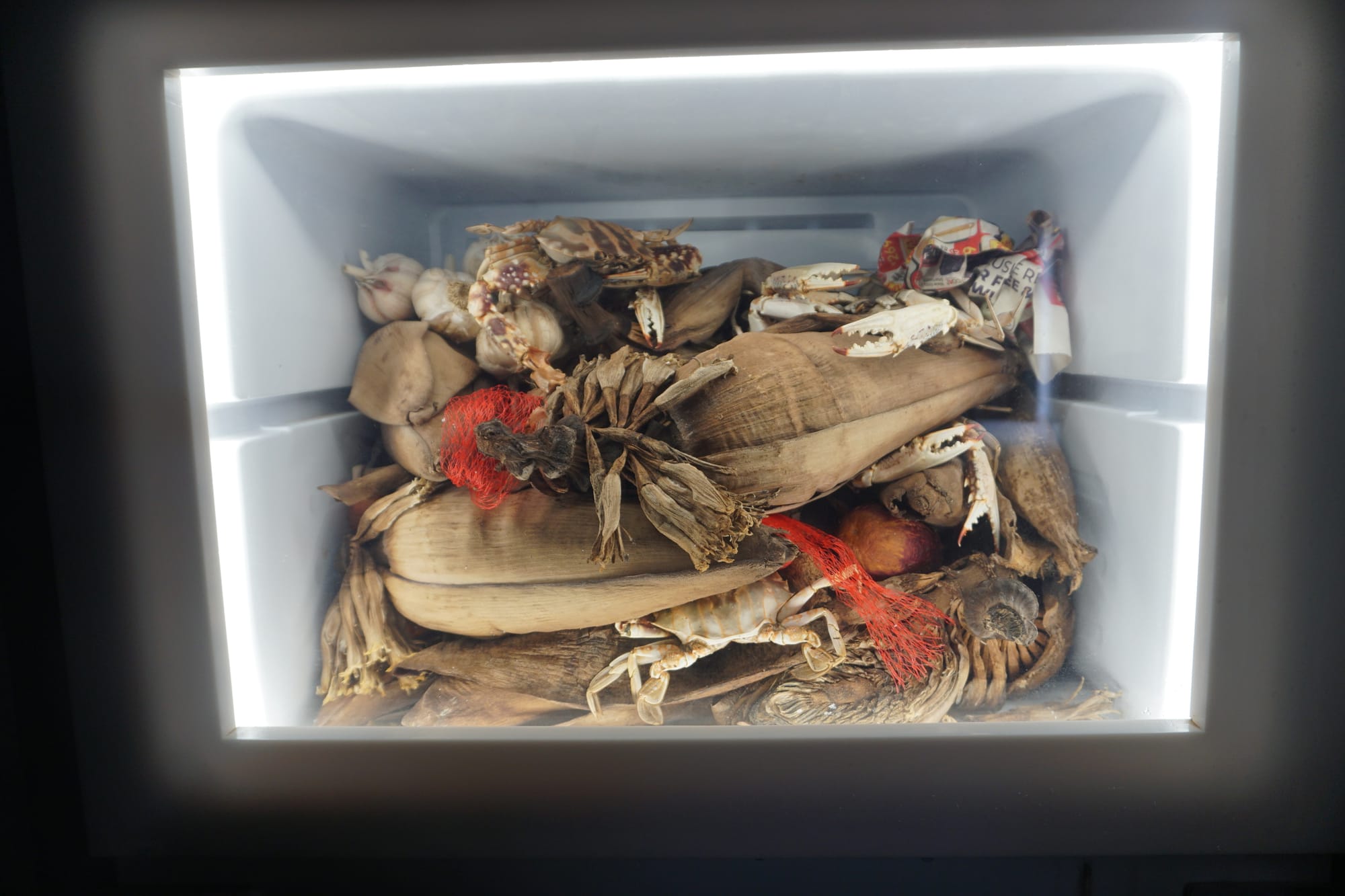
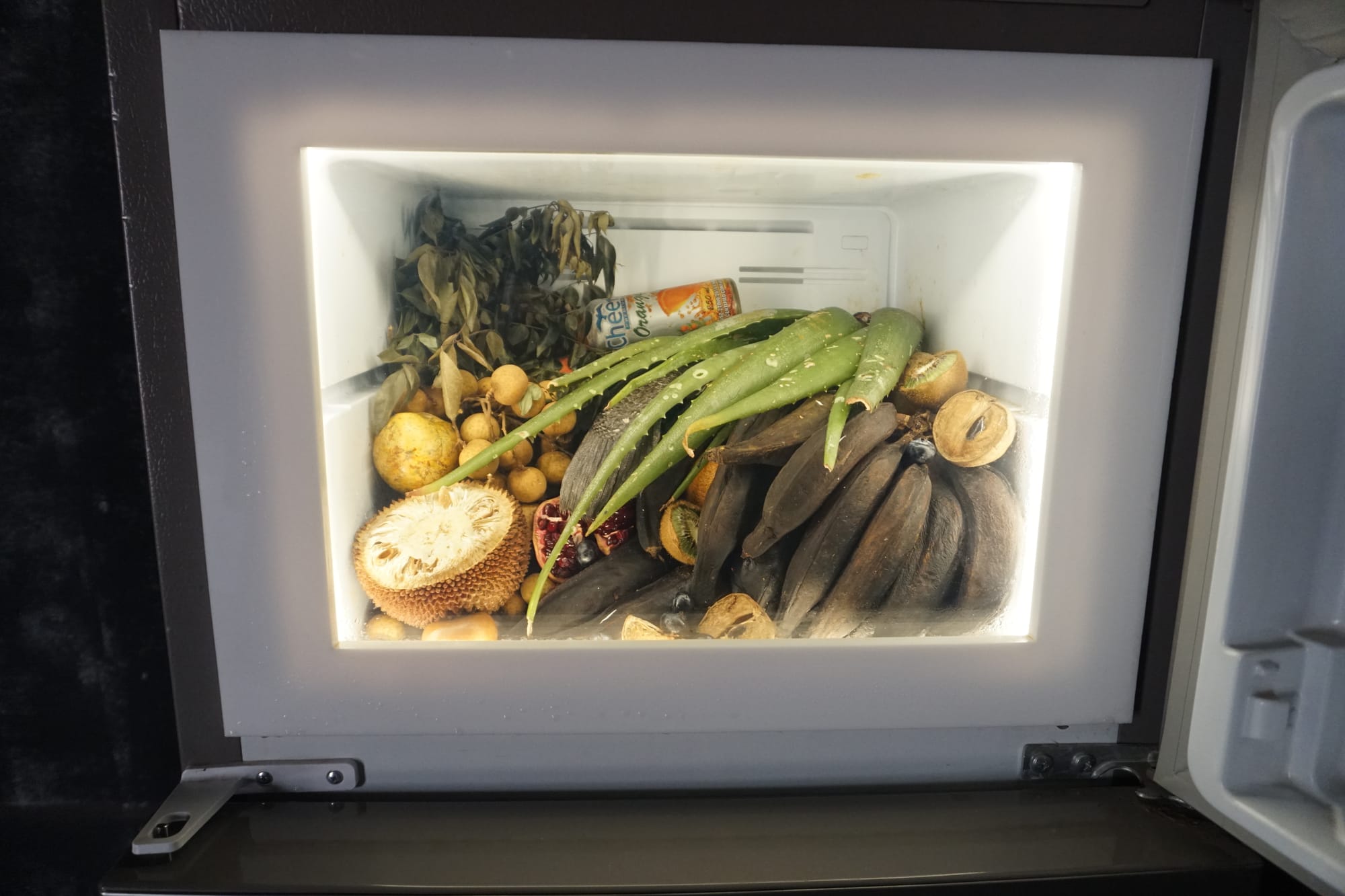
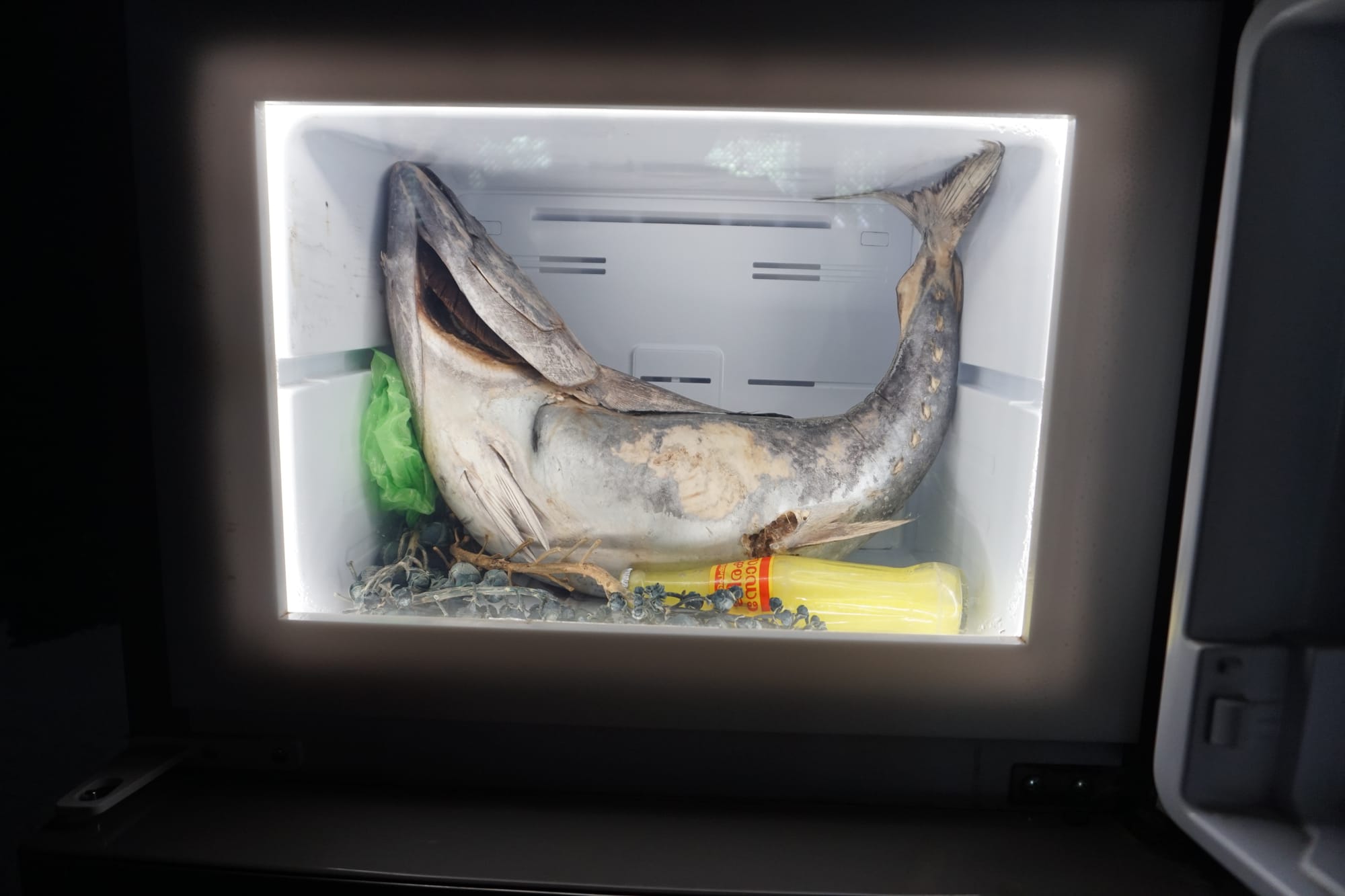
One of the works at the Kochi-Muziris Biennale was by Adrián Villar Rojas, known for his large-scale installations exploring time, decay, and transformation.
At the Coir Godown in Aspinwall, he presented sculptures from his Rinascimento series, in which obsolete refrigerators were transformed into display cases containing organic materials such as meat, fish, fruits, and packaged beverages in varying states of decay.
By compressing elements of the natural and industrial worlds into a domestic appliance, the work reflects on consumption, global supply chains, and the fragile ecological conditions of the Anthropocene.
2. Himanshu Jamod
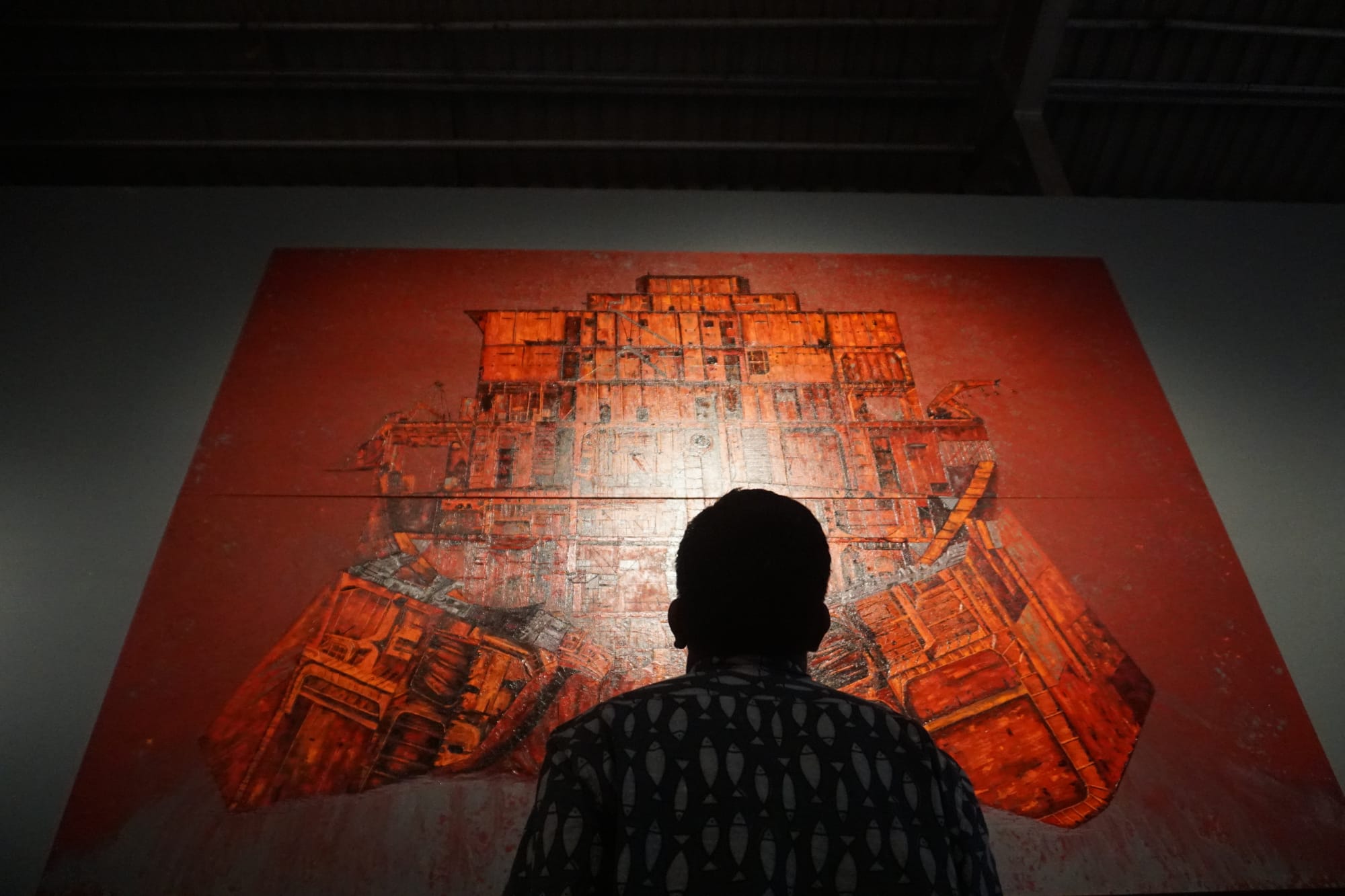
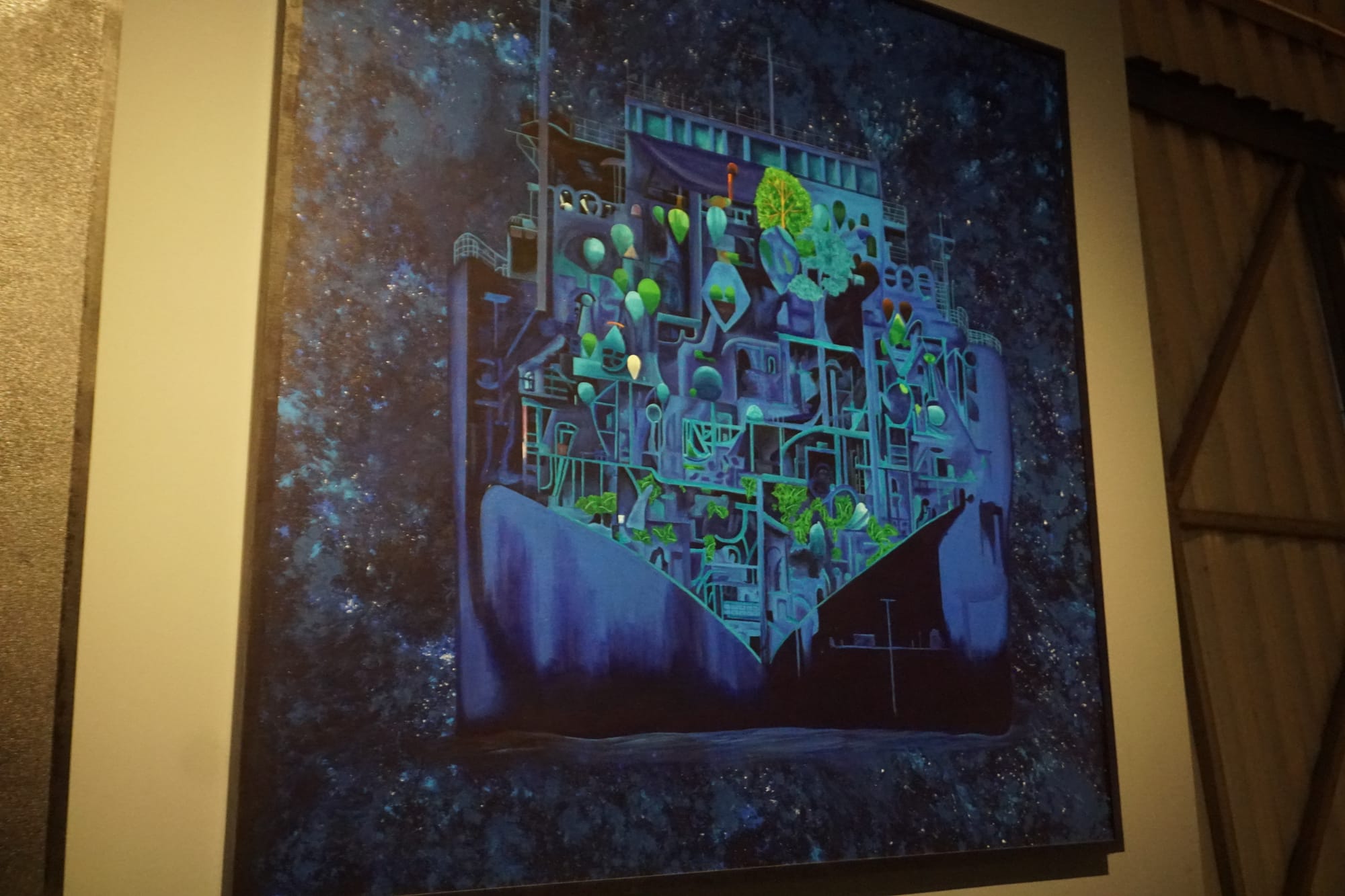
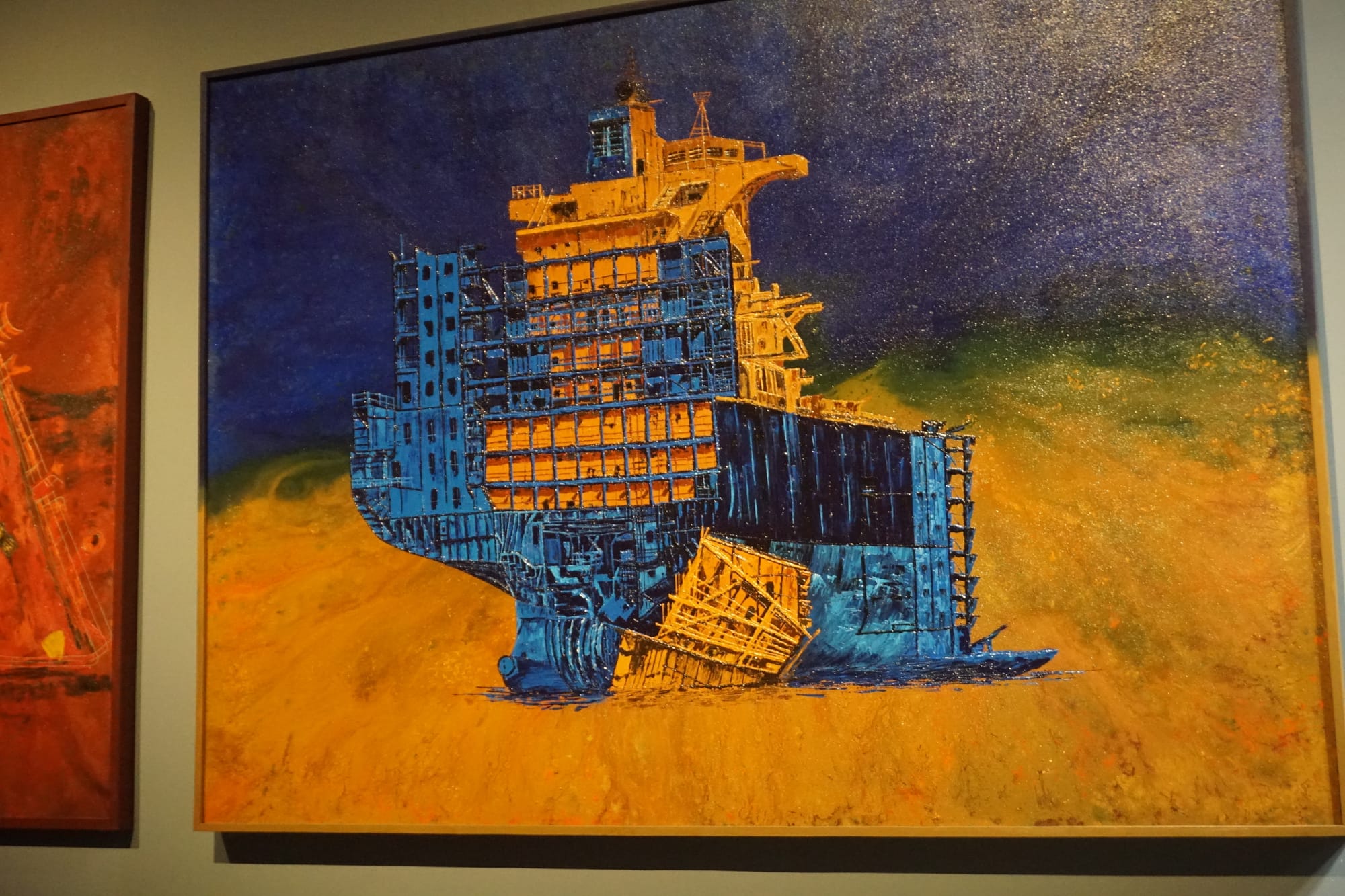
Another compelling work was by Himanshu Jamod, whose large mixed‑media paintings explore the life cycles of merchant ships.
Drawing from personal memories of growing up in a seafaring family in Bhavnagar and observations of the shipbreaking yards at Alang, Jamod traces the journeys, dismantling, and afterlives of vessels.
His series Retrieve and Seedbed present ships not as endings but as evolving systems sites of labour, industry, and regeneration reflecting the global networks of maritime trade and recycled material cultures.
3. Ali Akbar PN
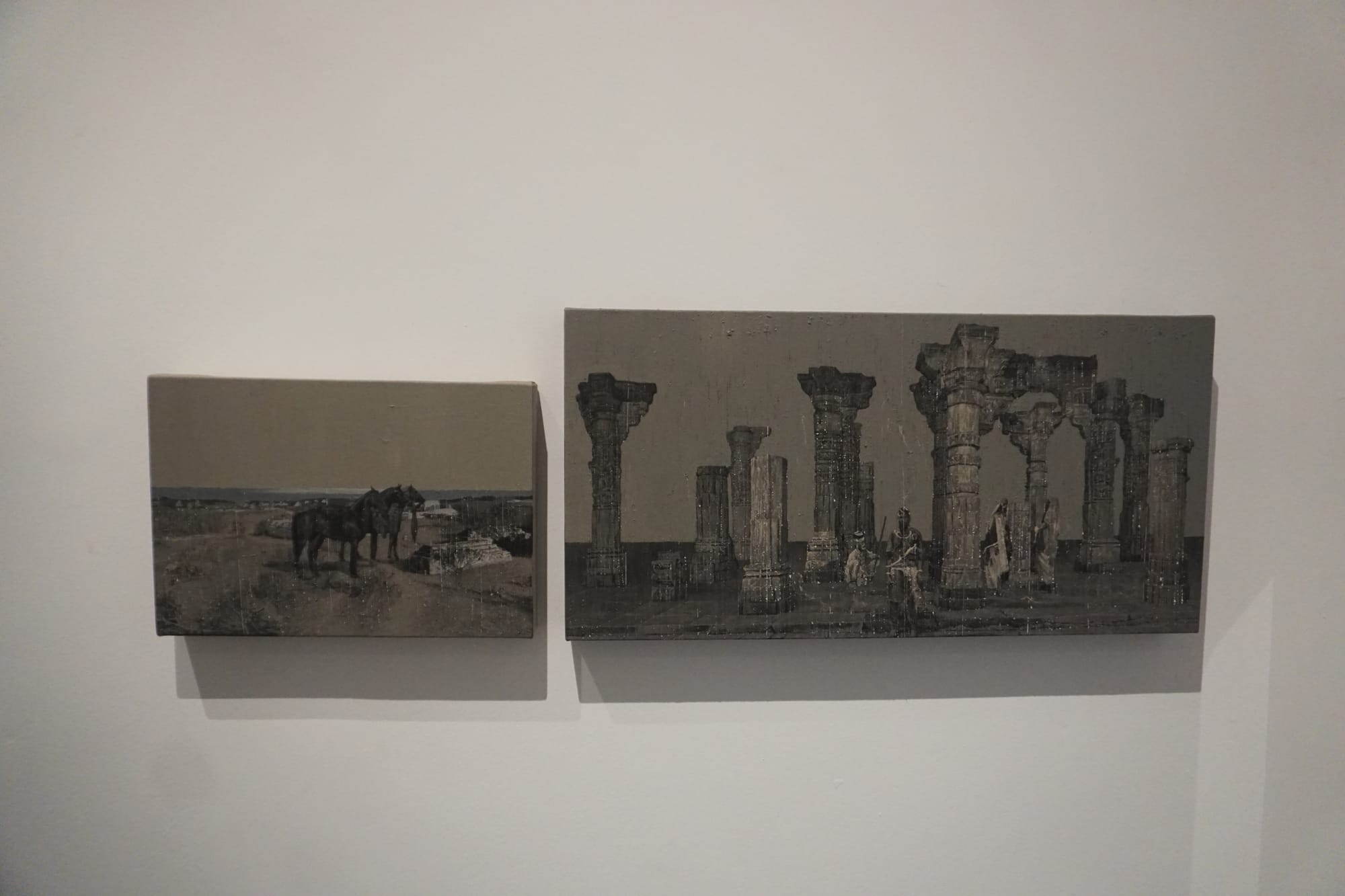
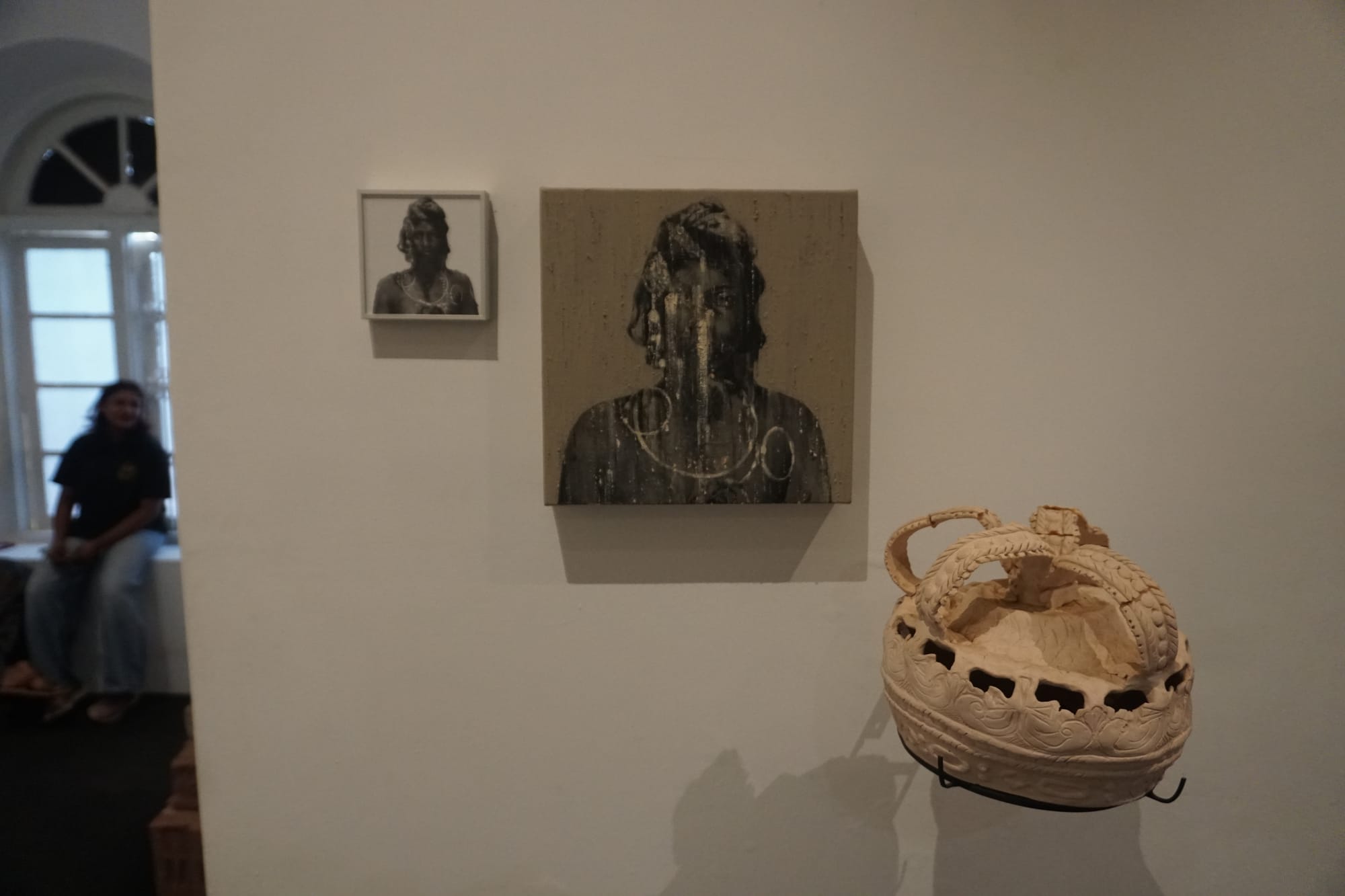
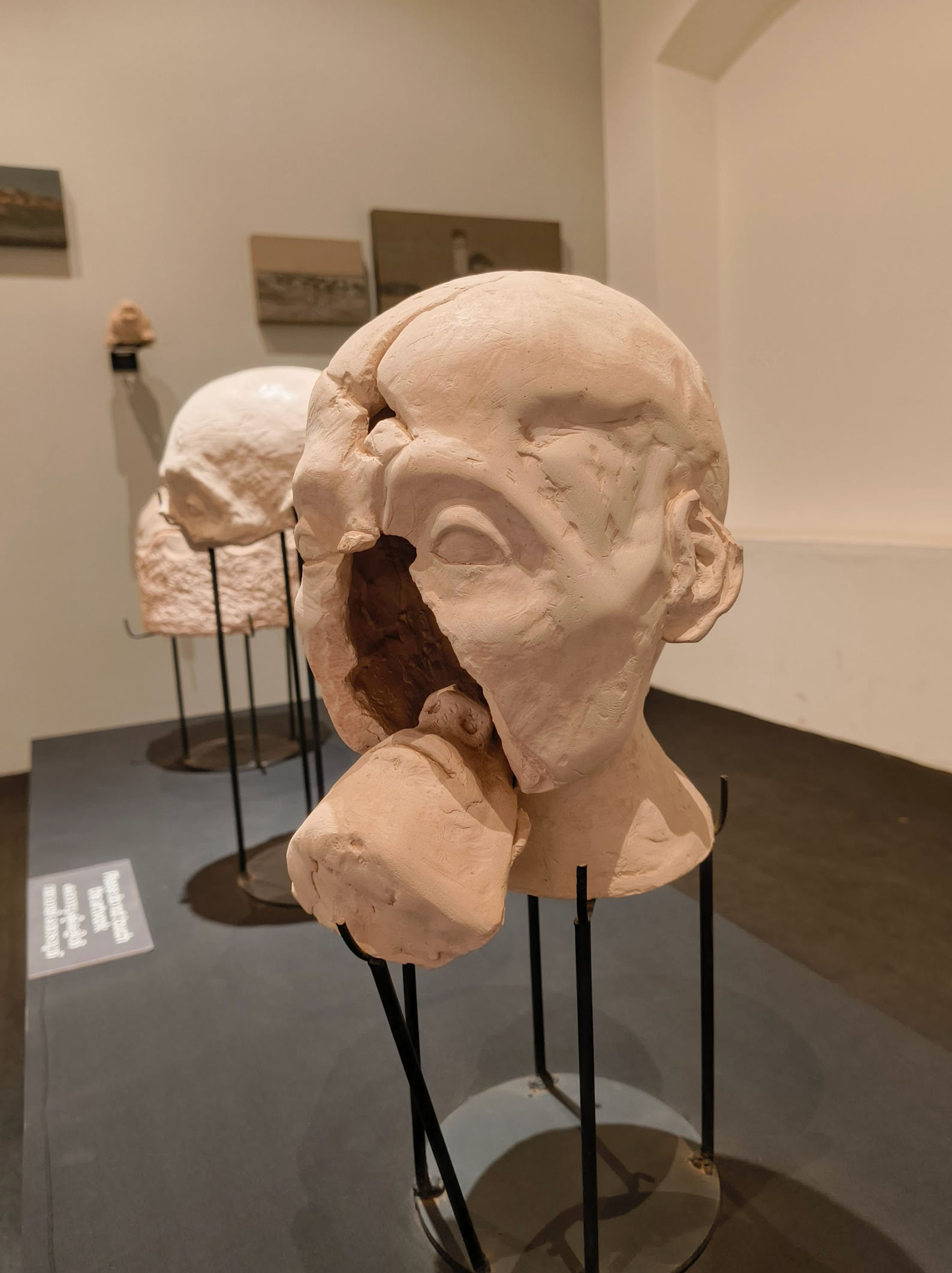
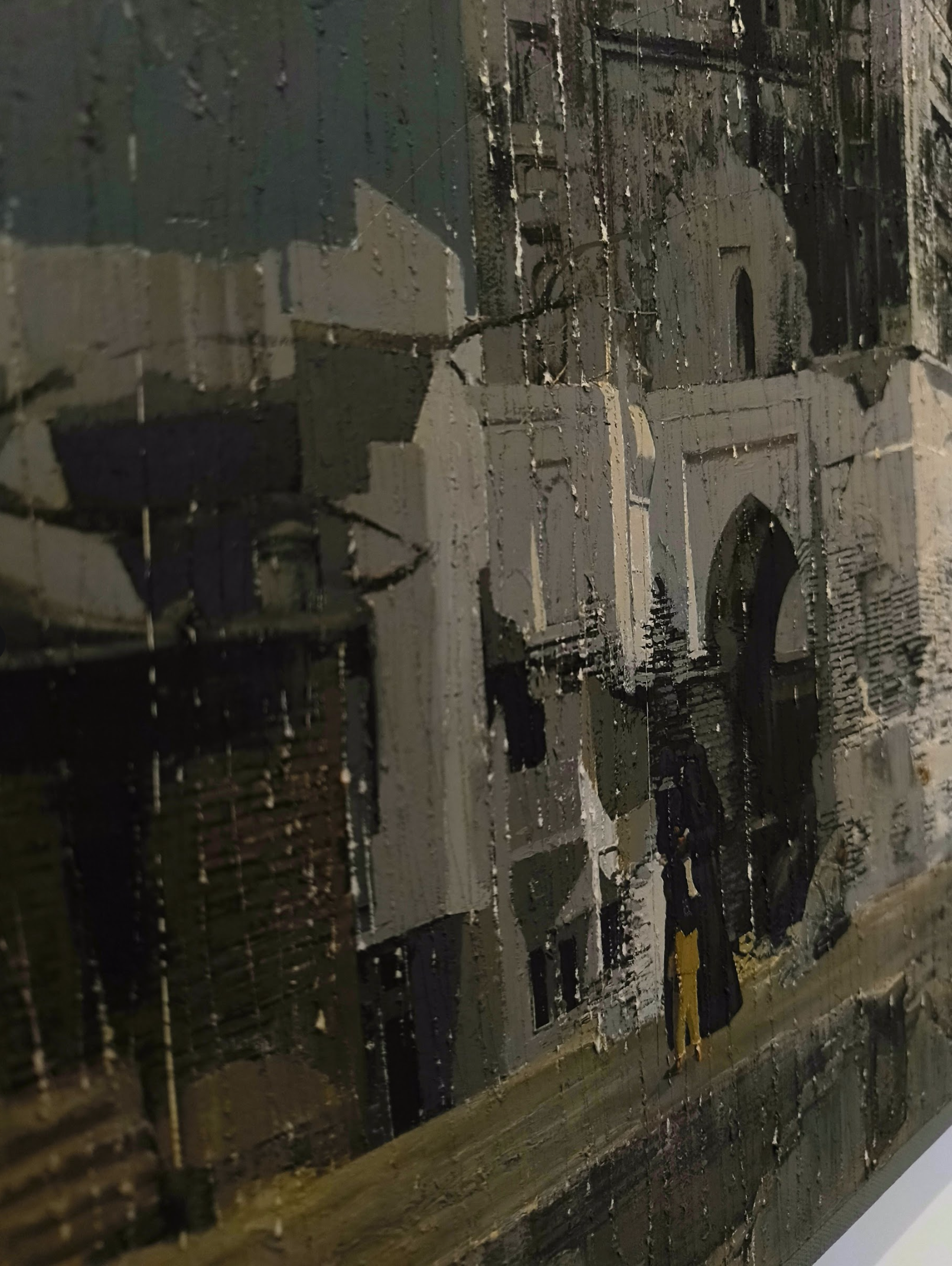
Another notable presentation came from Ali Akbar PN, whose multimedia practice explores cultural exchanges and social histories across coastal regions of India, particularly between Kerala and Gujarat.
His ongoing project Reliquary (2024–ongoing) reconstructs architectural sites and shared religious spaces through paintings, sculptural replicas, and historical fragments.
Drawing from oral histories, archival research, and site studies, Akbar reflects on the syncretic relationships that once shaped these communities. The work also questions how shifting political narratives reshape cultural memory, revealing how histories of coexistence and shared traditions are often simplified or erased over time.
4.Prajwal Xavier
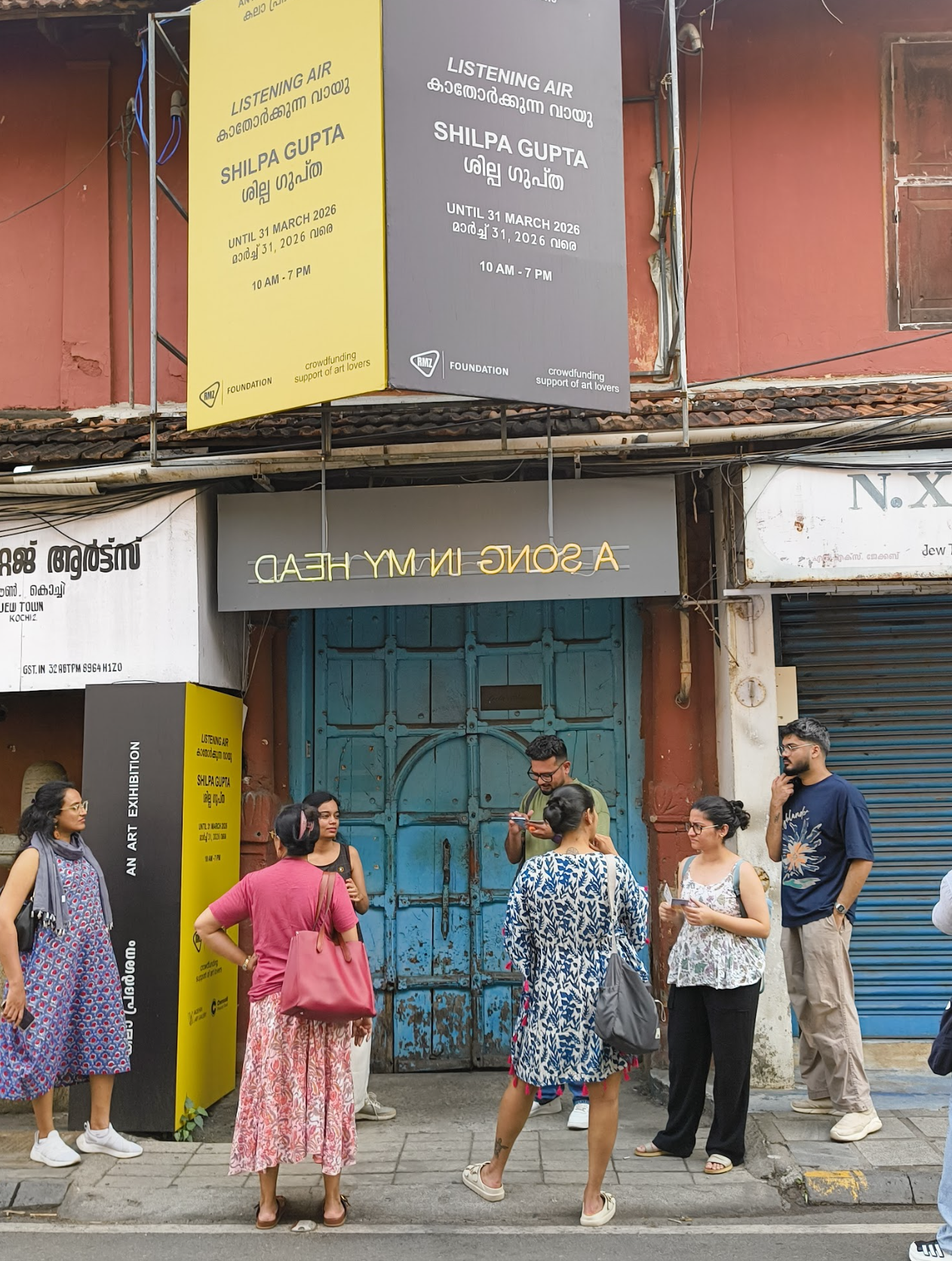
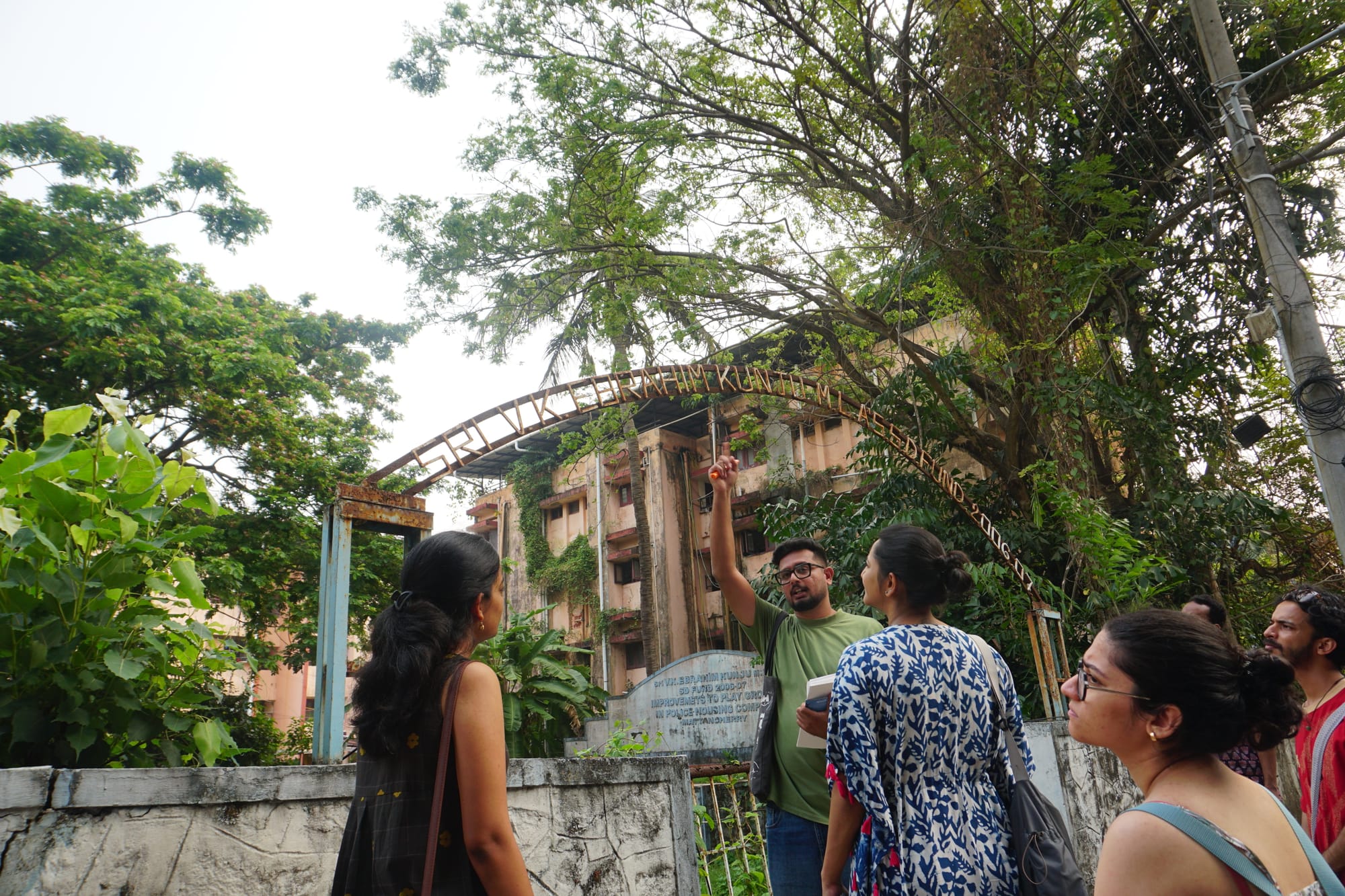
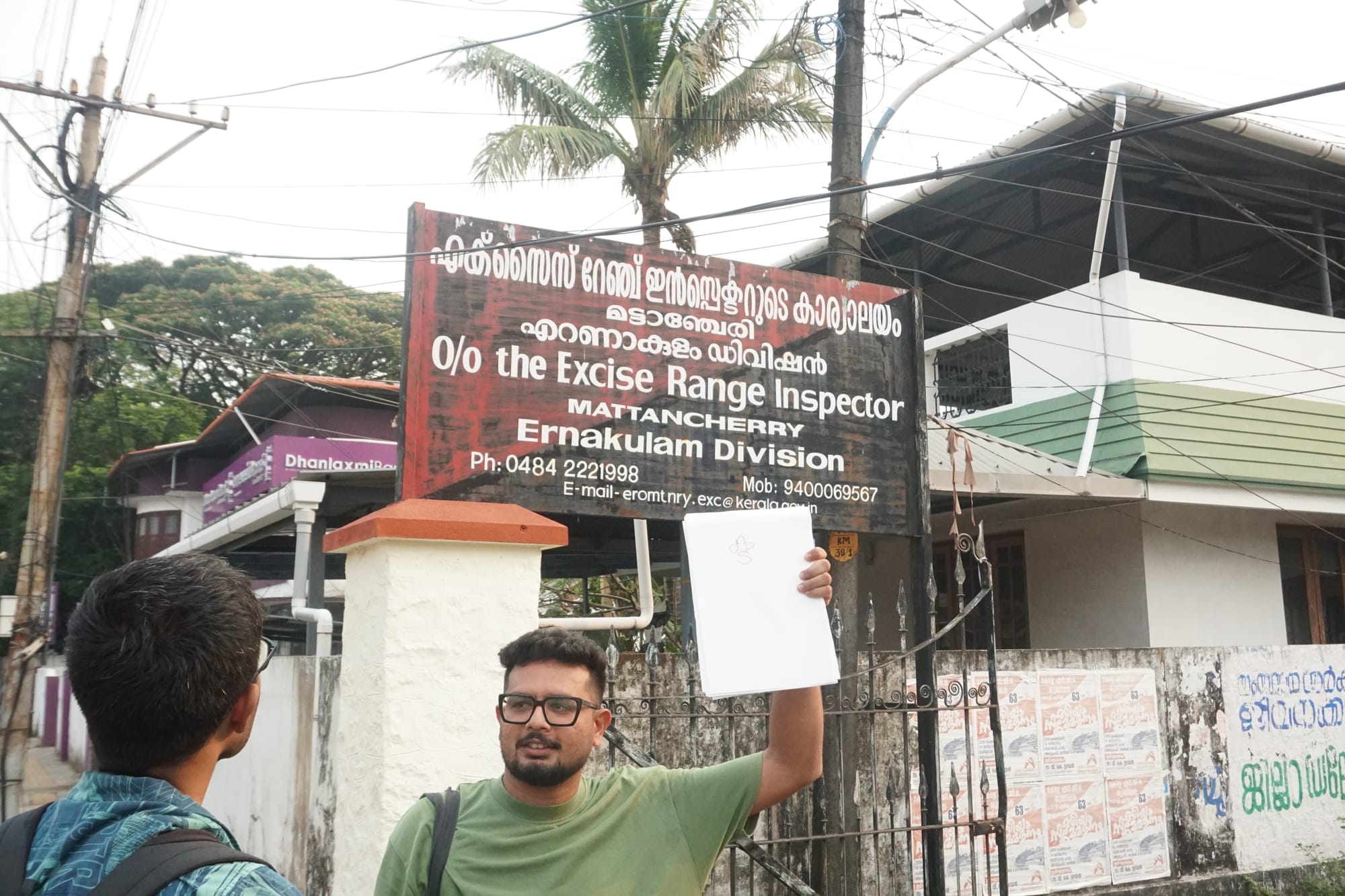
Another interesting project was Typewalk by Prajwal Xavier, which explores typography through walking and observing the city. The project documents letterforms found in everyday urban environments—shop signs, painted walls, street markings, and handmade signboards.
By treating the city as a living archive of type, Typewalk highlights how typography exists beyond digital design, shaped by local culture, craft, and informal practices. The project invites viewers to slow down and notice the visual language embedded in the streets, revealing how letters become part of the city’s identity and everyday communication.
A Temporary Cultural Ecosystem
What also stayed with us was the pace at which the experience unfolded. The Biennale encourages attention rather than efficiency, creating an environment where visitors engage with ideas slowly and deliberately.
Many installations require time and patience, and simply moving between venues involves walking through the city. Yet even during the event, Fort Kochi retains its calm rhythm.
In between exhibitions, we would come across ordinary scenes: fishermen working near the shore, small cafés going about their routine, residents going about their daily lives. Experiencing both the artworks and the everyday life of Kochi simultaneously made the Biennale feel deeply connected to the place.
The ecosystem created by the Biennale exists only for about 120 days. After that, the installations disappear, and the city gradually returns to its everyday state. Because it exists only for this short period, the Biennale never feels like a permanent cultural institution.
Instead, it feels more like a seasonal moment within the life of the coastal town, a time when ideas, people, and spaces come together before quietly dissolving again.
In a world increasingly designed for speed and efficiency, the Biennale offers something rare: a cultural environment shaped by attention, curiosity, and time. For those 120 days, Fort Kochi becomes a living example of how a city can be experienced differently through cultural activity.