Should a strong design culture need designers in every room?
Designers and design leaders debated whether strong design cultures should require designers in every room. The discussion opened an important reflection: how can design intent scale without diluting craft, judgement, and the user’s voice?
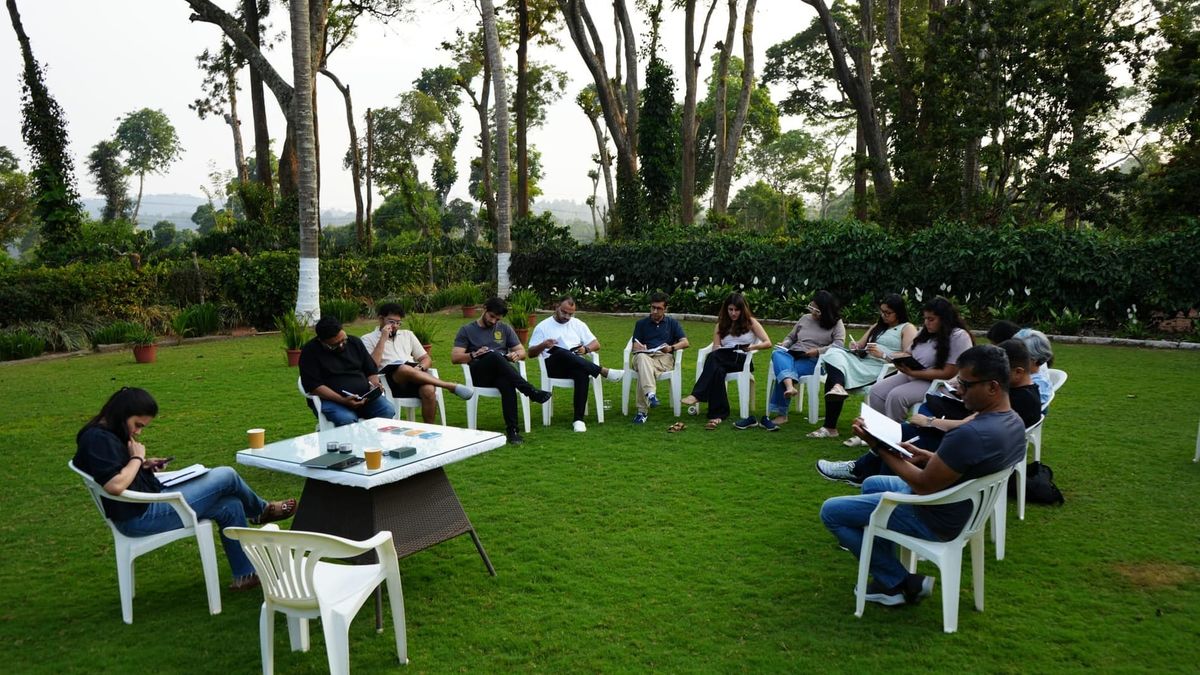
On 16–19 April 2026, Extended Pack Collective hosted DesignScape, a four-day residential program in Coorg for designers and design leaders. The program brought together designers and leaders from reputed organisations, including Amazon, Honeywell, Wells Fargo, Target, Ather Energy, and Samsung Electronics, creating a space for deeper conversations on design practice, leadership, craft, and the future of the field.
One of the sessions in the program was a debate on the statement: A company with a strong design culture should not need designers in every room. These notes document the core arguments, tensions, and insights that emerged from the debate.
One side argued:
A mature design culture should reduce dependency on designers for every small decision. Design principles, systems, guardrails, and shared language should allow teams to make better decisions even when designers are not present.
The other side argued:
Design cannot be fully reduced to systems or frameworks. Designers bring judgment, empathy, craft, and the ability to read context in real time. Without them, design culture can slowly erode.
A design culture that depends on designers for everything is fragile.
A design culture that removes designers too quickly is shallow.
The following are some key takeaways from the session.
A strong design culture should not create permanent dependency
“Design principles become organisational muscle memory.”
Design should become part of the organisation's way of thinking.
In a strong design-led company, product, engineering, business, sales, and leadership teams should begin to speak a shared language. They should understand personas, user intent, problem framing, experience standards, and design guardrails.
The goal is to make design intent easier to carry across the company, and not to make every person a designer by title. If every decision has to wait for a designer, the organisation has not built a design culture. It has built design dependency.