The invisible dimension of design: how sound shapes human experience.
Sound shapes how we experience spaces, products and everyday interactions. Drawing on Sofia Boarino’s research, this article explores sound as a design material and offers practical ways for designers to create better experiences by paying closer attention to what people hear.
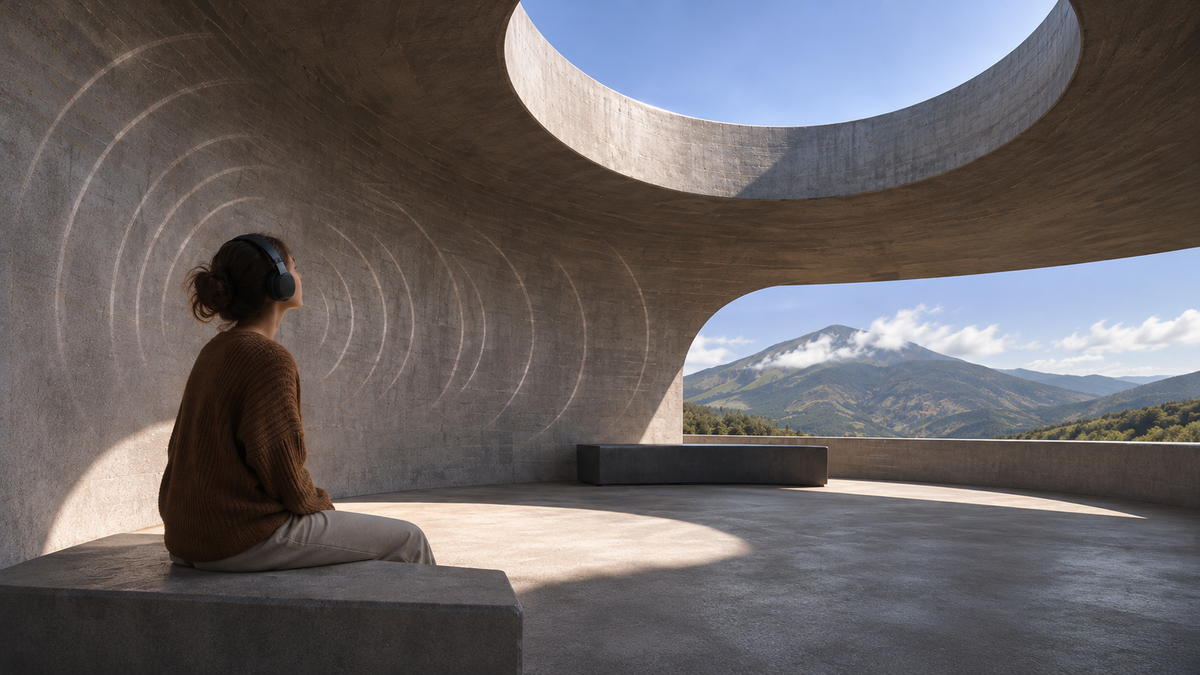
The article below draws from Sofia’s presentation, her four projects and the discussion with EPC members. The practical takeaways at the end extend her ideas into everyday design practice.
Based on “Resonant Architectures,” a conversation with Sofia Boarino at the Extended Pack Collective.
Designers describe spaces through dimensions, materials and light, and interfaces through screens, typography and interactions. Both can overlook something that changes the experience considerably: sound. The same café can feel welcoming or exhausting depending on what we hear. A car door can feel reassuring or flimsy when it closes. A hospital can look calm in photographs and still be an unpleasant place to spend an hour.
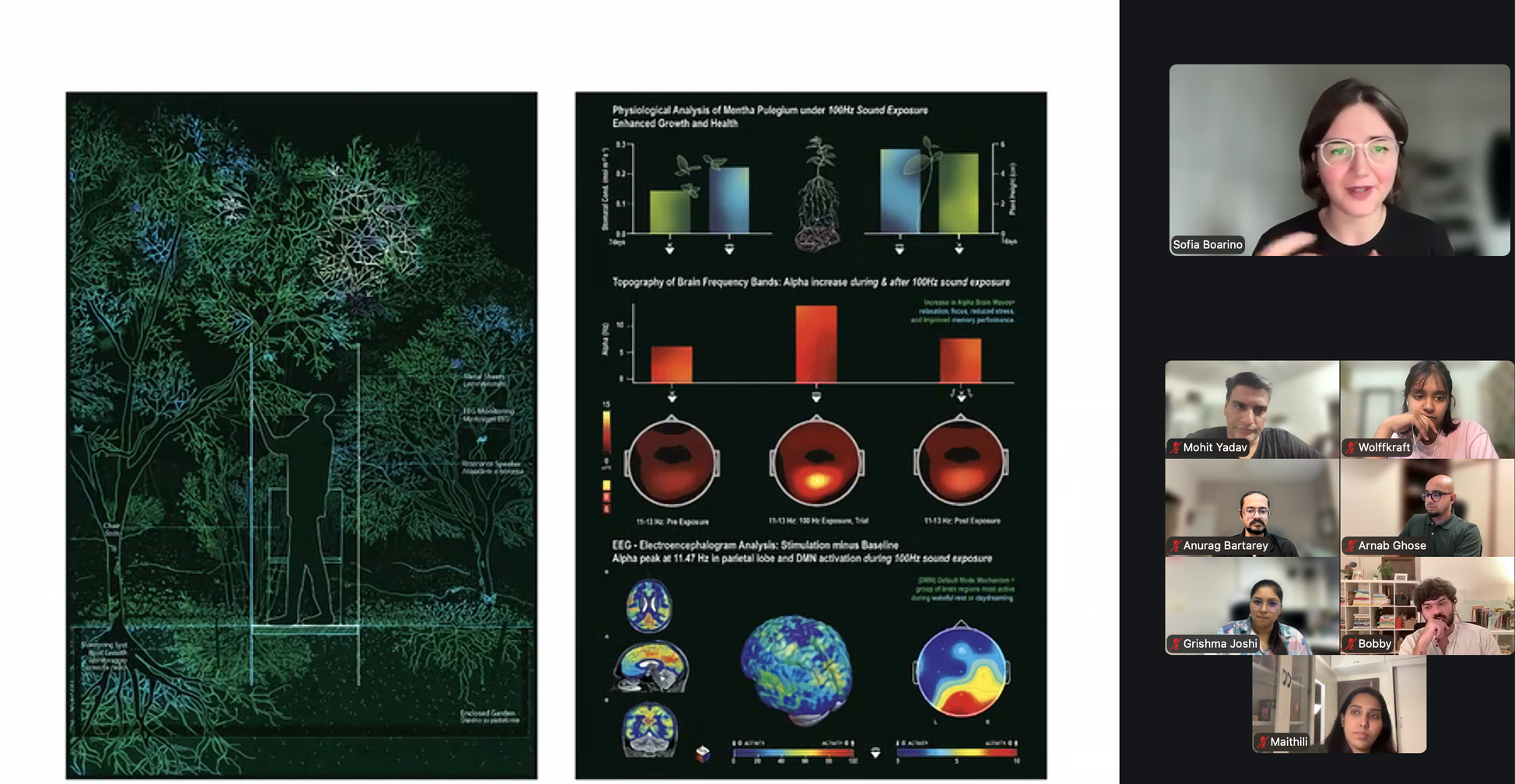
This question ran through Resonant Architectures, a member talk at the Extended Pack Collective with Sofia Boarino, a Zurich-based architect, artist and researcher. Her work asks a useful question for anyone who designs experiences: what happens when we treat sound as something we can design with, rather than a problem we have to remove?
Every place has a soundscape
Sofia began with the idea of a soundscape: the acoustic environment created by natural sounds, living organisms and human activity. A place has sounds that remain in the background, sounds that demand attention and distinctive sounds that help people recognise it. Think of the difference between a street with bicycle bells, conversations and birds, and one where an uninterrupted engine hum covers almost everything else. Both may be busy. They do not feel the same.
Soundscape research distinguishes environments with clear individual sounds from those where constant noise masks them. Sound carries information. It tells us whether a place is occupied, active, safe, familiar or changing. Removing every audible trace of the outside world may improve isolation, but it can also remove a sense of connection.
One of Sofia's simplest methods is a sound walk. Participants move through an environment with the specific intention of listening, sometimes even without relying on sight. They notice distance, repetition and change. In her workshops, some participants who had moved from other countries recognised sounds that reminded them of childhood. Listening became a way of feeling more at home in an unfamiliar place.