Beyond design thinking: how designers can learn to think better
How can designers become better thinkers? Drawing from Professor Nathan Crilly’s talk at the Extended Pack Collective, this article explores the limits of design thinking, our intellectual blind spots, and how learning from other disciplines can improve design judgement.
What designers can learn from other disciplines, why our preferred ways of thinking create blind spots, and how AI is changing design practice. Based on a member's talk and discussion hosted by the Extended Pack Collective (EPC) with Professor Nathan Crilly, Professor of Design at the Department of Engineering, University of Cambridge.
Designers spend a considerable part of their professional lives learning how to solve problems. They learn to conduct research, understand people, identify opportunities, generate ideas, build prototypes and evaluate solutions. Over time, these activities become part of their natural approach to work. However, relatively few designers spend enough time examining how they think, why they favour certain approaches and what they might be overlooking because of those preferences.
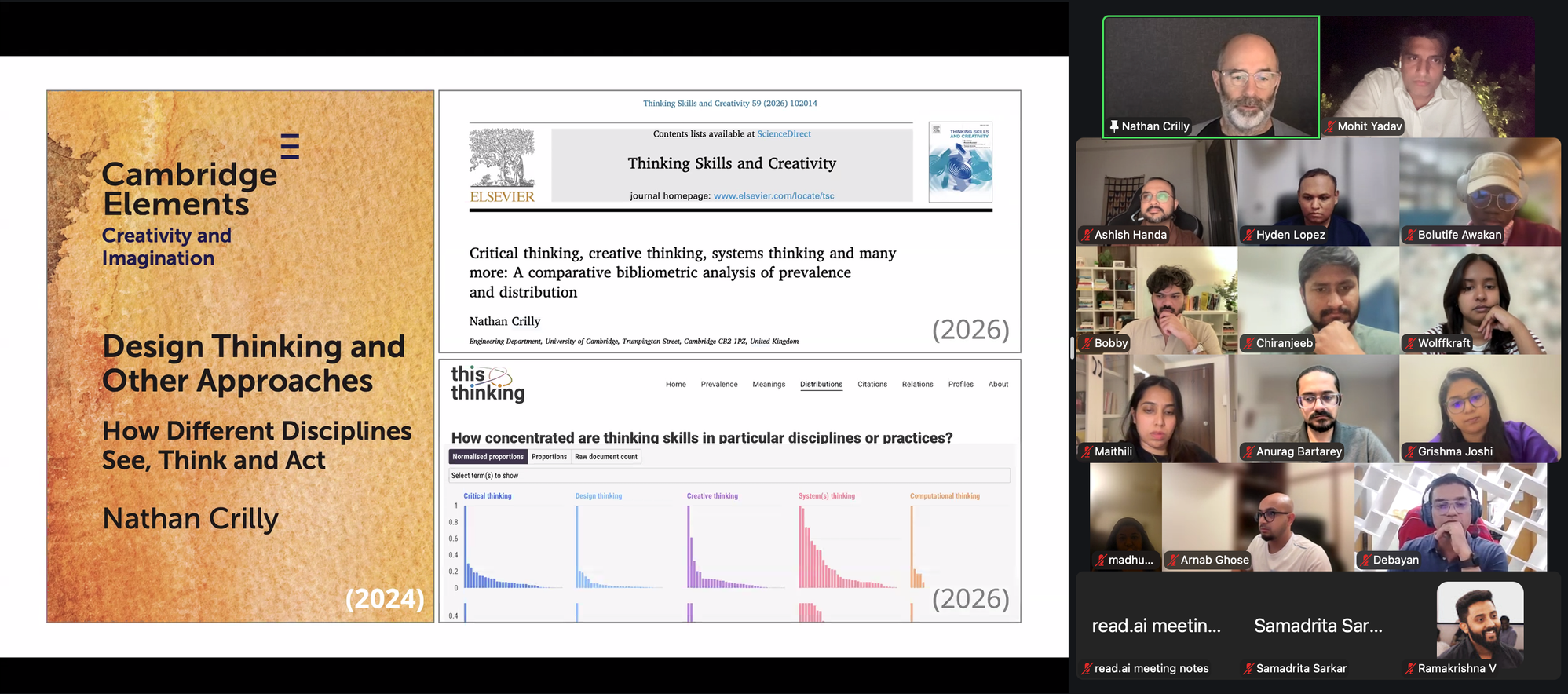
During a members' talk at the Extended Pack Collective, Professor Nathan Crilly presented his research comparing design thinking with several other forms of thinking. The discussion explored the relationship between professional expertise, creativity, problem-solving, artificial intelligence and the changing expectations placed on designers.
An important idea that emerged from the conversation was that becoming a better designer may require us to examine the very ways of thinking that made us designers in the first place.
What exactly do we mean by design thinking?
When people speak about design thinking, they are not necessarily referring to the same thing. Some understand it as the five-stage process popularised by Stanford's d.school: empathise, define, ideate, prototype and test. Others associate it with the Double Diamond model, which encourages exploring and narrowing down problems and solutions.
Another interpretation describes design thinking as a set of attitudes and behaviours. These include curiosity, empathy, collaboration, experimentation and the ability to remain comfortable with uncertainty.
Nathan offered an interesting way of understanding the concept. Imagine taking an experienced designer out of a design studio and asking them to address a problem in education, public policy, business strategy or organisational management. What would they bring from their professional experience to help them approach these unfamiliar problems?
The ability to transfer the knowledge, instincts and practices developed through design into other contexts is central to the idea of design thinking.
This distinction matters because following a documented process and developing the judgement of an experienced practitioner are two very different things. A framework can introduce someone to a method, but experience helps them recognise when to use it, when to modify it and when to abandon it.
Designers do not have a monopoly on creative problem-solving
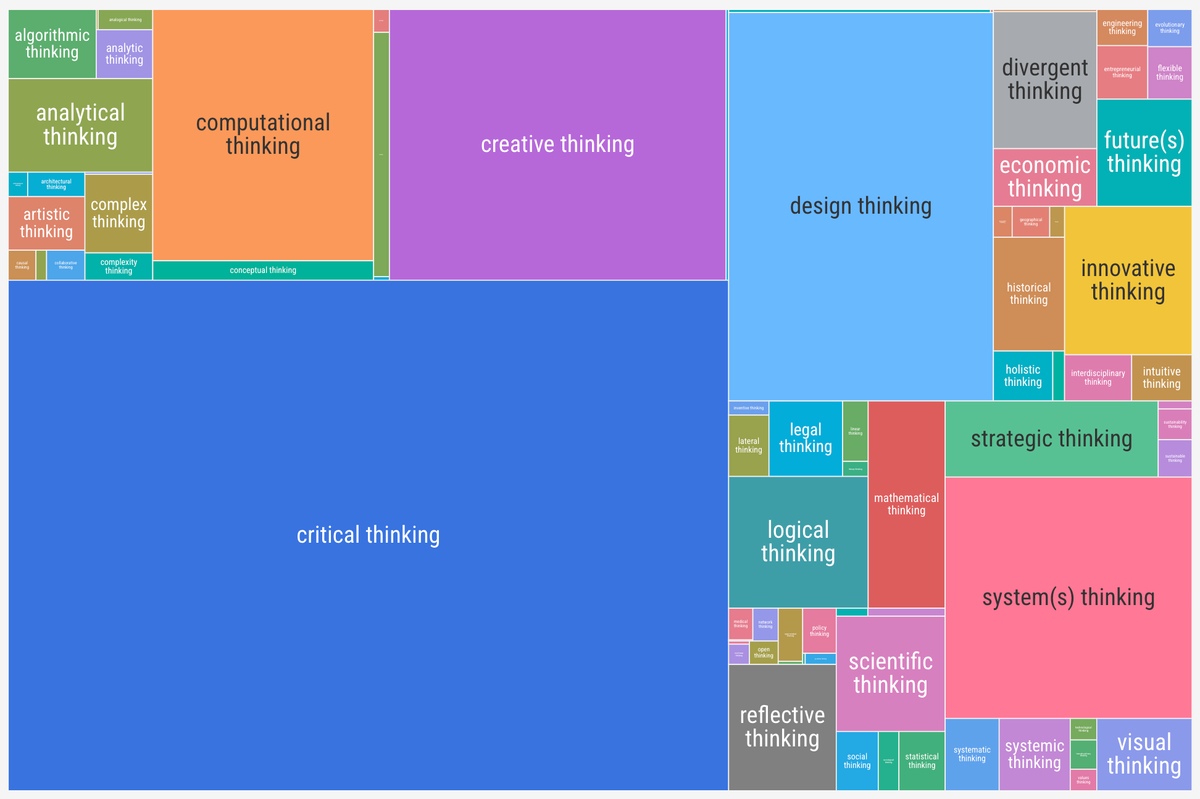
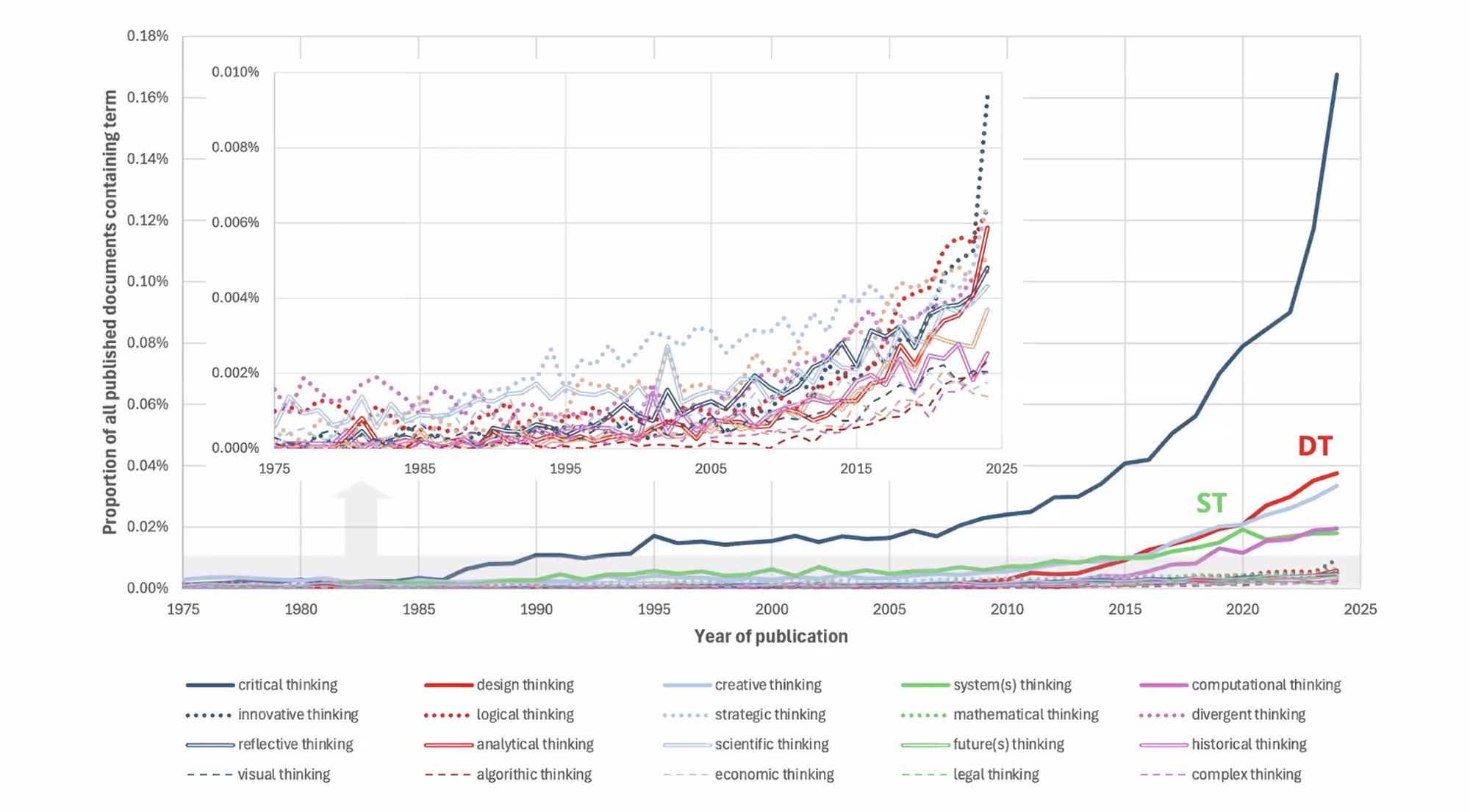
Nathan's research examined approximately 78 named forms of thinking discussed in academic literature. Among the most frequently mentioned were critical thinking, creative thinking, design thinking, systems thinking and computational thinking.
What he discovered was that many characteristics commonly associated with design thinking also appear in descriptions of other disciplines. Experimentation, iteration, collaboration, problem-solving and adaptability are all practised outside design.
Computer scientists experiment and iterate. Entrepreneurs collaborate and co-create. Scientists develop hypotheses and test them. Systems thinkers examine relationships and simulate possible outcomes. Anthropologists study people, behaviours and the influence of context.
Interestingly, many disciplines make similar arguments about their own ways of thinking. Designers argue that design is more than aesthetics. Computer scientists argue that computational thinking extends beyond writing code. Geographers argue that geographical thinking involves much more than remembering places and facts.
Each discipline recognises that its underlying approach has applications beyond its traditional professional boundaries.
For designers, this presents an opportunity to examine what other professions have learned about activities that are already familiar to them. An anthropologist's approach to understanding people, for example, may improve how a designer conducts research. An entrepreneur's approach to experimentation may help a designer understand the commercial consequences of an idea.