A wall is a portal: wallpaper as the membrane between worlds
Wallpaper is more than decoration. It is a medium for atmosphere, memory and storytelling. Jonathan Nodrick’s work reveals how scale, material, craft and collaboration can transform an ordinary wall into an immersive world.
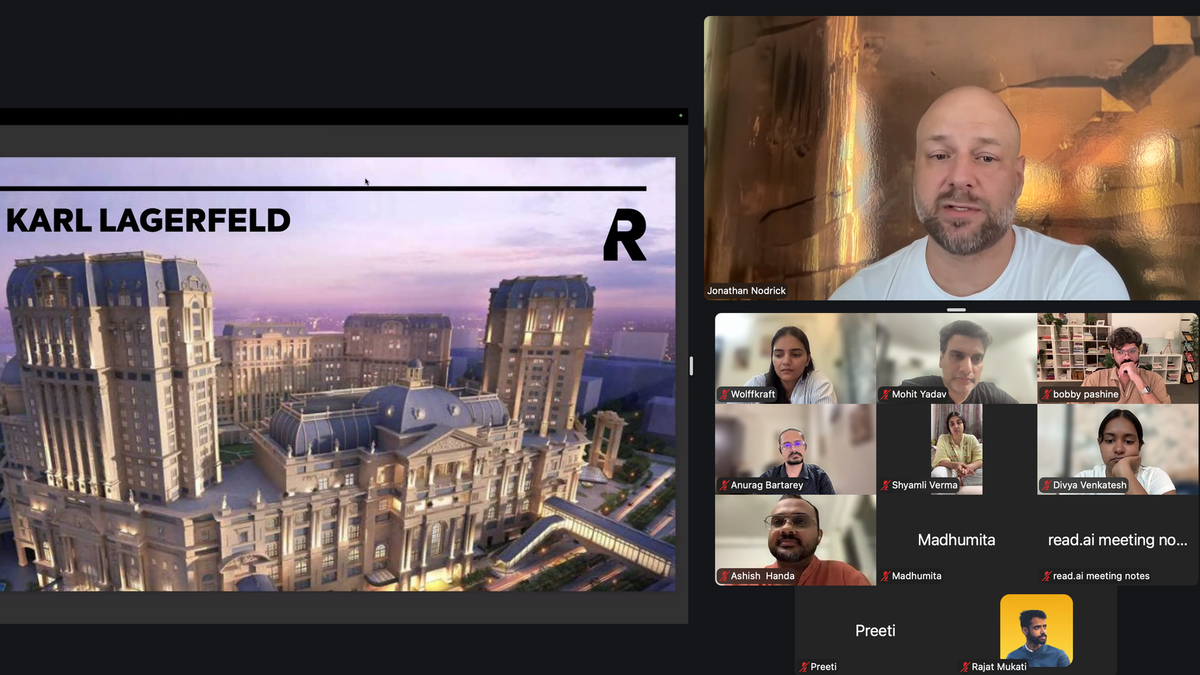
Design often begins with a familiar question: what problem are we solving?
But in a recent Extended Pack Collective conversation with Jonathan Nodrick, Founder, CEO and Creative Director of Rollout, the question opened up into something larger:
What kind of world are we inviting people into?
“A wall is not just a surface. It can become a portal into a new world.”
Jonathan’s work sits in a space that many designers may not immediately think about — wallpaper. But through Rollout, wallpaper is not treated as background decoration. It becomes a medium for atmosphere, memory, emotion, identity, and spatial storytelling.
The session was not just about walls. It was about how design behaves when it leaves the screen, enters architecture, wraps around people, and changes how they feel inside a space.
1. Wallpaper as a thin membrane between many worlds
One of the most memorable ways Jonathan described wallpaper was as a thin membrane.
On one side of it, there is the work behind the scenes — artists, designers, production teams, printers, installers, clients, budgets, timelines, logistics, materials, and decisions. On the other side, there is the human experience — the people who walk in, pause, touch, remember, photograph, talk, and carry the space with them.
This makes wallpaper far more than a final layer applied to a space. It becomes the meeting point between intention and experience.
Many design outputs are judged by what they look like in isolation. A screen, a poster, a packaging system, a room, a wall. But Jonathan’s practice reminds us that the real work begins when the designed object starts interacting with people.
A wall can create curiosity, pattern can slow someone down, a texture can make people want to touch it, and a colour can make a space feel more open, intimate, luxurious, strange, calm, or alive.
2. Moving wallpaper beyond decoration
“The business is not printing wallpaper. The business is helping people create worlds.”
Wallpaper is often seen as something ornamental. It covers a wall. It adds patterns, completes an interior. Rollout’s work challenges that assumption.
Jonathan spoke about using large-format digital printing for interior environments at a time when very few people were approaching wallpaper in that way. The opportunity was not simply to print images at scale, but to understand how graphics, texture, psychology, space, and memory come together.
The work is about creating a distinct spatial experience for workplaces, hotels, restaurants, retail spaces, institutions, multi-user residences, and cultural environments. This is where wallpaper becomes a business of atmosphere.
For a restaurant, it can make the space more memorable. For a hotel, it can create a signature experience. For a workplace, it can express personality and culture. For a retail brand, it can create a world around the product. For a public or cultural space, it can carry a story, identity, or even rebellion.